



Unlock the Secret to Perfect Wraps: Master Your Material Storage
Hey there, fellow wrap enthusiasts! As someone who’s spent over 15 years knee-deep in vinyl, I can tell you that a fantastic install doesn’t just start with a clean vehicle and a steady hand. It begins long before that, with how you store and handle your precious car wrap materials. Think of your vinyl as a high-performance athlete – it needs the right environment and careful treatment to perform at its peak. Neglect it, and you’ll face headaches like adhesive issues, shrinking, or even bubbling down the line, costing you time, money, and frustration.
Table Of Content
Whether you’re a professional shop owner with rolls of 3M 2080 or Avery Supreme Wrapping Film, or a DIY hobbyist with a partial roll of Oracal 970RA for a chrome delete project, these real-world tips from Car Wrap Info will help you keep your materials in prime condition, ensuring every wrap you tackle looks professional and lasts its intended 5-7+ years.
The Golden Rules: Temperature and Humidity Control
The biggest enemies of your vinyl film are extreme temperatures and fluctuating humidity. These conditions can wreak havoc on the film’s adhesive properties, flexibility, and overall integrity.
- Ideal Temperature Range: Aim for a consistent 68-75°F (20-24°C). Too hot, and the adhesive can start to soften, making the film gummy and difficult to handle. Too cold, and the vinyl can become brittle, leading to cracking or reduced conformability.
- Optimal Humidity Levels: Keep your storage area between 40-50% relative humidity. High humidity can cause the adhesive liner to absorb moisture, leading to “tunneling” (wavy appearance) or reduced tack. Low humidity can dry out the adhesive, making it less effective.
Think of your garage. Is it sweltering in summer and freezing in winter? That’s not a vinyl-friendly environment. A climate-controlled room or a dedicated storage cabinet in a conditioned space is your best bet.
Storing Rolls Like a Pro: Vertical is Key
How you position your vinyl rolls matters more than you might think.
- Vertical Storage for the Win: For full or even substantial partial rolls (especially 60-inch wide rolls), storing them vertically is paramount. This prevents pressure points from developing on the film layers, which can lead to creasing, flat spots, or adhesive migration. Many shops use specialized vertical racks or simply stand rolls upright, ensuring they are stable and won’t tip over.
- Horizontal with Caution: If you absolutely must store a roll horizontally, ensure it’s on a clean, flat surface and ideally supported along its entire length to prevent sagging. Never stack other items on top of a horizontally stored roll. Smaller, lighter rolls or very short remnants can sometimes be stored horizontally without issue, but vertical is always preferred.
- Protect the Core: The cardboard core is the backbone of your roll. Avoid crushing it. Many manufacturers like 3M and Avery provide sturdy plastic end caps with their rolls – keep these on! They protect the edges of the film and help maintain the core’s integrity.
- Original Packaging: If possible, keep your rolls in their original boxes. These provide an extra layer of protection against dust, light, and minor physical damage.
Keeping Sheets and Scraps Organized
Don’t just toss those valuable offcuts and samples into a bin!
- Flat and Protected: Store cut sheets and larger scraps flat. Use dedicated flat storage drawers, portfolios, or even hang them using specialized clips. Creases in vinyl are notoriously difficult to remove completely, especially in smaller pieces.
- Label Everything: This is a massive time-saver. Label your scraps with the film brand (e.g., “Hexis HX20000 Gloss Black”), color, and ideally, the date you acquired it. This prevents confusion and ensures you’re using the correct material for touch-ups or small projects.
Handling Your Materials with Care
Even before installation, how you handle the film can impact its performance.
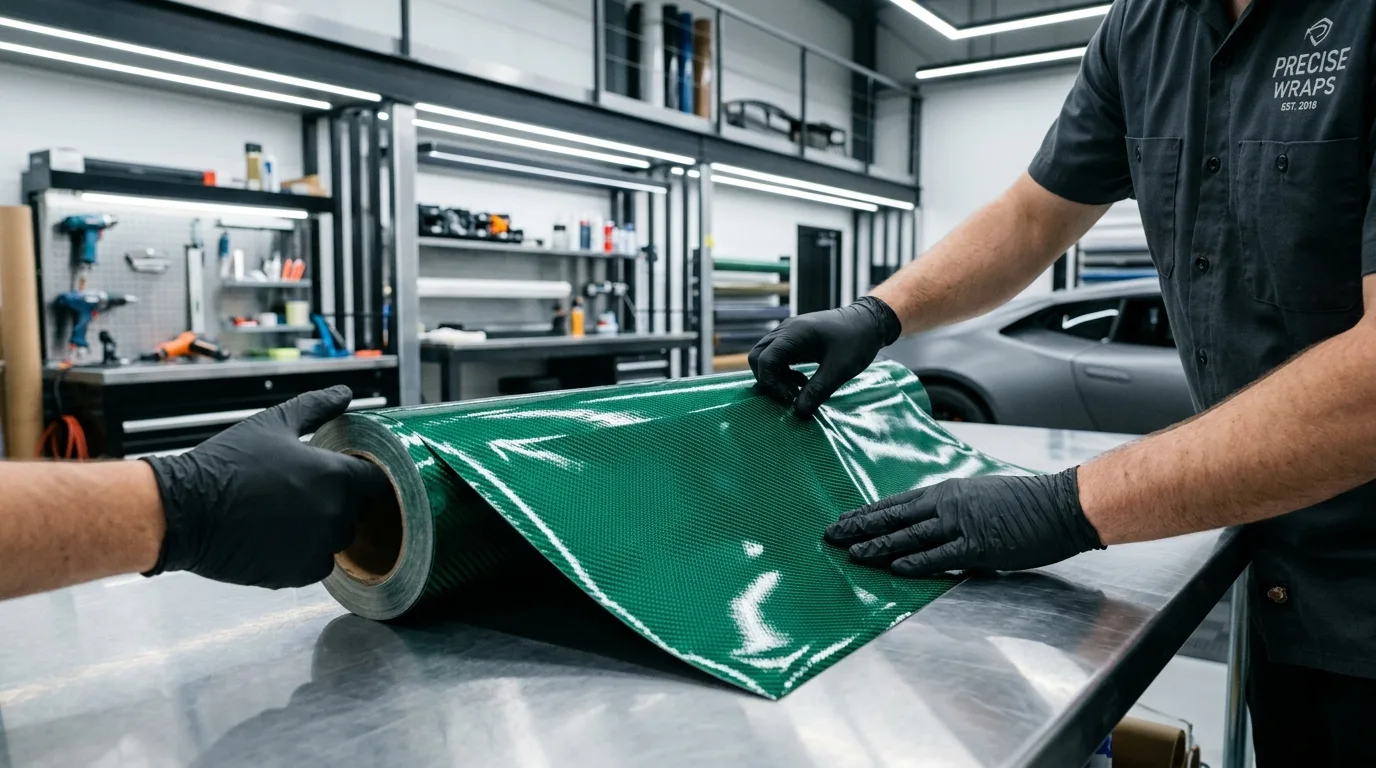
- Clean Hands (and Gloves!): Always handle vinyl with clean hands. Better yet, wear clean, lint-free cotton gloves. Fingerprints and natural skin oils can leave residues on the adhesive or the film surface, creating contamination points that lead to lifting or blemishes.
- Lift, Don’t Drag: When moving rolls or large sheets, lift them. Dragging can scuff the film, introduce static, or even damage the edges.
- Avoid Kinks and Creases: Be mindful when unrolling and cutting. A sharp kink or crease is often permanent and will show up in your finished wrap.
- Acclimation is Key: Before installation, always allow your vinyl to acclimate to the installation environment. Bring the rolls into your shop or garage at least 24 hours before you plan to wrap. This allows the film and its adhesive to reach the same temperature and humidity as your workspace, ensuring optimal performance during application.
Understanding Shelf Life
Vinyl isn’t designed to last forever, even when stored perfectly.
- General Guideline: Most cast vinyl films (the premium, heat-activated film that conforms to complex curves without shrinking back, like 3M 2080 or Avery SWF) have a shelf life of 1-2 years when stored unopened in ideal conditions. Once opened, that shelf life typically reduces. calendered vinyl (the more affordable, stiffer film better suited for flat surfaces) generally has a similar shelf life.
- Check the Date: Many premium films have a manufacturing date or batch number. Always try to use your older stock first (first in, first out).
- Signs of Age: If a film is past its prime, you might notice the liner becoming wavy, the adhesive feeling less tacky, or the film itself becoming brittle or difficult to conform. Using expired film is a shortcut to a failed wrap.
Final Thoughts from the Shop Floor
Proper storage and handling of your car wrap materials isn’t just about preserving your investment; it’s about setting yourself up for success. A well-maintained roll of vinyl will conform better, adhere more securely, and give you that flawless finish you’re striving for. Ignore these tips, and you’re inviting common beginner mistakes like bubbles, lifting edges, and adhesive failure.
By treating your vinyl with the respect it deserves – from a climate-controlled environment to careful handling – you’ll ensure every project, big or small, comes out looking its absolute best and lasts for years to come. Happy wrapping!