

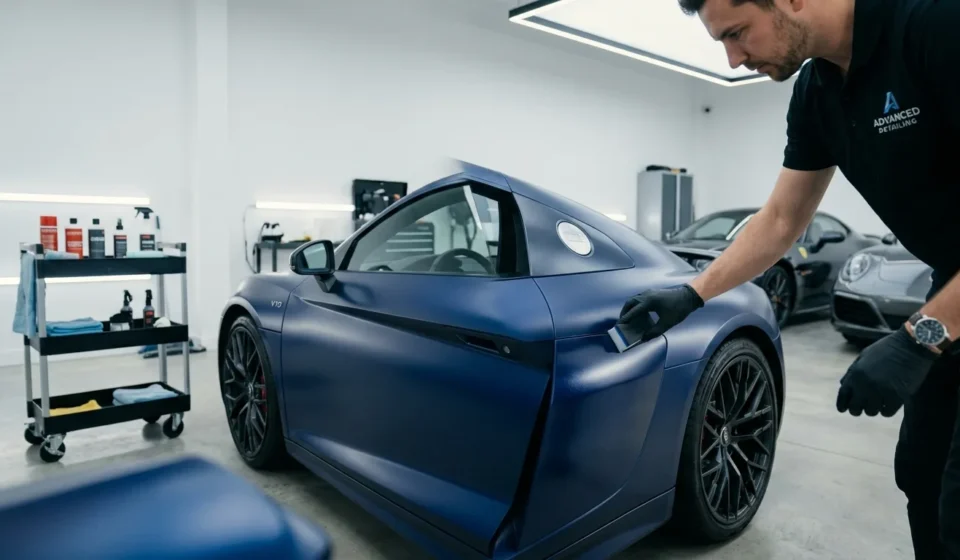

Unlock Maximum Protection: Why Ceramic Coating is Your Wrap’s Best Friend
You’ve invested time, money, and passion into your vehicle wrap. Maybe it’s a stunning color change wrap, a sleek matte finish, or a custom graphic that makes heads turn. You want it to look fantastic and last for years, right? But what if you could give that beautiful vinyl an invisible shield, making it even more resilient, easier to clean, and extending its vibrant life? That’s where Car Wrap Info shines a light on the magic of ceramic coating for vehicle wraps. Honestly, this isn’t just another detailing trend; it’s a game-changer for wrap longevity and appearance.
Table Of Content
- Unlock Maximum Protection: Why Ceramic Coating is Your Wrap’s Best Friend
- What Exactly is Ceramic Coating and How Does It Work on Vinyl?
- The Core Benefits: Why Your Vehicle Wrap Absolutely Needs Ceramic Protection
- Enhanced Durability and Longevity
- Superior Hydrophobicity and Effortless Cleaning
- Unbeatable UV Protection and Color Stability
- Chemical and Stain Resistance
- Choosing the Right Ceramic Coating & Mastering Application
- DIY vs. Professional Application: What’s Right for You?
- The Golden Rule: Prep is King!
- Application Techniques
- Maintaining Your Coated Wrap for Maximum Longevity
- Your Wrap, Supercharged and Protected
For over 15 years, I’ve seen countless vehicles roll through my shop, from brand-new Tesla Model Ys getting a full satin black wrap to classic Ford F-150s sporting fresh custom graphics. And one thing I can tell you is this: the vehicles that truly stand the test of time and environmental assault are those protected by a quality ceramic coating. It’s an extra layer of defense that makes a significant difference, preventing common issues like premature fading, staining, and swirl marks.
What Exactly is Ceramic Coating and How Does It Work on Vinyl?
Let’s strip away the jargon for a moment. At its core, a ceramic coating is a liquid polymer solution, typically composed of silicon dioxide (SiO2) or silicon carbide (SiC), that’s applied by hand to a vehicle’s exterior. When it cures, it forms a semi-permanent, super-hard, hydrophobic layer over the surface. Think of it as a thin, clear, sacrificial glass-like shell.
Now, here’s where it gets interesting for wraps. Unlike paint, which has a clear coat, vinyl wraps (especially cast vinyl – the premium, heat-activated film that conforms to complex curves without shrinking back) have a top layer designed for flexibility and color. When you apply a ceramic coating to vinyl, it doesn’t just sit on top; it chemically bonds with the microscopic pores and surface tension of the vinyl itself. This creates a highly durable barrier that protects the vinyl from UV degradation, environmental contaminants, and light abrasions without changing the finish. For example, a matte wrap will retain its matte look, but with enhanced protection and a richer appearance.
Even calendered vinyl – the more affordable, stiffer film better suited for flat surfaces – can benefit, though its lifespan might not be as dramatically extended as with cast films due to its inherent material properties. And if you’re rocking Paint Protection Film (PPF), like a 4-5 mil thick clear bra protecting your paint, ceramic coatings boost its self-healing properties and make it incredibly slick and easy to clean. So, whether it’s a full color change wrap on a 2024 Tesla Model Y or a custom graphic on your motorcycle, a ceramic coat significantly ups its game.
The Core Benefits: Why Your Vehicle Wrap Absolutely Needs Ceramic Protection
So, you know what it is. But why bother adding another step or cost to your wrapped vehicle? The benefits are tangible and, in my opinion, truly worth the investment.
Enhanced Durability and Longevity
A high-quality vehicle wrap from brands like 3M 2080/1080 series, Avery Supreme Wrapping Film, or Oracal 970RA is designed to last 5-7 years. With a ceramic coating, you’re looking at extending that lifespan, potentially to 7-9+ years, especially if you maintain it properly. The coating acts as a sacrificial layer, absorbing the brunt of minor scratches, swirl marks from washing, and everyday wear and tear. This means your vinyl stays looking newer, longer, resisting fading and degradation from constant exposure to the elements.
Superior Hydrophobicity and Effortless Cleaning
This is probably the most visually striking benefit. Once ceramic coated, your wrap becomes incredibly hydrophobic, meaning water beads up and rolls right off the surface, taking dirt, dust, and grime with it. Imagine this situation: you’ve just driven through a light rain, and instead of leaving streaks and water spots, your wrap looks almost dry and clean. Bird droppings, tree sap, and road tar that used to be a nightmare to remove from vinyl can now often be rinsed away with minimal effort. Washing your car becomes a joy, not a chore, as dirt simply doesn’t stick as readily.
Unbeatable UV Protection and Color Stability
UV radiation is the silent killer of wraps, especially matte and satin finishes. Over time, sunlight can cause vinyl to fade, chalk, or become brittle. Ceramic coatings provide a robust barrier against these harmful UV rays, significantly reducing the chances of your wrap degrading prematurely. This means your vibrant colors stay vibrant, and your deep blacks stay deep, maintaining the aesthetic appeal you paid for.
Chemical and Stain Resistance
From accidental fuel spills at the gas station to acidic bug guts on a long road trip, wraps can be susceptible to chemical etching and staining. A ceramic coating offers a strong defense against these corrosive elements. It creates a barrier that prevents these harsh substances from directly contacting and damaging your vinyl, giving you more time to clean them off before they can cause permanent damage.
Choosing the Right Ceramic Coating & Mastering Application
Based on my experience, selecting the right product and preparing the surface correctly are the two most critical steps for a successful ceramic coating application on your wrap.
DIY vs. Professional Application: What’s Right for You?
There are two main categories of ceramic coatings for wraps: consumer-grade and professional-grade.
- Consumer-grade coatings: These are often spray-on or wipe-on formulas, easier for a DIY wrapper to apply, and typically last 6-12 months. Brands like Adam’s Polishes, Chemical Guys, or Gyeon CanCoat are popular choices. A good DIY kit might cost you $50-$200.
- Professional-grade coatings: These are more concentrated, durable formulations (lasting 2-5 years or more) that typically require a trained installer to apply. Brands like Ceramic Pro, Feynlab, or CarPro CQuartz Professional fall into this category. The cost for a professional application on a full vehicle wrap (like wrapping a Ford F-150 crew cab, which takes 18-22 linear meters of 60-inch film) can range from $500-$1500, depending on the vehicle size, complexity, and the specific coating chosen. The higher cost reflects the product quality, labor, and expertise involved.
If you’re comfortable with meticulous detailing, a DIY consumer-grade coating is a great way to start. For maximum durability and peace of mind, a professional application is often the best route, especially for new wraps.
The Golden Rule: Prep is King!
I cannot stress this enough: surface preparation is paramount. If your wrap isn’t perfectly clean and decontaminated, the ceramic coating won’t bond properly, and you’ll waste your time and money. Here’s the sequence:
- Thorough Wash: Use a two-bucket method with a pH-neutral car shampoo (e.g., Gyeon Bathe, CarPro Reset). Avoid any soaps with waxes or sealants.
- Decontamination: Apply an iron remover to dissolve embedded metallic particles. For stubborn contaminants like tar or industrial fallout, a clay bar can be used, but always test on an inconspicuous area first, especially with matte wraps, as aggressive claying can alter the finish.
- Surface Prep Wipe: This is the really critical point. After washing and decontamination, use an Isopropyl Alcohol (IPA) solution (70% concentration works well) or a dedicated ceramic prep spray (like CarPro Eraser or Gyeon Prep) to wipe down every square inch of the wrap. This removes any residual oils, waxes, or polishing oils that would prevent the coating from bonding.
Application Techniques
Whether DIY or professional, the application process generally follows these steps:
- Work in small sections (e.g., 2×2 feet).
- Apply the coating thinly and evenly using an applicator pad.
- Observe the product’s flash time – the period it takes for the coating to “flash” or rainbow slightly on the surface, indicating it’s ready to be buffed off. This varies by product and ambient temperature/humidity.
- Buff off any residue gently with multiple clean, high-quality microfiber towels. You’ll need several; don’t reuse dirty towels.
- Allow adequate cure time. Avoid water exposure, washing, or harsh chemicals for at least 24-48 hours, or as recommended by the manufacturer.
Maintaining Your Coated Wrap for Maximum Longevity
A ceramic coating isn’t a “set it and forget it” solution; it still requires maintenance, albeit significantly less intensive. To truly get 5-7+ years out of your wrap and enjoy its protected state:
- Wash Regularly: Continue hand washing your vehicle every 2-4 weeks using pH-neutral, ceramic-coating-safe shampoos. Avoid automatic car washes, which can be too abrasive and use harsh chemicals.
- Use Ceramic Boosters: Periodically, use a ceramic spray sealant or “booster” (e.g., Gyeon WetCoat, CarPro Reload) during or after washes. These products replenish the hydrophobic properties and extend the life of your coating.
- Avoid Harsh Chemicals: Stay away from aggressive degreasers, solvent-based cleaners, or acidic wheel cleaners on your coated wrap. These can degrade the ceramic layer.
- Reapplication: Consumer-grade coatings typically need reapplication every 6-12 months. Professional coatings might need a “top-up” or fresh application every 2-3 years, depending on environmental exposure and how well it’s maintained.
One final, critical point from an installer’s perspective: even with a ceramic coating, proper edge sealing during the initial wrap installation (using post-heating techniques to bond the vinyl securely around edges) is crucial to prevent lifting. The coating protects the surface, but a well-installed wrap prevents edge failure.
Your Wrap, Supercharged and Protected
Investing in a ceramic coating for your vehicle wrap is like adding an insurance policy that pays dividends in appearance, ease of maintenance, and longevity. It protects your investment, keeps your vehicle looking pristine, and gives you more time to enjoy your custom ride instead of scrubbing stubborn stains. Whether you DIY with a quality consumer product or opt for professional application, it’s a decision that will save you headaches and keep your wrap looking fresh for years to come. Explore Car Wrap Info for more practical tips and guides to keep your vehicle customization at its best!