

Master Your Wrap: Why a Heat Gun is Your Best Friend for Vehicle Vinyl Application

Honestly, if you’re serious about vehicle wraps – whether you’re a seasoned DIYer or just starting out – there’s one tool that stands head and shoulders above the rest in terms of its impact on your final result: the heat gun. You might think it’s just for stripping paint, but in the world of vinyl, it’s a magic wand. From making stubborn film conform to complex curves to ensuring your wrap lasts for years, a heat gun isn’t just helpful; it’s absolutely non-negotiable.
Table Of Content
In my 15+ years of wrapping everything from sleek sports cars to massive fleet trucks, I’ve seen firsthand the difference a properly used heat gun makes. It’s the key to turning a decent wrap into an exceptional one, preventing common headaches like lifting edges or premature shrinkage. So, let’s dive deep into why this seemingly simple tool is so critical and how to wield it like a pro.
The Unsung Hero: Why Your Wrap Needs Heat
Think of vinyl film as having a memory. When it’s manufactured, it’s stretched and set. When you pull it off its liner, especially cast vinyl – the premium, heat-activated film that conforms to complex curves without shrinking back – it wants to return to its original flat state. This is where heat comes in. Applying controlled heat makes the vinyl pliable, allowing you to stretch, shape, and manipulate it without damaging the film or its adhesive.
Without proper heat, you’d be fighting the material every step of the way. Imagine trying to wrap a mirror cap or a bumper corner with cold, stiff vinyl – it would wrinkle, crease, and simply refuse to cooperate. Calendered vinyl, the more affordable, stiffer film better suited for flat surfaces, also benefits from heat, though it has a stronger “memory” and is more prone to shrinking back if overstretched and not properly post-heated.
More Than Just Pliability: Other Key Roles of Heat
- Adhesive Activation/Reactivation: Many high-quality wrap films, like 3M 2080/1080 series or Avery Supreme Wrapping Film, feature pressure-sensitive adhesives that benefit from heat. It helps the adhesive flow and bond more effectively to the vehicle’s surface, especially in textured areas.
- Bubble and Wrinkle Removal: Minor bubbles and wrinkles can often be smoothed out by gently heating the area, making the film more flexible, and then squeegeeing it down. This is particularly useful for stubborn air pockets.
- Edge Sealing: A touch of heat can help the vinyl conform tightly around edges, providing a more secure and aesthetically pleasing finish, reducing the chance of lifting.
Conforming to Curves: Shaping Vinyl Like a Pro
This is perhaps the most obvious and crucial benefit. Vehicles aren’t flat; they’re full of compound curves, recesses, and intricate body lines. Trying to lay a flat piece of vinyl onto these 3D shapes without heat is a recipe for disaster. For example, imagine this situation: you’re wrapping the front bumper of a 2024 Tesla Model Y. It has deep curves and sharp angles. Without a heat gun, you’d end up with massive wrinkles, creases, and stretched-out areas that will fail prematurely.
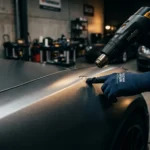
When you apply heat (typically between 120-180°F or 49-82°C, depending on the film and ambient temperature), the vinyl relaxes. It becomes like a malleable skin that you can gently stretch and pull into shape. The key here is controlled stretching – just enough to get it to conform, but not so much that you thin out the film or overstretch the adhesive. Remember, the goal is to lay the film down in its most relaxed state possible once it’s conformed to the curve.
Techniques for Seamless Conformation
- Even Heat Distribution: Don’t hold the heat gun in one spot! Keep it moving in a gentle, sweeping motion, typically 4-6 inches away from the film, to ensure even heating. Overheating can damage the vinyl, causing it to distort or even melt.
- Two-Handed Approach: Often, one hand will hold the heat gun, while the other gently guides or stretches the vinyl into place. This allows for precise control.
- Work in Sections: For larger, more complex curves, tackle them in smaller, manageable sections, heating and laying down the film incrementally.
The Longevity Secret: Mastering Post-Heating
So far we’ve covered using heat during the initial application. Now let’s get to the really critical point: post-heating. This is arguably the most overlooked yet vital step for a durable, long-lasting wrap. After the film is applied, even if it looks perfect, the vinyl still retains some of its “memory,” especially in stretched areas. It wants to pull back.
Post-heating is the process of applying a specific, higher temperature heat to the entire wrapped surface, particularly in areas that were stretched or deeply recessed, to “set” the vinyl’s memory. This essentially shrinks the film back to its most relaxed state on the vehicle, activating the adhesive to its full bonding strength and preventing future lifting, bubbling, or shrinkage. For most premium cast films like Oracal 970RA or Hexis, you’re aiming for a surface temperature of 180-200°F (82-93°C). You’ll need an IR thermometer to accurately check the surface temperature – guessing is not an option here.
Without proper post-heating, you’re looking at a wrap that might only last 1-2 years before edges start to lift or stretched areas pull back, exposing paint. Honestly, based on my experience, this is the number one reason DIY wraps fail prematurely. Take your time, hit those critical temperatures, and your wrap will have a much better chance of reaching that 5-7+ year lifespan.
Choosing & Using Your Heat Gun Safely
Not all heat guns are created equal. For wrapping, you want one with variable temperature control and multiple fan settings. Brands like DeWalt, Milwaukee, or even specialized wrap heat guns from Steinel offer excellent options. A digital display for temperature control is a huge bonus, allowing for precise adjustments.
Using a heat gun incorrectly can quickly lead to costly mistakes. Common beginner errors include holding the gun too close, heating one spot for too long, or using too high a temperature setting. This can scorch the vinyl, permanently damage the adhesive, or even burn through the film, especially thinner materials like 2.5-3 mil cast vinyl. Always keep the gun moving, use your free hand to feel the film’s temperature, and if you can’t get an IR thermometer, practice on scrap pieces first to get a feel for how the vinyl reacts to different heat levels.
Safety First, Always!
- Ventilation: Vinyl films can release fumes when heated. Always work in a well-ventilated area.
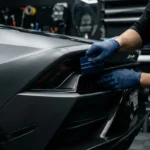
- Gloves: While not strictly for heat gun use, clean, lint-free gloves (like wrap gloves) protect the film from oils and fingerprints and can offer some minor heat protection for your hands when working close to hot areas.
- Clear Workspace: Ensure there are no flammable materials near your work area. A heat gun generates significant heat.
- Power Source: Use a reliable power outlet and avoid extension cords that aren’t rated for high-wattage tools.
A good quality heat gun with temperature control will typically cost between $80-$200. An IR thermometer is another $20-$50 investment that pays for itself many times over by preventing expensive re-dos or premature wrap failures. These are investments, not expenses, in ensuring your wrap project on Car Wrap Info looks fantastic and lasts.
So, what would you do in this situation if you didn’t have a heat gun? You’d be stuck with a subpar, short-lived wrap. Don’t let that happen to you!