

Master Your Wrap: Essential Tools Every Pro & DIYer Needs for Flawless Results

The Right Tools Make All the Difference: Why Gear Matters in Vehicle Wrapping
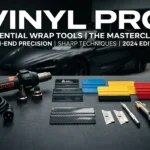
Listen, after more than 15 years knee-deep in vinyl, I can tell you this: a great installer with mediocre tools is still going to struggle. But give that same installer the right gear, and magic happens. It’s like a chef with dull knives or a painter with cheap brushes – you can have all the skill in the world, but if your tools aren’t up to snuff, you’re fighting an uphill battle. This isn’t just about making the job easier; it’s about making it better. Better adhesion, fewer mistakes, and a finish that lasts for years. We’re talking about avoiding bubbles, preventing lifting edges, and getting those perfectly clean cuts that scream “professional.”
Table Of Content
- The Right Tools Make All the Difference: Why Gear Matters in Vehicle Wrapping
- Pre-Application Perfection: Cleaning & Prep Tools
- Application Essentials: Squeegees, Heat, and Magnets
- Squeegees: Your Primary Weapon
- Heat Guns: The Vinyl Whisperer
- Magnets: Your Extra Set of Hands
- Precision & Cutting: Knives, Tapes, and Detail Tools
- Wrap Knives & Blades: Sharpness is Key
- Knifeless Tape: The Game Changer
- Detailing & Finishing: The Small But Mighty Helpers
- My “Must-Have” Toolkit: Consolidating Recommendations
- Wrapping Up: Equip Yourself for Success
Whether you’re tackling your first chrome delete, a full color change on a 2024 Tesla Model Y, or just a small graphic, investing in quality tools is non-negotiable. Cheap tools break, leave marks, and ultimately cost you more in wasted material and frustration. So, let’s dive into the essential tools I rely on daily, why they’re important, and what specific ones I recommend from my own workbench.
Pre-Application Perfection: Cleaning & Prep Tools
Honestly, this is where most DIYers (and even some pros, shame on them!) cut corners, and it’s the biggest mistake you can make. A dirty surface is a wrap killer. You wouldn’t paint over rust, would you? Same principle applies here. Your vinyl, whether it’s 2.5-3 mil cast vinyl (the premium, heat-activated film that conforms to complex curves without shrinking back) or even a thicker 4-5 mil PPF (Paint Protection Film), needs a pristine surface to bond correctly.
- Cleaning Solutions: Forget dish soap. You need specific automotive degreasers and cleaners. My go-to is usually a two-stage clean: first, a good degreaser like Gyeon Prep or 3M Surface Prep System to remove waxes, silicones, and road grime. Then, a final wipe-down with a 70% isopropyl alcohol (IPA) solution mixed with distilled water (about 70% IPA, 30% water) on a clean microfiber towel. This evaporates quickly, leaving no residue.
- Clay Bar: This is an absolute must-have. Even after washing, your paint has invisible contaminants embedded in it – tiny specs of tar, rail dust, industrial fallout. A clay bar (e.g., Meguiar’s Smooth Surface Clay Kit) used with a clay lubricant will pull these out, leaving a perfectly smooth surface for the vinyl to adhere to. Without this step, those tiny bumps will show through your wrap, especially on gloss finishes, and can even create adhesion issues.
- Lint-Free Microfiber Towels: Invest in high-quality, lint-free towels specifically for detailing. The last thing you want is lint trapped under your fresh wrap. Have plenty on hand – use them once and then toss them in the wash.
Application Essentials: Squeegees, Heat, and Magnets
Once the surface is spotless, it’s time to lay down that beautiful film. These are the tools you’ll have in your hand for 90% of the install.
Squeegees: Your Primary Weapon
Not all squeegees are created equal. You need a variety to tackle different areas and film types. For instance, you wouldn’t use a hard plastic squeegee on a delicate satin finish or a super soft one on a large, flat panel where you need firm pressure.
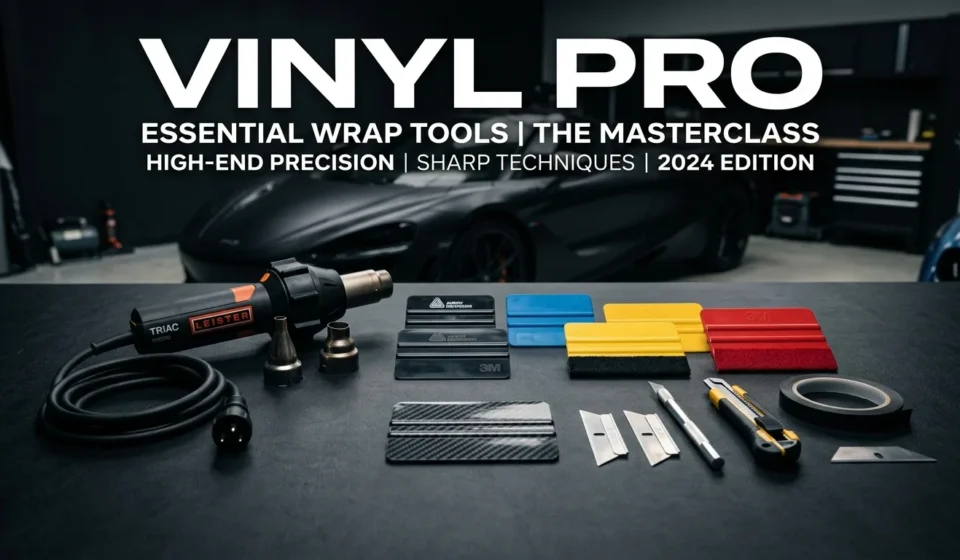
- Hard Plastic Squeegees: For general application on flatter surfaces or when you need aggressive pressure to push out air. Brands like 3M Gold PA1 Squeegee or Avery ProFlex are industry standards. Always cover the edge with a felt buffer (e.g., 3M Felt Edge Squeegee Buffer) to prevent scratching the vinyl, especially on gloss or satin films.
- Soft Felt Squeegees: Perfect for delicate finishes like matte, satin, or chrome films where even a buffered hard squeegee might leave a mark. The Yellotools YelloFelt or Monkey Strips Pro Series are excellent choices that are gentle yet effective.
- Conformable Squeegees: For complex curves and recessed areas. Think about bumpers, mirrors, or door handles. The 3M Blue Squeegee (slightly softer than gold) or the ProWrap “The Lil’ Chizler” are fantastic for working into tight spots without creasing the film.
Heat Guns: The Vinyl Whisperer
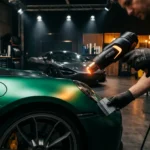
A heat gun isn’t just for shrinking vinyl; it’s for making it pliable, stretching it around curves, and ensuring proper adhesion. It’s your partner in conforming that material to every contour of the vehicle. For example, imagine trying to wrap a tricky front bumper on a Ford F-150 crew cab without heat – it would be a creased, lumpy mess. You need precise control.
- Temperature Control: Look for a heat gun with adjustable temperature settings and ideally, a digital display. I recommend the Steinels HG 2320 E or the Milwaukee M18 Fuel Cordless Heat Gun for portability. You’ll typically be working in the 150-250°F (65-120°C) range for most installations, with post-heating temperatures often hitting 180-200°F (82-93°C) to set the adhesive properly.
- Infrared Thermometer: Absolutely crucial for post-heating. You need to ensure the film reaches its proper post-heating temperature to prevent future shrinkage and lifting edges. Don’t guess; measure it. A basic Fluke or Klein Tools IR Thermometer will do the trick.
Magnets: Your Extra Set of Hands
These are simple but incredibly effective. They hold the vinyl in place while you position it, preventing it from falling or shifting. Yellotools YelloWings or 3M Wrap Magnets are strong, rubber-coated magnets that won’t scratch the paint or the vinyl. I typically use 4-6 magnets for most panels.
Precision & Cutting: Knives, Tapes, and Detail Tools
Clean cuts and precise trims separate the amateur from the pro. This is where attention to detail really shines.
Wrap Knives & Blades: Sharpness is Key
Never, ever use a dull blade. It will drag, tear, and leave jagged edges. Change your blade frequently – sometimes multiple times per panel. When cutting, you want just enough pressure to cut the vinyl, not the paint underneath. This takes practice and a steady hand.
- Breakaway Blades: My favorite is the OLFA 30-Degree Stainless Steel Knife (e.g., OLFA SAC-1 or 180 Black SVR-2). The 30-degree angle allows for much finer, more precise cuts than a standard utility knife. Always snap off a dull segment for a fresh, razor-sharp edge.
- Snitty or Vinyl Safety Cutter: For cutting backing paper or rough trimming without risking paint damage. The Snitty is a small, indispensable tool for quickly splitting the backing paper.
Knifeless Tape: The Game Changer
If you’re not using Knifeless tape, you’re missing out. This product (e.g., 3M Knifeless Design Line Tape or Finish Line Tape) allows you to make precise, clean cuts in the vinyl without ever touching the vehicle’s paint with a blade. It’s fantastic for creating perfect seams, cutting around emblems, or doing intricate designs. Lay the tape, apply the vinyl over it, then pull the filament through the vinyl. It’s brilliant.
Detailing & Finishing: The Small But Mighty Helpers
These are the tools that ensure longevity and a truly professional finish.
- Rivet Brush / Application Gloves: For conforming vinyl around rivets, textured surfaces, or deep recesses. The 3M Rivet Brush is specifically designed for this, pushing the vinyl into every crevice. For general application, good quality nylon wrap gloves (e.g., Image One Impact Glidegloves) keep your hands clean, reduce friction, and prevent fingerprints on the adhesive side.
- Edge Sealant: While not a tool, an edge sealant like 3M Edge Sealer 3950 is critical for high-stress areas (like edges around wheel wells, bumpers, or door jambs) to prevent lifting. It essentially creates an invisible barrier, extending the life of your wrap. This is especially important for areas exposed to harsh elements or frequent washing.
- Plastic Scrapers / Pick Tools: For gently lifting edges during removal or working with small details. Avoid metal scrapers that can damage the paint.
My “Must-Have” Toolkit: Consolidating Recommendations
If you’re starting out or upgrading, here’s my concise list of what I consider the absolute core:
- Prep: IPA solution, quality microfiber towels, Meguiar’s Clay Kit.
- Squeegees: 3M Gold PA1 with felt buffers, Yellotools YelloFelt, 3M Blue.
- Heat: Steinels HG 2320 E Heat Gun, IR Thermometer.
- Cutting: OLFA 30-Degree Knife (with plenty of extra blades), Snitty, 3M Knifeless Tape (Design Line).
- Support: Yellotools YelloWings Magnets (at least 4), Image One Impact Glidegloves, 3M Rivet Brush.
You can find many of these as part of a comprehensive starter kit, but I believe in picking individual, high-quality pieces rather than a generic kit that often includes subpar items. A full, professional DIY toolkit might run you anywhere from $300-$600, but it’s an investment that pays for itself many times over in saved time, frustration, and perfectly executed wraps.
Wrapping Up: Equip Yourself for Success
So far we’ve covered the individual tools, why they’re crucial, and some top recommendations. Now let’s get to the really critical point: using them correctly. Having the best tools in the world won’t matter if you don’t practice proper technique. Always use the right squeegee pressure – firm enough to push out air but not so hard you stretch the film unnecessarily. Master your heat gun control – too little heat, and the film won’t conform; too much, and you risk burning or overstretching it. And always, always prioritize cleanliness.
Every vehicle wrap, whether it’s a full wrap on a 2024 Tesla Model Y costing $4,200–$5,800 or a smaller accent on your daily driver, is a significant investment of time and money. Don’t let cheap tools sabotage your efforts. By equipping yourself with the right gear and dedicating yourself to mastering their use, you’re setting yourself up for success, ensuring your vehicle looks sharp, and your wrap lasts for its full 5-7+ year lifespan. Head over to Car Wrap Info for more guides and tips to keep your wrapping game strong!