

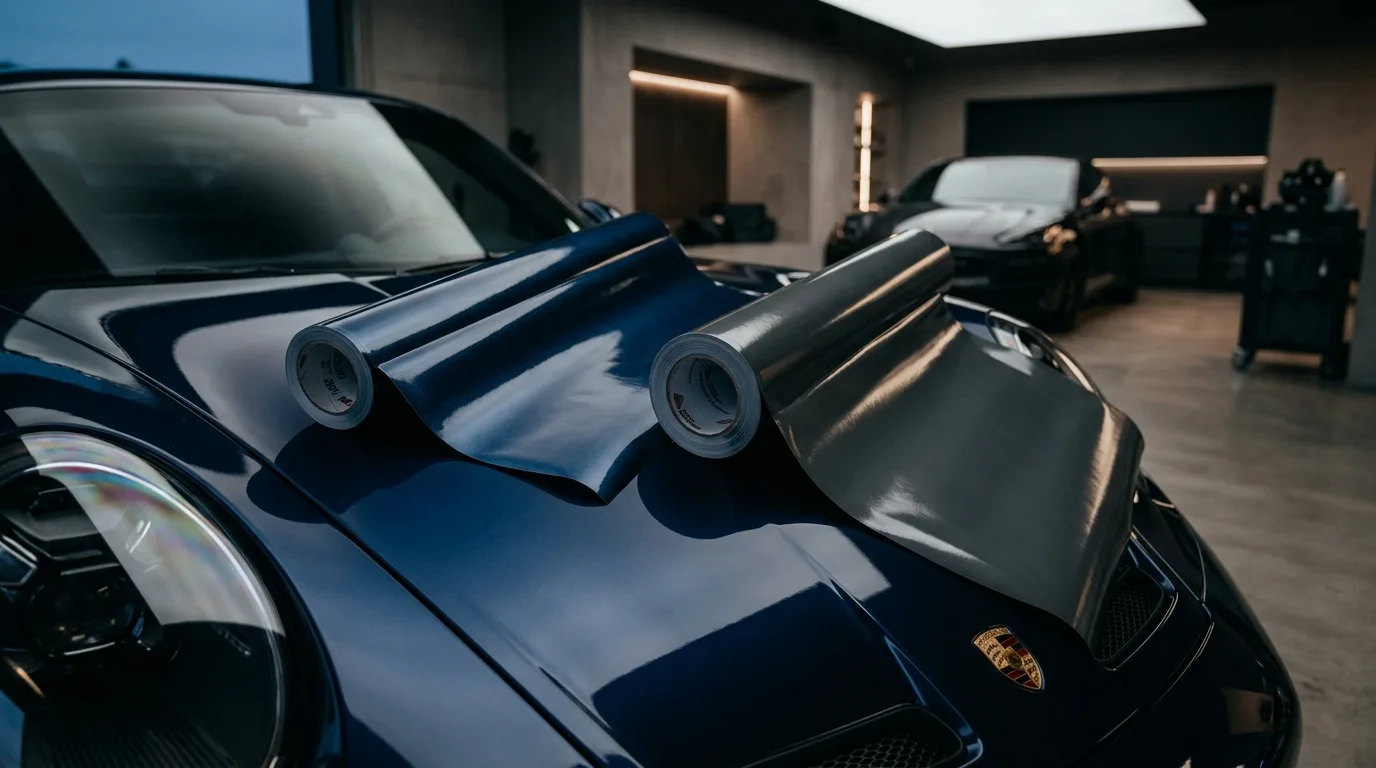

3M 2080 vs. Avery Supreme Wrapping Film: Which Vinyl is Best for Your DIY Car Wrap?
Alright, fellow car enthusiasts and DIY warriors! If you’re tackling a car wrap project yourself, you’ve probably narrowed down your material choices to two titans of the industry: 3M 2080 Series and Avery Dennison Supreme Wrapping Film (SWF). Both are exceptional cast vinyl films, meaning they are premium, heat-activated films designed to conform beautifully to complex curves without shrinking back, offering superior durability compared to cheaper calendered vinyl (which is stiffer and better suited for flat surfaces). But which one is truly best for your hands-on project? Let’s break it down.
Table Of Content
- 3M 2080 vs. Avery Supreme Wrapping Film: Which Vinyl is Best for Your DIY Car Wrap?
- Understanding the Contenders: Premium Cast Vinyl
- 3M 2080 Series: The Forgiving Friend
- Avery Dennison Supreme Wrapping Film (SWF): The Smooth Operator
- Head-to-Head for the DIYer
- Which One Should YOU Choose for DIY?
- General DIY Wrap Tips (Applies to Both!)
Understanding the Contenders: Premium Cast Vinyl
Both 3M 2080 and Avery SWF are top-tier cast vinyls, typically ranging from 3.2 to 3.8 mil in thickness. This thickness, combined with their manufacturing process, gives them incredible conformability and a lifespan of 5-7+ years with proper care. They also both feature advanced air-release technologies to help prevent bubbles during installation.
3M 2080 Series: The Forgiving Friend
The 3M 2080 Series is the successor to the popular 1080 series and comes with enhanced features. It’s known for its excellent conformability and durability. What makes it great for DIYers?
- Adhesive Technology: 3M utilizes Controltac (allowing repositioning until firm pressure is applied) and Comply (non-visible air release channels). This combination provides a good balance of initial tack and repositionability. For a DIYer, this means you can lay the film down, slide it around, and lift it if needed before really committing with your squeegee (a specialized tool to smooth out vinyl).
- Conformability: Excellent for deep recesses, curves, and complex shapes. With a bit of heat from your heat gun (around 180-220°F / 82-104°C), it stretches and shrinks nicely.
- Finish Protection: Many 2080 films, especially gloss finishes, come with a clear protective layer that you peel off after installation. This helps prevent scratches during the wrapping process, which is a huge plus for beginners.
- Workability: It has a moderate initial tack. This can be an advantage as it doesn’t feel too “loose” on the surface, making it easier to manage on vertical panels or when working alone.
DIY Tip: While repositionable, once 3M 2080 gets firm pressure, it really sticks. Be mindful of your squeegee pressure. For a full wrap on a mid-size sedan like a Honda Civic, you’ll typically need 15-18 linear meters of 60-inch film.
Avery Dennison Supreme Wrapping Film (SWF): The Smooth Operator
Avery SWF is another premium cast film highly regarded by professionals. Its characteristics make it a contender, especially for larger panels.
- Adhesive Technology: Avery’s Easy Apply RS technology is renowned for its extremely low initial tack and superior repositionability. This means you can lay a large sheet of vinyl down, move it around extensively, and lift it multiple times without much effort or fear of adhesive residue. The adhesive only fully activates with firm pressure and heat.
- Conformability: Excellent, similar to 3M 2080. It handles curves and recesses beautifully when properly heated. Some installers find it slightly “stretchier” than 3M, which can be an advantage on very complex shapes.
- Workability: The very low initial tack is a double-edged sword for DIYers. It’s fantastic for repositioning and sliding large pieces, but it can feel slippery and difficult to control on vertical surfaces or in windy conditions without a second pair of hands.
- Color & Finish Range: Avery SWF boasts an incredibly wide array of colors and unique finishes, often considered to have some of the most vibrant and exotic options available.
DIY Tip: Because of its lower initial tack, Avery SWF might require more patience and careful handling, especially on a full panel. Don’t be afraid to use a tack reducer or slip solution (for wet application, though most DIYers stick to dry) on large areas, or simply rely on the film’s easy repositioning. For a large vehicle like a Ford F-150 crew cab, you’ll be looking at 20-25 linear meters of 60-inch film.
Head-to-Head for the DIYer
Let’s directly compare these two powerhouses from a DIY perspective:
- Ease of Initial Placement: Avery SWF wins for sheer repositionability. You can slide it for days. 3M 2080 is also good but has a bit more initial grab.
- Conformability (Deep Curves): Both are excellent. 3M 2080 might feel slightly more robust, while Avery SWF can feel a bit more pliable when heated.
- Risk of Adhesive Lines: Avery SWF’s low tack reduces the chance of ‘bruising’ the adhesive or leaving lift lines if you need to pull it back up. 3M 2080 is good, but you need to be a bit more careful with aggressive lifting after pressure.
- Scratch Protection: 3M 2080’s clear protective liner is a significant advantage for DIYers, protecting the finish during squeegeeing.
- Color/Finish Variety: Avery SWF generally offers a broader and more unique range of colors and textures.
- Cost (2025-2026): Both are premium films, so expect similar pricing. Raw film for a full car wrap (material only) can range from $700 – $1,500+ depending on the vehicle size and finish chosen (e.g., matte vs. gloss, special effects). A professional install of a full color change wrap, like on a 2024 Tesla Model Y, typically costs $4,200-$5,800 depending on the chosen finish and shop location.
Which One Should YOU Choose for DIY?
Based on my 15+ years of experience, here’s my honest advice for DIYers:
- For Beginners or Solo Wrappers: I often lean towards 3M 2080 Series. The slightly higher initial tack can make it feel more controllable, especially on vertical panels, and the protective liner is a godsend for preventing squeegee marks. It’s very forgiving.
- For Those with a Bit More Experience (or a Helper): Avery Supreme Wrapping Film offers unparalleled repositionability, which is fantastic for large, uninterrupted panels. If you’re confident in your handling and have an extra set of hands, you might appreciate its smooth flow and incredible finish options.
- For Unique Finishes: If you’re chasing a specific, exotic color or texture, Avery SWF often has the edge in sheer variety.
General DIY Wrap Tips (Applies to Both!)
- Prep is King: Always start with a meticulously clean vehicle. Wash, clay bar, and degrease (using isopropyl alcohol) every surface. Contamination is the enemy of a good wrap.
- Right Tools: Invest in good quality tools: soft squeegees (like a 3M Blue or Gold), a sharp snappy blade (Olfa or NT Cutter), a reliable heat gun, Knifeless tape for precise cuts, and rivet brushes (like 3M’s) for textured surfaces.
- Post-Heating: This is crucial for longevity! After installation, go over every inch of the wrap with your heat gun, bringing the film to 200-220°F (93-104°C) to set the adhesive’s memory and prevent lifting. Pay extra attention to edges and recessed areas.
- Maintenance: Hand wash your wrapped vehicle regularly (every 1-2 weeks) with pH-neutral soap. Avoid abrasive cleaners, automatic car washes, and harsh chemicals. You can even apply ceramic coatings specifically designed for matte or gloss vinyl for added protection.
Ultimately, both 3M 2080 and Avery Supreme Wrapping Film are outstanding choices for a DIY car wrap project. Your decision will likely come down to your personal preference for initial tack, desired finish, and your comfort level with handling vinyl wrap. Whichever you choose, take your time, be patient, and enjoy the process of transforming your vehicle. For more detailed guides and tips, keep exploring Car Wrap Info – we’re here to help you succeed!