



Mastering the Squeegee: Your Key to Flawless Car Wrap Application
Alright, let’s talk about your most important partner in the wrapping game: the squeegee. As someone who’s been laying down vinyl for over 15 years, I can tell you that a skilled hand with a squeegee makes all the difference between a professional, bubble-free finish and a frustrating mess. Whether you’re a DIY enthusiast tackling your first project or a seasoned pro looking for a refresher, mastering this simple tool is paramount. Forget fancy machines; your squeegee is where the magic happens.
Table Of Content
- Mastering the Squeegee: Your Key to Flawless Car Wrap Application
- Your Squeegee Arsenal: Choosing the Right Tool
- The Golden Rules of Squeegee Technique
- 1. The Right Angle & Overlap
- 2. Consistent, Controlled Pressure
- 3. Work from the Center Out
- 4. Dealing with Curves and Contours
- 5. Addressing Trapped Air Bubbles
- The Role of Heat and Post-Heating
- Preventing Common Squeegee Mistakes
Your Squeegee Arsenal: Choosing the Right Tool
Not all squeegees are created equal, and having the right one for the job is crucial. They come in various materials, flexibilities, and sizes. Here’s a breakdown:
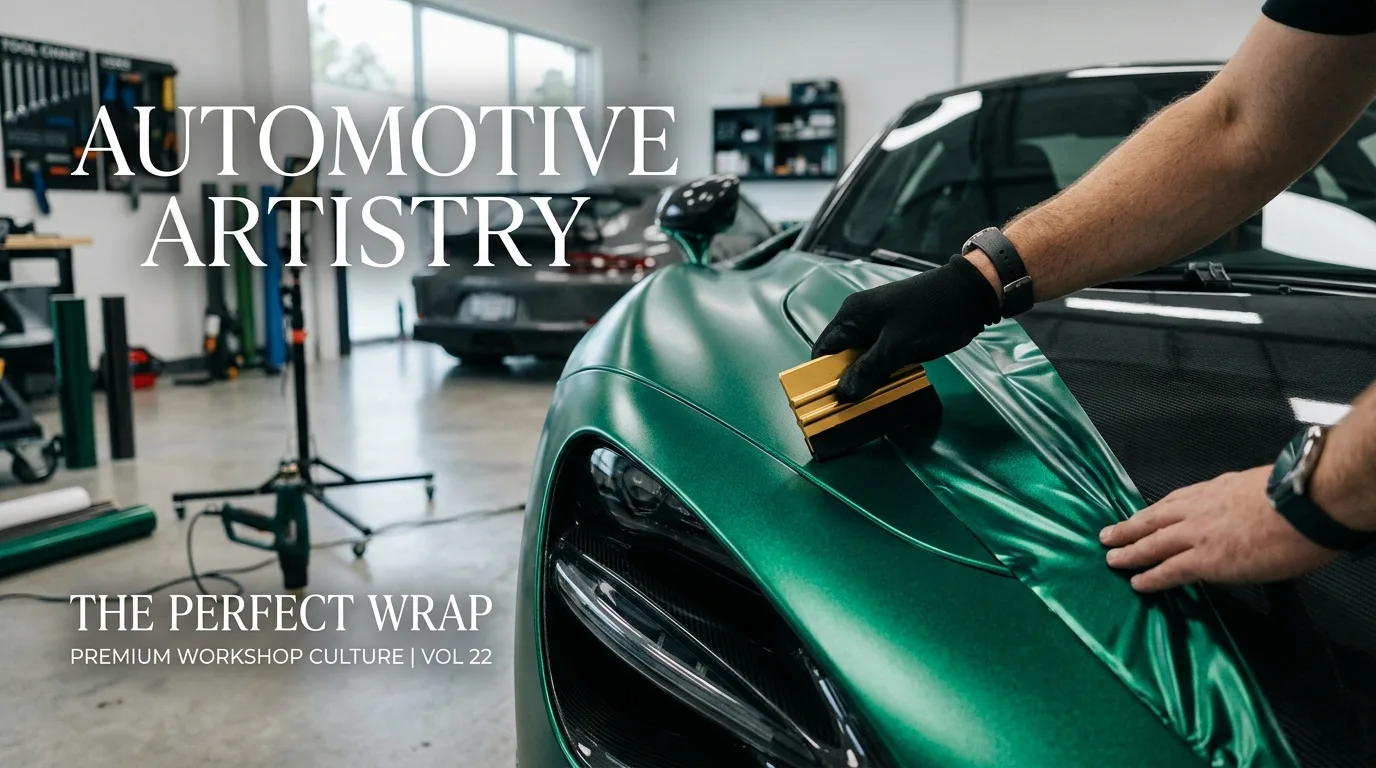
- Felt-Edged Squeegees: These are your workhorses for most vinyl wrap applications, especially with glossy or sensitive films. Brands like 3M (e.g., 3M Gold Squeegee with a felt buffer) or Avery Dennison ProFlex Squeegee are fantastic. The felt edge prevents scratching and marring the surface of the vinyl, which is especially important for delicate finishes like gloss or chrome. These are ideal for applying premium cast vinyl – the durable, heat-activated film (typically 2.5–3.5 mil thick) that conforms beautifully to complex curves without shrinking back.
- Hard Plastic Squeegees: Without felt, these offer a stiffer edge and are excellent for applying paint protection film (PPF), which is a thicker, more durable film (often 4–5 mil) designed for impact resistance. They’re also great for applying transfer tape or for more aggressive pressure on durable films where scratching isn’t a concern.
- Rubber or Soft Squeegees: These are perfect for very delicate surfaces, wet applications (like some window tint or PPF installs), or for working over rivets and complex textures with a rivet brush.
- Specialty Squeegees: Think small, pointed squeegees for tight corners and crevices (like the Avery Lil’ Chizler), or larger, softer ones for very large, flat panels.
Always keep your squeegees clean! A tiny spec of dirt on your squeegee can cause a major scratch or a trapped particle under the film.
The Golden Rules of Squeegee Technique
Before you even pick up your squeegee, remember this: proper surface prep is non-negotiable. Even the best squeegee technique can’t fix dirt or grease under the vinyl. Ensure your vehicle is thoroughly cleaned, decontaminated, and wiped down with isopropyl alcohol.
1. The Right Angle & Overlap
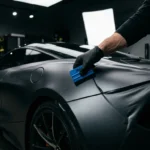
Hold your squeegee at about a 45-degree angle to the surface. This angle allows you to push air out efficiently without digging into the vinyl or creating drag lines. When working across a panel, always use an overlapping motion. Each pass of your squeegee should overlap the previous one by about 50%. This ensures that no air is missed between passes, preventing trapped bubbles.
2. Consistent, Controlled Pressure
This is where many beginners falter. You need consistent, firm pressure – enough to bond the adhesive to the paint, but not so much that you stretch the vinyl unnecessarily or burnish the film. Think of it like spreading butter evenly. For larger, flat surfaces, use your full hand for even pressure distribution. For curves, you might use your fingers for more controlled, localized pressure. Avoid “feathering” the pressure; start with firm pressure, maintain it through the stroke, and release only at the end. For cast vinyl, firm pressure helps activate the adhesive properly.
3. Work from the Center Out
Always start your squeegee strokes from the center of the panel or the area you’ve anchored, working outwards. This method pushes air towards the edges where it can easily escape. Never trap air by squeegeeing inwards from the edges.
4. Dealing with Curves and Contours
Complex curves (like those on a Tesla Model Y fender or a Ford F-150 bumper) require a combination of heat and squeegee work.
Use your heat gun (typically set to 200-250°F / 93-121°C, but always test your film first!) to gently relax the vinyl. As the vinyl becomes pliable, carefully stretch and conform it into the curve, following immediately with your squeegee. Use short, controlled strokes, often from the highest point of the curve downwards and outwards. Don’t overstretch!
5. Addressing Trapped Air Bubbles
Even pros get a bubble or two. For small, isolated air bubbles (not creases), you have a couple of options:
- Lift and Re-squeegee: If the adhesive hasn’t fully set, you can often gently lift the film just past the bubble and re-squeegee it down, working from just before the bubble outwards.
- Pin-Prick: For stubborn or tiny bubbles, use a fine pin (like a 3M Awl or even a sewing needle) to prick a small hole on one side of the bubble. Then, squeegee towards the hole to push the air out.
The Role of Heat and Post-Heating
While the heat gun softens the film for application, your squeegee is what truly sets the adhesive. After the initial application, especially on curves and recessed areas, always post-heat the vinyl to 180-200°F (82-93°C). This process fully activates the adhesive’s memory and ensures it “sets” into its new shape, preventing it from lifting or shrinking back over time. After heating, give those areas another firm squeegee pass to ensure maximum adhesion.
Preventing Common Squeegee Mistakes
- Too Little Pressure: Leads to poor adhesion and bubbling, especially after the vehicle has been exposed to heat.
- Too Much Pressure: Can stretch the film excessively, leading to thin spots, discoloration, or premature lifting. It can also scratch the film if your squeegee is dirty or not felt-edged.
- Incorrect Angle: Holding the squeegee too flat traps air; holding it too steep can damage the film.
- Dirty Squeegee: Always, always keep your squeegee edge clean. Wipe it on a clean microfiber cloth frequently.
- Not Overlapping: Gaps between squeegee passes are prime real estate for air bubbles.
Mastering the squeegee takes practice, patience, and attention to detail. Don’t get discouraged if your first few attempts aren’t perfect. Keep at it, follow these techniques, and you’ll be laying down flawless vinyl like a seasoned pro in no time. For more tips and in-depth guides, keep checking back here at Car Wrap Info!