




The Unsung Hero: Why Edge Sealing Isn’t Optional for Your Wrap
You’ve just put hours, maybe even days, into perfecting your vehicle wrap. The color is stunning, the lines are crisp, and your ride looks brand new. But what if I told you there’s one often-overlooked step that can make or break the longevity and appearance of all that hard work? I’m talking about edge sealing – the crucial final touch that truly protects your investment.
Table Of Content
- The Unsung Hero: Why Edge Sealing Isn’t Optional for Your Wrap
- Identifying Your Vulnerable Spots: Where to Seal for Maximum Protection
- Your Edge Sealing Arsenal: Tools and Materials for a Pro Finish
- The Right Sealants: Liquid vs. Tape
- Essential Tools for Precision
- Mastering the Technique: Step-by-Step Edge Sealing for Durability
- Pre-Sealing Prep: The Foundation of Success
- Applying Liquid Edge Sealer: The Invisible Shield
- Applying Edge Sealing Tape (If Applicable)
- Post-Application Care: The Final Curing
- Common Pitfalls and Pro Tips for a Flawless Finish
- Mistakes to Avoid
- Pro Tips for DIYers and Enthusiasts
Honestly, neglecting proper edge sealing is one of the quickest ways to see your beautiful wrap start lifting, peeling, and ultimately failing prematurely. It’s the vinyl equivalent of forgetting to caulk your bathroom; things might look good initially, but eventually, water and grime will find their way in, causing damage. Edge sealing creates a durable, invisible barrier that locks your vinyl wrap down, preventing environmental contaminants like dirt, moisture, and cleaning chemicals from sneaking underneath the film’s vulnerable edges. It’s not just about aesthetics; it’s about protecting the structural integrity of your wrap for years to come.
Based on my experience wrapping hundreds of vehicles, from daily drivers to show cars, I can tell you that a properly sealed wrap isn’t just a pretty sight – it’s a testament to professional installation and meticulous care. Without it, even the highest quality 2.5–3 mil cast vinyl (that premium, heat-activated film designed to conform to complex curves without shrinking back) can start to lift, especially in harsh conditions. And for those using more affordable calendered vinyl (the stiffer film better suited for flat surfaces, which has a higher tendency to shrink), edge sealing isn’t just recommended, it’s absolutely non-negotiable.
Identifying Your Vulnerable Spots: Where to Seal for Maximum Protection
Knowing where to apply edge sealer is just as important as knowing how. Not every square inch of your wrap needs it, but certain areas are hotspots for lifting and require special attention. Think of it like this: where would water naturally pool or air resistance be highest? Those are your prime candidates.
First, focus on all cut edges. These are the exposed seams where the vinyl terminates against another panel, body line, or trim piece. Common examples include the edges around door jambs, fuel doors, bumpers, and side mirrors. These areas are constantly exposed to friction, direct water spray during washes, and temperature fluctuations. Similarly, any areas where the vinyl is stretched significantly, like deep recesses around grilles or complex curves, will have higher tension and are more prone to lifting.
High-impact zones are another critical category. This includes the front bumper, rocker panels, wheel arches, and the leading edges of hoods and fenders. These areas take a beating from road debris, bugs, and direct wind pressure. Even chrome deletes and window trim wraps, while often smaller in scale, have very thin, exposed edges that can easily catch and peel if not properly sealed. Over time, I’ve seen countless wraps fail at these points, not because the material was bad, but because the edges weren’t secured. Why go through all that trouble only to have an edge peel back after a few months?
Your Edge Sealing Arsenal: Tools and Materials for a Pro Finish
To achieve a truly long-lasting, professional-grade edge seal, you need the right tools and materials. Don’t skimp here; a few dollars saved can cost you hundreds in re-wraps or repairs down the line.
The Right Sealants: Liquid vs. Tape
When it comes to the actual sealing agent, you generally have two main options:
- Liquid Edge Sealer: This is arguably the most common and versatile solution. Products like 3M Edge Sealer 3950 or Avery Dennison Edge Sealer are specifically designed to penetrate the microscopic pores of the vinyl edge and form a strong, flexible, and often clear barrier. They create an almost invisible seal that prevents moisture and dirt from migrating under the film. Application is usually with a small brush or foam applicator, allowing for precise control on complex curves and tight spaces.
- Edge Sealing Tapes: While less common for full vehicle wraps, specific edge sealing tapes can be incredibly effective, especially for PPF (Paint Protection Film) installations or larger, flatter cut lines. These are typically thin, durable tapes that physically cover and adhere to the very edge of the vinyl. They offer an additional layer of mechanical protection. However, they require a very clean, straight edge for seamless application and are more visible than liquid sealers.
Essential Tools for Precision
Beyond the sealer itself, a few other items are crucial:
- Isopropyl Alcohol (IPA): A 70% solution is perfect for cleaning the wrap edges and surrounding paint thoroughly. This is non-negotiable for proper adhesion.
- Lint-Free Microfiber Cloths: For wiping away contaminants without leaving behind fibers.
- Heat Gun: Absolutely essential for post-heating the vinyl edges to relieve tension and ensure maximum adhesion before sealing. Aim for temperatures around 180-200°F (82-93°C) for most films.
- Application Pads/Brushes: For liquid sealers, small foam brushes or felt-tipped applicators provide the best control.
- Squeegee: If using edge sealing tape, a soft squeegee helps ensure proper adhesion without bubbles.
Mastering the Technique: Step-by-Step Edge Sealing for Durability
Now, let’s get down to the nitty-gritty – the actual application. This isn’t a race; patience and precision are your best friends here.
Pre-Sealing Prep: The Foundation of Success
Before you even think about opening that bottle of sealer, proper preparation is paramount. First, ensure the vehicle surface and the wrap edges are immaculately clean. Use your IPA and a clean microfiber cloth to thoroughly wipe down every edge you plan to seal. Any dust, wax, or finger oils will compromise the sealer’s adhesion.
Next, and this is a step many DIYers skip to their detriment: post-heating. Every piece of vinyl has a “memory.” When you stretch it around curves, it wants to pull back to its original flat shape. Post-heating with a heat gun, bringing the vinyl’s surface temperature up to its activation point (typically 180-200°F or 82-93°C for cast films like 3M 2080/1080 or Avery Supreme Wrapping Film), relaxes this memory. Once it cools, the vinyl “sets” in its new shape, dramatically reducing the tension that causes lifting. Focus the heat gun on the edge and about an inch or two onto the main panel, then firmly press the vinyl down with a gloved finger or felt squeegee as it cools.
Applying Liquid Edge Sealer: The Invisible Shield
Once your edges are clean and post-heated, you’re ready for the sealer. Apply a thin, even coat of liquid edge sealer along the very edge of the vinyl, extending just a millimeter or two onto the paint and a similar distance onto the wrap itself. The goal is to create a seamless transition that encapsulates the cut edge without being visibly thick or globby. Imagine you’ve just spent 20 hours wrapping your dream car, say a 2024 Tesla Model Y, and it looks absolutely flawless. You wouldn’t want a messy, uneven edge seal to ruin that perfect finish, right? That’s why precision matters here.
Allow the first coat to dry completely according to the manufacturer’s instructions – usually 10-15 minutes. In my opinion, for high-wear areas or intricate spots, a second thin coat can offer an extra layer of protection, but always ensure the first is fully cured. Avoid over-applying; too much sealer can become visible, sticky, or even crack over time. Less is often more with these products.
Applying Edge Sealing Tape (If Applicable)
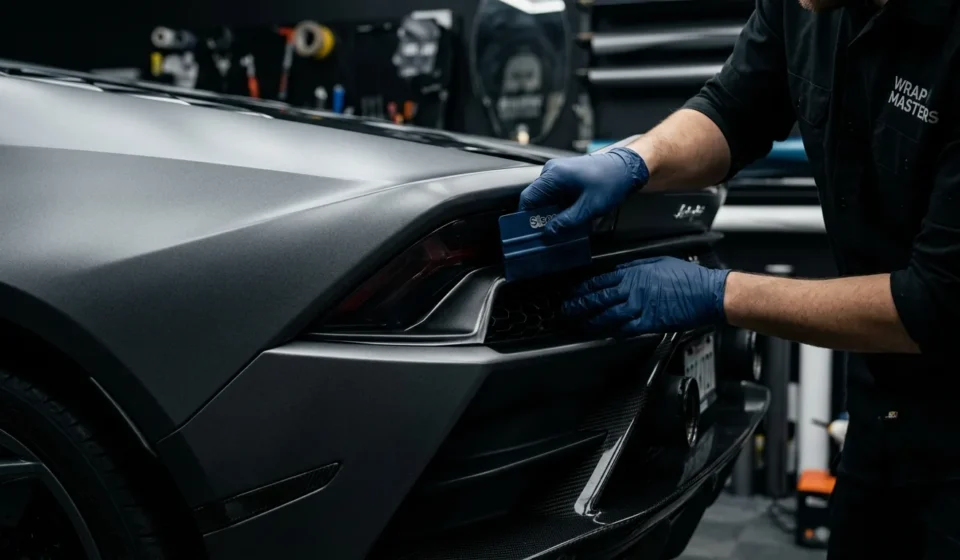
If you’re using edge sealing tape, carefully align it along the vinyl’s edge, overlapping slightly onto both the wrap and the paint. Use a soft squeegee to firmly press the tape down, working out any air bubbles as you go. Trim any excess cleanly with a sharp knife, taking care not to cut the underlying wrap. This method is often preferred for PPF on areas like bumper edges where a visible but highly protective layer is desired.
Post-Application Care: The Final Curing
After applying your chosen sealer, give it ample time to cure. This is typically 24-48 hours, during which you should avoid washing the vehicle or exposing it to harsh weather conditions. This curing time allows the sealer to fully bond and harden, creating its maximum protective barrier. Perform a visual inspection after a day or two to ensure no areas have lifted or show signs of inadequate sealing. This small step can prevent major headaches later.
Common Pitfalls and Pro Tips for a Flawless Finish
Even with the best intentions, mistakes can happen. Here’s how to sidestep the most common issues and what I’ve learned over the years to ensure a perfect edge seal every time.
Mistakes to Avoid
- Skipping Surface Prep: As mentioned, dirty edges mean poor adhesion. It’s the most common DIY mistake.
- Forgetting Post-Heating: This is huge! Without it, the vinyl’s memory will work against your seal, leading to premature lifting, especially on complex curves.
- Over-Applying Liquid Sealer: It won’t make it stronger; it’ll just make it messy, potentially visible, and can even attract dirt.
- Not Allowing Proper Cure Time: Rushing the process means the sealer hasn’t fully bonded, making it less effective.
- Using the Wrong Sealer: Ensure your sealer is compatible with your specific vinyl film (e.g., some sealers are not recommended for matte finishes as they can create shiny spots). Always check the product’s specifications.
Pro Tips for DIYers and Enthusiasts
- Practice Makes Perfect: If you’re new to this, grab some scrap vinyl and practice applying sealer on various curves and edges before tackling your actual wrap.
- Work in Sections: Don’t try to do the whole car at once. Break it down into manageable sections – a door, a fender, a bumper – ensuring quality control for each part.
- Use a Good Light Source: A bright, direct light will help you spot any missed spots or uneven application.
- Check Periodically: Even after the initial cure, make it a habit to check your wrap edges every few washes, especially in the first few months. Catching a small lift early can prevent it from becoming a major issue.
- Consider Professional Help: If you’re unsure, or it’s a very high-value vehicle, don’t hesitate to consult or hire a professional wrap shop. For instance, a full wrap on a Ford F-150 crew cab takes 18–22 linear meters of 60-inch film, and ensuring all those edges are perfect is a significant task that can easily add $200-$400 to a professional install for labor and materials if done right, but saves thousands in the long run.
Edge sealing might seem like a small detail, but it’s the invisible guardian of your vehicle wrap. By understanding its importance, knowing where to apply it, using the right products, and perfecting your technique, you can dramatically extend the life and pristine appearance of your wrap. Don’t let your hard work literally peel away – seal those edges, and enjoy your stunning ride for years to come. For more practical, real-world advice on keeping your vehicle looking sharp, keep checking Car Wrap Info!