

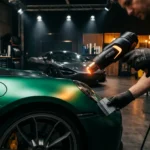
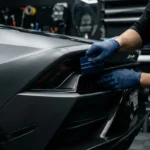
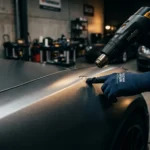

Alright, let’s talk real talk about vehicle wraps. You see those stunning color changes, the intricate custom graphics, the flawless finish on a freshly wrapped car? What’s the secret sauce? Is it the premium cast vinyl from 3M or Avery, the installer’s magical touch, or some fancy heat gun technique? Honestly, if you ask any seasoned wrap expert, they’ll tell you the same thing: it’s almost entirely about what happens before the vinyl even touches the paint. We’re talking about vehicle preparation, and it’s the unsung hero of every successful car wrap.
Table Of Content
- The Foundation: Why Prep is Non-Negotiable
- The Deep Clean: More Than Just a Car Wash
- Washing Techniques
- Surface Decontamination & Inspection: The Hidden Enemies
- Clay Bar Treatment
- IPA Wipes and Final Inspection
- Disassembly & Taping: Precision Pays Off
- Door Handles, Mirrors, & Emblems
- Knifeless Tape Placement
- Final Wipe-Down & The Waiting Game: The Last Critical Steps
Think of it this way: you wouldn’t paint a wall without cleaning it first, right? The same principle, but amplified by about a thousand, applies to wrapping a car. Neglect the prep, and you’re not just risking a few bubbles; you’re inviting lifting edges, premature failure, and a whole lot of wasted time and money. Whether you’re a DIY enthusiast tackling your first project or hiring a professional shop like ours, understanding and executing proper prep is non-negotiable for a wrap that truly lasts 5-7 years or more.
The Foundation: Why Prep is Non-Negotiable
When we apply a high-quality film, whether it’s a 2.5-3 mil cast vinyl (the premium, heat-activated film that conforms to complex curves without shrinking back) like 3M’s 2080 Series or Avery Supreme Wrapping Film, or a thicker 4-5 mil PPF (Paint Protection Film), it relies on a strong, clean bond with the vehicle’s surface. Vinyl adhesive is designed to stick to paint, not to dirt, wax, oil, or silicone residues. Even microscopic contaminants can create weak spots that eventually lead to adhesion failure, especially in critical areas like edges, recessed channels, and complex curves.
Imagine this situation: You’ve spent hours meticulously applying a gorgeous matte black wrap on a 2024 Tesla Model Y. You’re proud of your work. A few weeks later, you notice a small edge lifting on the door jamb. You press it down, but it keeps coming back. Why? Because during the prep, a tiny amount of wax residue was missed right on that edge. The film couldn’t create a strong enough bond, and over time, temperature changes and car washes started to pull it away. This isn’t just frustrating; it’s a call for a costly re-do, potentially costing you another $100-$200 in material and several hours of labor for just that panel.
This is why proper preparation isn’t just a step; it’s the most critical phase. It directly impacts the longevity, appearance, and overall success of your wrap. Skipping corners here is like building a house on sand – it might look good initially, but it won’t stand the test of time. A professional shop might charge anywhere from $300-$800 for comprehensive prep on a full vehicle, and believe me, it’s worth every penny to protect your $4,200–$5,800 wrap investment.
The Deep Clean: More Than Just a Car Wash
Before any vinyl can be applied, the vehicle needs a thorough, meticulous cleaning. This isn’t your average Sunday car wash; this is a surgical strike against every speck of dirt, grime, and environmental fallout. We’re aiming for pristine.
Washing Techniques
Start with a proper hand wash. Use the two-bucket method (one bucket for soapy water, one for rinsing your wash mitt) to prevent scratching. Opt for a pH-neutral car shampoo – something like Chemical Guys Mr. Pink or Meguiar’s Gold Class works great. Avoid any wash-and-wax products, as they leave behind residues that will absolutely inhibit vinyl adhesion. Use a dedicated bug and tar remover for stubborn spots, ensuring you rinse thoroughly afterwards.
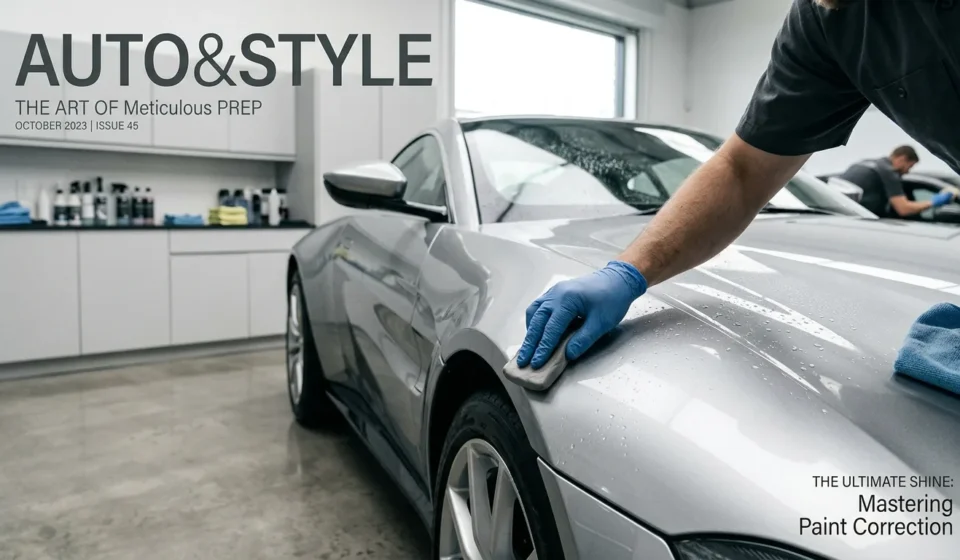
Once washed, the drying process is just as critical. Use soft, clean microfiber drying towels to absorb all water, followed by an air blower to force water out of all crevices, seams, badges, and panel gaps. Water left in these areas can seep out during the wrap process or even weeks later, leading to bubbles or lifting. We want a bone-dry surface before moving on to the next stage.
Surface Decontamination & Inspection: The Hidden Enemies
Even after a meticulous wash, your vehicle’s paint is likely still covered in invisible contaminants. These include industrial fallout, brake dust, tree sap, overspray, and old wax or sealant residues. These are the silent killers of wrap adhesion.
Clay Bar Treatment
This step is absolutely essential. A clay bar (or synthetic clay mitt) is designed to pull embedded contaminants from the paint surface, leaving it incredibly smooth and clean. You’ll need a dedicated clay lubricant or a mild detail spray. Work in small sections, gliding the clay bar over the lubricated surface until it feels smooth to the touch. Regularly knead the clay to expose a fresh surface. After claying, immediately wipe down the area with a clean microfiber towel to remove any lubricant residue.
The difference a clay bar makes is astounding. Run your hand over a clayed panel versus an unclayed one – you’ll feel the paint is significantly smoother. This super-smooth surface provides the ideal canvas for the vinyl to bond to. Missing this step is like trying to put a sticker on a dusty whiteboard; it just won’t hold properly.
IPA Wipes and Final Inspection
Now for the ultimate degreasing step: an IPA wipe. IPA stands for Isopropyl Alcohol, and a 70% solution mixed with 30% distilled water is our go-to for removing any remaining oils, wax, polish, or finger smudges. Apply it generously to a fresh microfiber towel and wipe down every single surface that will be wrapped. Don’t just do the flat panels; get into the door jambs, under the hood edges, around light housings – everywhere. Repeat this process at least twice, using fresh towels each time. We’re talking about every square inch of potential adhesion area.
Once the IPA wipe is complete, it’s time for a critical final inspection. Put on some clean, lint-free gloves. Use a bright LED light to scrutinize every panel, looking for any missed spots, dust, or lingering residues. Run your gloved hand over the surface – it should feel squeaky clean and smooth. Any imperfection you feel now will show through the wrap. This is your last chance to catch those hidden enemies before the vinyl goes on.
Disassembly & Taping: Precision Pays Off
For a truly seamless, professional-looking wrap, some minor disassembly is often required. This isn’t about tearing your car apart, but about strategically removing components that make wrapping difficult or prone to failure.
Door Handles, Mirrors, & Emblems
In my opinion, removing exterior components like door handles, side mirrors, emblems, and sometimes even taillights or headlights (depending on the vehicle) is always worth the effort for a full color change wrap. Trying to wrap around a door handle, for example, often results in visible seams, compromised adhesion points, or awkward cuts. Removing them allows the film to be tucked cleanly underneath, creating a factory-like finish. For a popular “chrome delete” on a BMW M3, for instance, taking off the window trim makes the job infinitely cleaner and more durable than trying to trim around the chrome in place.
Always consult your vehicle’s service manual or reliable online resources for proper removal and reinstallation procedures. Keep all screws and clips organized – a magnetic parts tray is your best friend here!
Knifeless Tape Placement
In areas where cutting needs to be precise without touching the paint, Knifeless tape is a game-changer. This specialty tape, with its embedded filament, allows you to create clean, sharp cut lines for things like door jambs, intricate details, or even trimming off excess material without ever putting a blade near the paint. It’s applied to the surface, the film is laid over it, and then the filament is pulled to make the cut. Mastering its application takes practice, but it’s an invaluable tool for protecting your paint and achieving flawless edges.
Final Wipe-Down & The Waiting Game: The Last Critical Steps
You’ve cleaned, decontaminated, inspected, and prepped. But you’re not quite done. There are still a couple of final considerations.
Before you even unroll your film, do one last, light wipe-down with IPA on any immediate working area, ensuring no new dust or fingerprints have settled. Use a fresh, clean microfiber towel. Also, ensure your workspace is as dust-free as possible. A clean shop floor and minimal air movement are your allies. Even a tiny spec of dust can create a visible bubble or imperfection under the wrap, especially with gloss finishes.
Finally, consider the outgassing factor. If your vehicle has recently been repainted or had significant paint correction, the solvents in the fresh paint need time to fully cure and release their gases. Wrapping too soon will trap these gases, leading to bubbles and adhesion failure. For fresh paint, I recommend waiting at least 30-60 days, sometimes even longer depending on paint type and conditions. It’s a waiting game, but a crucial one for the wrap’s longevity.
The ideal temperature for applying vinyl is typically between 65-75°F (18-24°C). This allows the film to be pliable without being too soft or too stiff, and helps the adhesive cure properly. Avoid extreme temperatures or direct sunlight during installation. Proper prep also includes providing the right environment for the wrap to be applied effectively.
So, there you have it. The secret to a phenomenal, long-lasting vehicle wrap isn’t a secret at all. It’s meticulous, painstaking preparation. It’s the difference between a wrap that peels in a year and one that looks fantastic for half a decade or more. Don’t cut corners here; your wrap (and your wallet) will thank you for it. Get these foundational steps right, and you’re already 90% of the way to a stunning, durable vinyl transformation.