

Mastering the Bubble-Free Finish: Pro Tips for Vehicle Wrap Application

The Quest for Perfection: Achieving a Bubble-Free Vehicle Wrap
There’s nothing quite as satisfying as stepping back to admire a freshly wrapped vehicle, its new color or finish gleaming flawlessly under the sun. But let’s be honest, for many, that dream quickly turns into a nightmare of trapped air pockets, unsightly bubbles, and lifting edges. It’s a common struggle, whether you’re a first-timer or have a few wraps under your belt. As someone who’s spent over 15 years knee-deep in vinyl, I can tell you that a bubble-free finish isn’t just luck; it’s the culmination of meticulous preparation, the right tools, and proven techniques. Forget those frustrating air pockets – I’m going to walk you through exactly how to get that glass-smooth, professional look, just like we do at the shop.
Table Of Content
- The Quest for Perfection: Achieving a Bubble-Free Vehicle Wrap
- The Undeniable Truth: Preparation is 90% of the Battle
- Deep Cleaning for Optimal Adhesion
- Inspecting Your Canvas
- Your Arsenal: Choosing the Right Materials and Tools
- The Vinyl Itself: Cast vs. Calendered
- Essential Tools for a Pro Finish
- The Art of Application: Techniques for a Bubble-Free Finish
- The Hinge Method and Squeegee Mastery
- The Critical Role of Post-Heating
- The Finishing Touches: Inspection, Curing, and Maintenance
- Final Inspection and Bubble Annihilation
- Long-Term Care for Lasting Beauty
This isn’t about quick fixes; it’s about building a solid foundation for a wrap that not only looks incredible but also lasts for years. We’ll cover everything from cleaning protocols that prevent microscopic contaminants from sabotaging your efforts to the subtle art of heat and pressure. By the time you’re done reading, you’ll have a clear, actionable roadmap to tackling your next wrap with confidence, leaving those pesky bubbles in the rearview mirror.
The Undeniable Truth: Preparation is 90% of the Battle
Honestly, if there’s one area where beginners consistently fall short, it’s preparation. Think of your vehicle’s paint as a canvas; you wouldn’t paint a masterpiece on a dirty, greasy surface, would you? The same goes for vinyl. Any dust, grease, wax, or even invisible contaminants will create a weak bond, leading to lifting, bubbles, and premature failure. Skipping steps here guarantees frustration later.
Deep Cleaning for Optimal Adhesion
Start with a thorough wash. I mean a really thorough wash. Use a two-bucket method with a pH-neutral car soap to prevent scratching, focusing on every nook and cranny. Don’t forget door jambs, under the hood edges, and around trim pieces. After rinsing, it’s time for chemical decontamination. A good iron remover will strip away embedded metallic particles, followed by a clay bar treatment to pull out any remaining bonded contaminants that washing missed. Rinse again, then dry completely with lint-free microfiber towels or an air blower.
The final, critical step is a full wipe-down with a 70% isopropyl alcohol (IPA) solution. This strips away any lingering oils, waxes, or polishing residues. Pay special attention to edges, recessed areas, and panel gaps. I often recommend a second IPA wipe, just to be absolutely sure. This ensures you have a pristine surface with high surface energy—a fancy term for how well a liquid (or vinyl adhesive) spreads and bonds to a solid. The higher the surface energy, the stronger your vinyl’s bond will be.
Inspecting Your Canvas
Now, with a clean vehicle, it’s time for a close inspection. Run your hand over every panel. Feel for any dents, dings, deep scratches, or paint imperfections. Vinyl will conform to these, so if you have a noticeable dent, it will show through the wrap. Small imperfections might be okay, but larger ones should ideally be addressed by a body shop first. Any rust spots must be completely remediated; wrapping over rust is asking for trouble, as it will continue to spread and eventually compromise the vinyl. For a truly professional finish, especially on complex vehicles like a 2024 Tesla Model Y, consider temporarily removing parts like door handles, mirrors, and emblems. This allows you to tuck the vinyl deeply, creating seamless edges that resist lifting.
Your Arsenal: Choosing the Right Materials and Tools
Having the right gear is non-negotiable. You wouldn’t use a butter knife to cut steak, right? The same principle applies here. Quality tools and materials make a world of difference in achieving a bubble-free finish and ensuring longevity.
The Vinyl Itself: Cast vs. Calendered
For a full vehicle wrap, you absolutely need cast vinyl. Brands like 3M 2080 Series, Avery Supreme Wrapping Film, and Oracal 970RA are industry standards. This premium, heat-activated film is manufactured by pouring liquid vinyl onto a casting sheet, resulting in a thinner (typically 2.5–3.5 mil), more stable film. It conforms beautifully to complex curves, recesses, and rivets without shrinking back over time, which is critical for preventing bubbles and lifting. Calendered vinyl, on the other hand, is made by extruding and rolling vinyl through heated rollers, making it thicker (4–5 mil) and stiffer. While more affordable, it has a “memory” and will try to shrink back to its original flat state, making it unsuitable for anything but the flattest surfaces. Always opt for cast for vehicle wraps!
Essential Tools for a Pro Finish
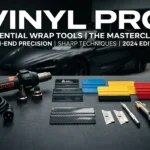
Here’s a breakdown of what you’ll need. Don’t skimp on these; they’re an investment in your success:
- Squeegees: You’ll need a variety. A medium-hard plastic squeegee (like a 3M Gold or Blue) is your workhorse for large areas. A softer felt-edged squeegee (e.g., Avery Pro-Flex, 3M PA1) is great for delicate finishes and initial passes to prevent scratching. Keep them clean!
- Heat Gun: A professional heat gun with variable temperature settings is crucial. An IR thermometer is highly recommended to monitor surface temperatures, aiming for around 200-250°F (93-121°C) for most cast films during stretching and conforming. Overheating can damage the vinyl; underheating won’t allow it to conform.
- Knifeless Tape: This revolutionary product (e.g., 3M Design Line) allows you to cut the vinyl cleanly without ever touching your vehicle’s paint, perfect for precise edges and intricate designs.
- Cutting Tools: A fresh, sharp Olfa snap-off blade knife (always break off a new segment for each major cut) and a Snitty cutter are indispensable. Sharp blades prevent jagged cuts and potential paint damage.
- Magnets: Strong vinyl magnets (at least 6-8 of them) are essential for holding panels in place during application, allowing you to reposition and tack vinyl precisely.
- Gloves: Lint-free cotton or nylon gloves protect the adhesive from your skin oils and keep the vinyl clean.
- Application Fluid: For some techniques, especially with larger panels, a little slip solution can help reposition the vinyl. However, for most dry applications, keep your surface and vinyl dry.
- Rivet Brush: If you’re wrapping a truck with rivets (like a Ford F-150 crew cab, which typically takes 18-22 linear meters of 60-inch film for a full wrap), a 3M rivet brush is invaluable for forcing the vinyl around them.
The Art of Application: Techniques for a Bubble-Free Finish
This is where the magic happens, and where technique truly shines. Applying vinyl isn’t about brute force; it’s about finesse, understanding material properties, and consistent pressure. The goal is to lay the vinyl down smoothly, pushing air out as you go, and allowing the film’s air egress channels (tiny patterns in the adhesive that allow air to escape) to do their job.
The Hinge Method and Squeegee Mastery
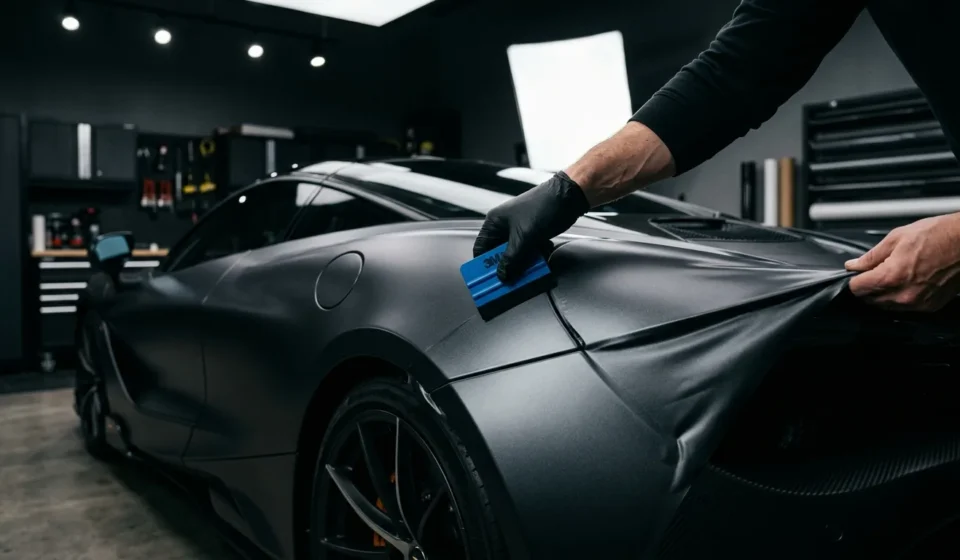
Start by cleaning the panel one last time with your IPA solution. Position your vinyl panel carefully, using magnets to hold it in place. We often use the “hinge” method: secure a horizontal line of vinyl across the center of your panel with magnets, then pull back one half of the liner. Tack the exposed adhesive portion lightly to the vehicle. Now, starting from the center and working outwards, apply firm, overlapping strokes with your squeegee at about a 45-degree angle. This consistent pressure pushes air out towards the edges. When you’ve finished one half, remove the magnets, pull back the rest of the liner, and repeat the process for the other half.
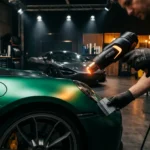
For curves and recesses, gentle heat is your best friend. Heat the vinyl just enough to make it pliable – remember that 200-250°F sweet spot. Stretch it carefully over the curve, then use your squeegee to lay it down. Avoid overstretching, as this thins the film and can lead to premature failure or “fingering” (vinyl lifting at the edges). Keep your squeegee strokes smooth and consistent, always working towards an open edge where air can escape. For example, imagine you’re wrapping the front bumper of a 2024 Tesla Model Y, which has complex curves. You’ll need to work in small sections, using heat to conform the vinyl, then squeegeeing it into place, constantly guiding the air out. It’s a dance between heat, stretch, and pressure.
The Critical Role of Post-Heating
Even if your wrap looks perfect immediately after installation, you’re not done. This is arguably the most overlooked and crucial step for longevity and preventing those insidious bubbles that appear days or weeks later. Vinyl has a “memory.” When you stretch it during application, it wants to pull back to its original flat state. If not properly set, this pulling can cause edges to lift and, you guessed it, bubbles to form.
Post-heating is the process of heating the entire wrapped surface, especially stretched areas and edges, to a higher temperature than used for application—typically 200-220°F (93-104°C) for flat areas, and up to 240-250°F (115-121°C) for deeply stretched areas and recesses. This “resets” the vinyl’s memory, making it conform permanently to the new shape. Use your heat gun and IR thermometer, moving slowly and evenly over the entire surface. Pay extra attention to all edges and recessed areas. After post-heating, use your squeegee or even just a clean glove to firmly press down on all edges and contours again. This ensures a strong, lasting bond and significantly reduces the chance of future lifting or bubbles.
The Finishing Touches: Inspection, Curing, and Maintenance
You’ve done the hard work, but a pro knows the job isn’t truly finished until every detail is perfect and the wrap is set up for success.
Final Inspection and Bubble Annihilation
Once your post-heating is complete, take a step back and thoroughly inspect every inch of the wrap under good lighting. Look for any tiny trapped air bubbles. Most good cast vinyls have micro-channels designed to release air, but sometimes a small pocket gets stuck. For tiny, pin-prick bubbles, a specialized air release tool (a very fine needle or pin) can be used to poke a minuscule hole, allowing the air to escape. Immediately after pricking, firmly squeegee over the area to press the vinyl down. Avoid this if possible, but for microscopic bubbles, it’s an option. For larger bubbles, if you catch them early, sometimes reheating and re-squeegeeing can fix them, but prevention is always better than cure.
Your wrap also needs time to “cure.” Most manufacturers recommend avoiding washing the vehicle for 3-7 days to allow the adhesive to fully bond. During this time, the vinyl is settling, and the adhesive is achieving its maximum strength. This curing period is vital for the long-term durability of your bubble-free finish. Honestly, patience here pays dividends.
Long-Term Care for Lasting Beauty
A professional wrap can last 5-7+ years, but only with proper care. Wash your wrapped vehicle by hand regularly with pH-neutral car soap, just like paint. Avoid automatic car washes, especially brush washes, as they can damage the vinyl. Always dry with soft microfiber towels. While waxing isn’t strictly necessary, specific vinyl sealants or ceramic coatings compatible with vinyl (like Gyeon Q2 CanCoat or CarPro Cquartz Lite) can add an extra layer of UV protection and make cleaning easier. Just be sure to check compatibility before applying any product. This proactive maintenance routine will keep your wrap looking fresh and extend its bubble-free lifespan.
Wrapping a vehicle is truly an art form, blending patience, precision, and the right techniques. By focusing on meticulous preparation, investing in quality tools, mastering your squeegee and heat gun, and diligently post-heating, you’re not just applying vinyl – you’re crafting a durable, stunning transformation. You’ll prevent those common beginner mistakes and achieve that coveted bubble-free finish every single time. So, grab your tools, trust the process, and get ready to turn heads. For more expert advice and detailed guides, keep exploring Car Wrap Info!