



Your Essential Toolkit: Why Quality Heat Guns & Squeegees Matter
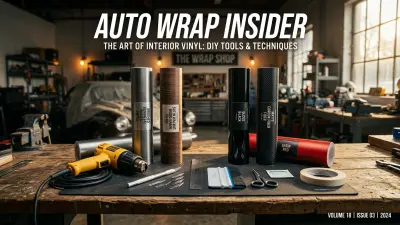
Hey everyone, it’s your seasoned wrap specialist here. If you’re serious about getting a professional-looking vinyl wrap on your car, truck, or motorcycle, whether it’s a full color change, chrome delete, or custom graphic, your success hinges on two fundamental tools: a good heat gun and the right squeegees. These aren’t just accessories; they’re extensions of your hands, making the difference between a frustrating, bubbly mess and a smooth, durable finish.
Table Of Content
- Your Essential Toolkit: Why Quality Heat Guns & Squeegees Matter
- The Heat Gun: Your Vinyl’s Best Friend
- Key Features to Look For
- My Top Heat Gun Recommendations for 2025
- Heat Gun Usage Tips
- The Squeegee: Your Smoothing Maestro
- Key Features to Look For
- My Top Squeegee Recommendations for 2025
- Squeegee Usage Tips
- Final Thoughts from Your Expert Wrapper
After wrapping hundreds of vehicles over 15 years, I can tell you that skimping on these tools is a common beginner mistake. Let’s dive into what makes a great heat gun and squeegee for DIY wrappers and what I recommend for 2025.
The Heat Gun: Your Vinyl’s Best Friend
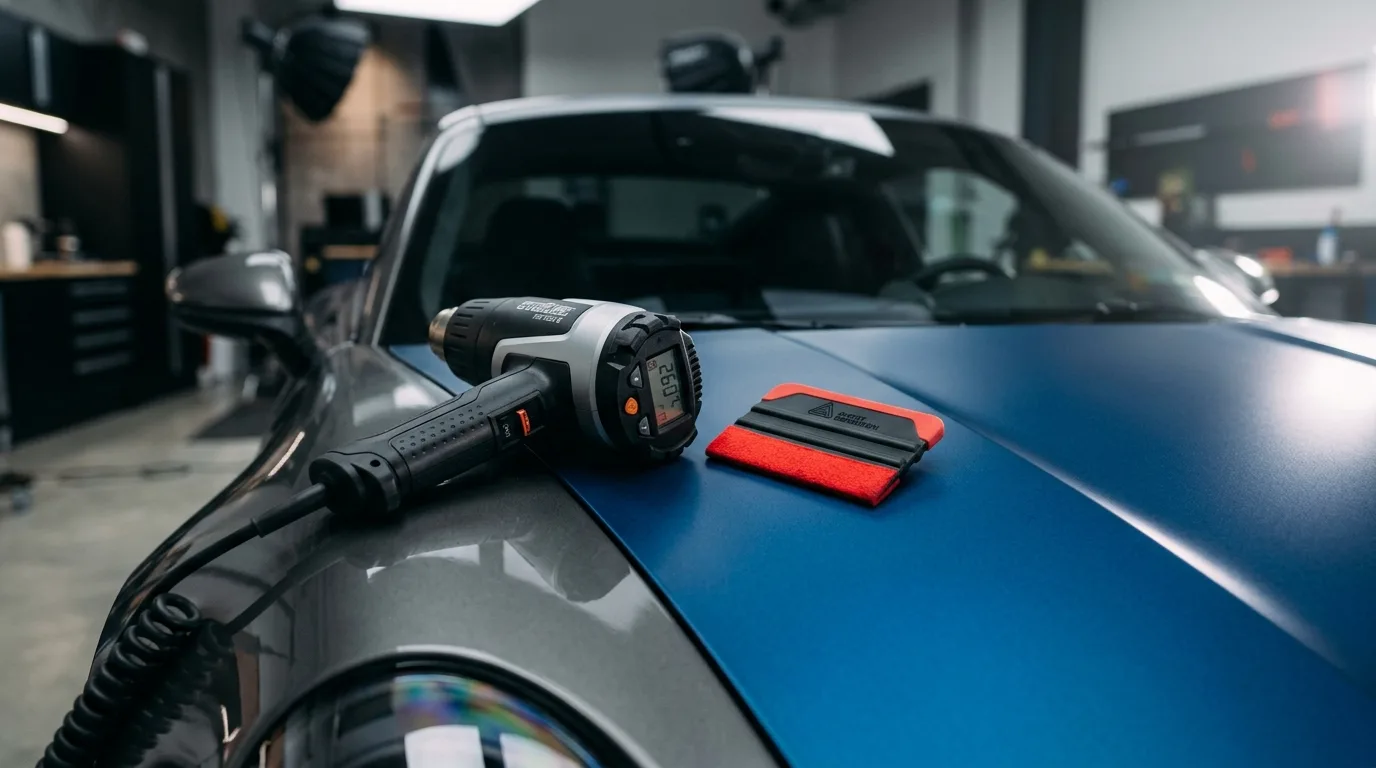
A heat gun is crucial for activating the adhesive on certain films, making vinyl pliable to conform to complex curves, and post-heating to set the film’s memory and prevent lifting. You’re not just blowing hot air; you’re manipulating the film on a molecular level.
Key Features to Look For:
- Variable Temperature Control: This is non-negotiable. You need precise control. Different films and applications require different heat levels. For instance, most premium cast vinyls (the thin, flexible film like 3M 2080 or Avery Supreme Wrapping Film, which conforms beautifully to curves) become pliable around 180°F-220°F (82°C-104°C). Calendered vinyl (thicker, stiffer film for flatter surfaces) might need slightly less or more, depending on its specific blend.
- Variable Airflow Settings: High airflow for large areas, lower for delicate work around edges or details.
- Wattage: Look for 1500W-2000W for consistent power and quicker heat-up times.
- Ergonomics: You’ll be holding this for hours. A comfortable grip and balanced weight are vital.
- Nozzle Attachments: Essential for directing heat precisely.
My Top Heat Gun Recommendations for 2025:
- Steinel HL 1920 E / HL 2020 E: These are industry workhorses. They offer precise digital temperature control, multiple airflow settings, and are incredibly durable. Expect to pay: $100-$150.
- DeWalt D26960K: A robust option with good power and temperature control. Great for heavier use. Expect to pay: $90-$130.
- Milwaukee 8978-20: Another solid choice known for its reliability and consistent performance. Expect to pay: $80-$120.
Heat Gun Usage Tips:
- Keep Moving: Never hold the heat gun in one spot too long to avoid burning the film or damaging the underlying paint.
- Post-Heating: After installing, always post-heat all edges and stretched areas. This reactivates the adhesive and helps the vinyl relax into its final position, preventing common issues like edge lifting. Aim for at least 200°F (93°C) on these areas. Use an infrared thermometer to verify.
The Squeegee: Your Smoothing Maestro
A squeegee isn’t just a piece of plastic; it’s your primary tool for applying consistent pressure, removing air bubbles, and smoothing the film onto the vehicle surface. You’ll need a variety.
Key Features to Look For:
- Material & Hardness (Durometer): Squeegees come in various materials (plastic, rubber, felt-covered) and hardness levels, measured on the Shore D durometer scale.
- Hard (90+ Shore D): Excellent for initial tack on large, flat panels, or for pushing water out during wet applications (like PPF – paint protection Film, which is a 4-5 mil thick clear urethane film).
- Medium (80-90 Shore D): The most versatile. Great for general application on curves and flat surfaces. Often felt-edged to prevent scratches on delicate finishes.
- Soft (70-80 Shore D): Ideal for conforming film into recesses, working with delicate or textured films (like matte or satin finishes), or when you need minimal marring.
&ul>
- Size & Shape: From large squeegees for hoods to tiny bullet squeegees for tight corners and trim tucks, variety is key.
- Edge Quality: Always ensure your squeegee edges are clean and smooth. Even a tiny nick can scratch your vinyl.
My Top Squeegee Recommendations for 2025:
- 3M Gold Squeegee (86 Shore D): The gold standard (pun intended). It’s a medium-hard squeegee that’s incredibly versatile. Always use it with a felt edge cover to protect the film, especially gloss or chrome. Cost: $5-$10 each.
- Avery Dennison Pro-Series Squeegee (Blue/Grey): Similar to the 3M Gold, these are excellent for all-around use. The grey is slightly softer than the blue, offering good flexibility. Also use with felt. Cost: $5-$10 each.
- Monkey Strips (Felt Buffers): These are adhesive felt strips you apply to your squeegees. A must-have for protecting your vinyl from scratches, especially on glossy or delicate films. Cost: $10-$20 for a pack.
- Hard Card / Bullet Squeegee: For those super tight areas, deep recesses, and tucking edges under trim. Cost: $3-$8 each.
- Soft Rubber Squeegee (e.g., 3M Blue, 70-75 Shore D): Excellent for applying PPF without leaving lines or for conforming vinyl into textured surfaces like riveted truck panels (with a 3M rivet brush).
Squeegee Usage Tips:
- Overlap Strokes: Always overlap your squeegee strokes by about 50% to ensure no air is trapped.
- Angle & Pressure: Hold your squeegee at a 45-degree angle, applying firm, consistent pressure. Work from the center of the panel outwards to push air and wrinkles away.
- Keep it Clean: Regularly wipe your squeegee’s edge clean. Dust or debris caught on the edge will scratch the film.
Final Thoughts from Your Expert Wrapper
Investing in quality heat guns and squeegees is like investing in a good set of paint brushes if you’re an artist. They won’t magically make you an expert, but they give you the best chance to succeed and prevent frustrating, expensive mistakes. Remember, practice is key, and having the right tools makes that practice much more effective.
For more in-depth guides on everything from choosing the right film (like 2.5-3 mil cast vinyl vs. 4-5 mil PPF) to detailed installation techniques, keep an eye on Car Wrap Info. Happy wrapping!