



Beyond Bubbles: Expert Fixes for wrap shrinkage, Adhesion Issues, and Edge Lifting
Hey there, fellow wrap enthusiasts! As your trusted source at Car Wrap Info, we’ve all tackled the basic bubbles and creases when applying vinyl. But what happens when your beautiful wrap starts playing hide-and-seek with the paint, shrinking away from edges, or refusing to stick in stubborn areas? That’s when we move “Beyond Bubbles” into advanced troubleshooting. With over 15 years of turning ordinary vehicles into rolling masterpieces, I’m here to share the real-world wisdom to conquer shrinkage, adhesion problems, and edge lifting – the true tests of a pro installer.
Table Of Content
- Beyond Bubbles: Expert Fixes for wrap shrinkage, Adhesion Issues, and Edge Lifting
- Understanding Vinyl Shrinkage: Why It Happens and How to Stop It
- The Culprit: Residual Stress and Film Type
- Prevention is Key: Proper Installation Techniques
- Tackling Adhesion Issues: When Your Wrap Just Won’t Stick
- The Foundation: Surface Preparation is Non-Negotiable
- Beyond Clean: Primer and Adhesion Promoters
- Conquering Edge Lifting: The Battle for a Seamless Finish
- Why Edges Lift
- Advanced Edge Sealing Techniques
- When to Call a Pro: Knowing Your Limits
- Final Thoughts
Understanding Vinyl Shrinkage: Why It Happens and How to Stop It
Shrinkage is a common nemesis, especially for DIYers. It’s when your vinyl wrap pulls back from its original position, often revealing paint around edges or in recesses. It’s usually due to the film’s “memory” trying to return to its flat, unstretched state.
The Culprit: Residual Stress and Film Type
- Calendered Vinyl: This is the more affordable, stiffer film, often 4-5 mil thick, produced by rolling vinyl through heated rollers. It has significant internal stress and a strong “memory,” making it prone to shrinking, especially on curves or after prolonged sun exposure. It’s better suited for flat surfaces or short-term graphics.
- Cast Vinyl: The premium choice, typically 2.5-3.5 mil thick, made by pouring liquid vinyl onto a casting sheet. It’s more stable, conforms beautifully to complex curves without shrinking back as much, and has less internal stress. Brands like 3M 2080/1080 series, Avery Supreme Wrapping Film, and Oracal 970RA are all cast films. If you’re doing a full color change, always opt for cast vinyl.
Even with cast vinyl, stretching the film too much during installation, especially in deep recesses or around complex curves, introduces residual stress. The film will try to revert, causing shrinkage.
Prevention is Key: Proper Installation Techniques
The best fix for shrinkage is prevention. Once the film has significantly shrunk, you often need to re-wrap that section.
- Minimize Stretch: Only stretch the film as much as absolutely necessary. Use relief cuts or bridging techniques on complex curves (like on a 2024 Tesla Model Y’s deep side skirts) to avoid overstretching.
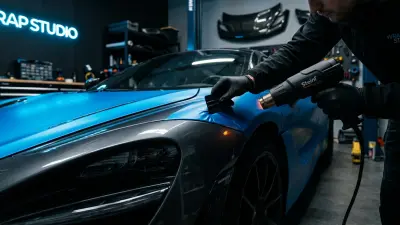
- Post-Heating: This is your superpower against shrinkage. After laying down the film and trimming, systematically heat all areas that have been stretched or are in recesses.
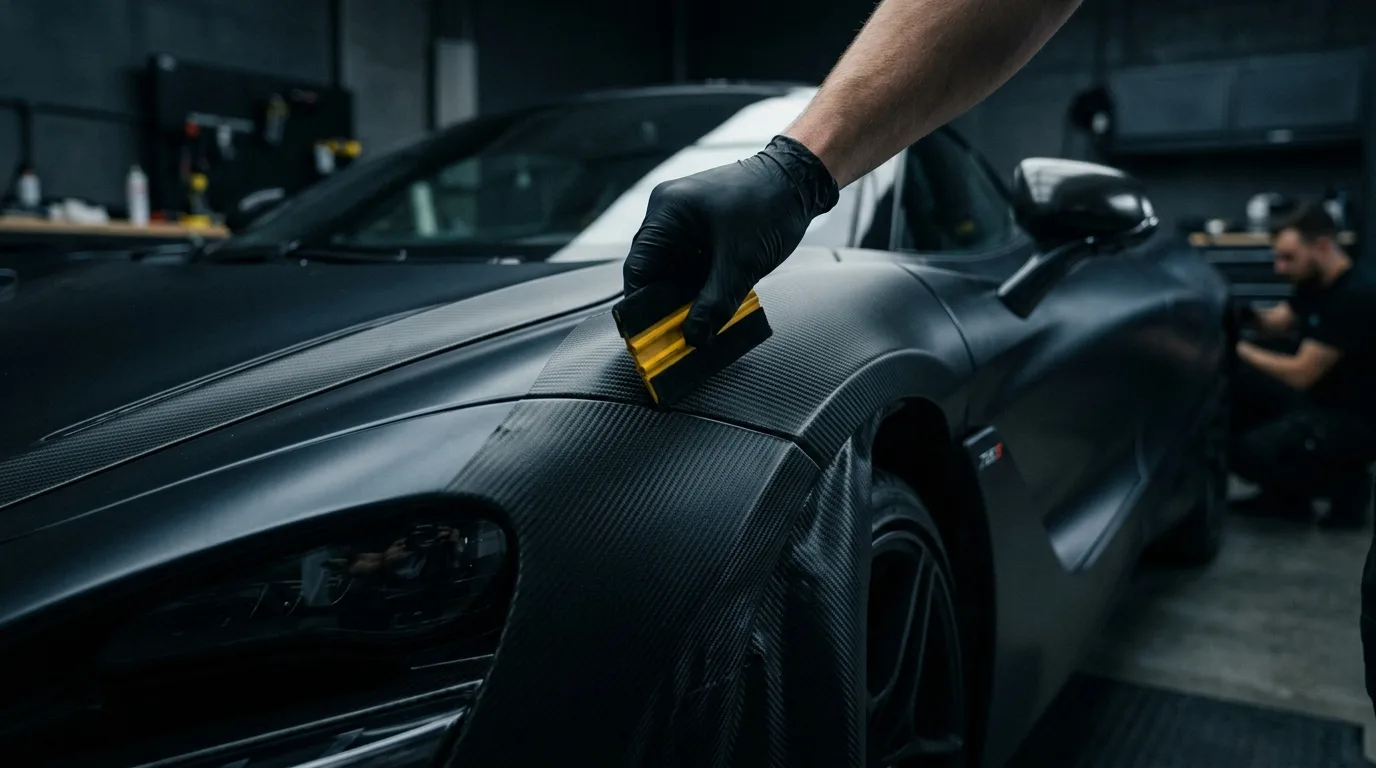
- Technique: Use a heat gun (like a Steinel HL 1920 E) set to 180-220°F (82-104°C). Slowly pass the heat gun over the stretched area, moving consistently. Immediately after heating, firmly press the vinyl into place with a soft, heat-resistant glove or a specialized felt squeegee (e.g., a 3M Blue Squeegee with a felt buffer).
- Why it works: Post-heating relaxes the vinyl’s memory, setting it in its new stretched state. Think of it like annealing a metal – it relieves stress. Pay extra attention to areas like mirror caps, bumper recesses, and around door handles.
Tackling Adhesion Issues: When Your Wrap Just Won’t Stick
A wrap is only as good as its bond to the surface. Poor adhesion leads to lifting, bubbling, and ultimately, failure. This is almost always a surface prep issue.
The Foundation: Surface Preparation is Non-Negotiable
If your film isn’t adhering, go back to basics. The surface must be surgically clean.
- Two-Step Cleaning:
- Wash the vehicle thoroughly, removing all dirt and grime.
- Degrease the entire surface to be wrapped with a 70% isopropyl alcohol (IPA) solution or a dedicated wrap prep spray (e.g., 3M Prep Solvent 70). Wipe immediately with a clean, lint-free microfiber cloth. Repeat this process at least twice, especially in seams and edges.
- Contamination Check: Wax, ceramic coatings, silicone sprays, and polishes are deadly enemies to vinyl adhesion. If the vehicle has a ceramic coating (like on many new Ford F-150s), it absolutely must be removed or the vinyl will not stick properly. Sanding with 2000-grit sandpaper and then a thorough IPA wipe might be necessary for stubborn coatings.
- Paint Condition: Vinyl needs a solid surface. If the clear coat is peeling, or the paint is heavily oxidized, the vinyl will only adhere to the loose paint, leading to premature failure. Repair or re-paint these areas before wrapping.
Beyond Clean: Primer and Adhesion Promoters
For high-stress areas where extra adhesion is crucial, primers are your best friend.
- When to Use: Deep recesses (e.g., around badges, in door jambs), extreme curves, exposed edges prone to abrasion, or areas with low surface energy plastic (e.g., some bumper trims).
- Products: 3M Primer 94 is an industry standard. Avery Dennison Surface Cleaner & Primer is another excellent option.
- Application: Apply a very thin, even coat of primer with a foam applicator or lint-free cloth. Allow it to “flash off” (dry completely, usually 5-10 minutes) before applying vinyl. Too much primer can cause issues like bubbling or make future removal more difficult.
Temperature Matters: Ensure the ambient temperature and the vehicle’s surface temperature are between 65-75°F (18-24°C) during installation. Cold surfaces significantly reduce initial tack, leading to poor adhesion.
Conquering Edge Lifting: The Battle for a Seamless Finish
Lifting edges are unsightly and can lead to the wrap peeling further. This is often a combination of poor prep, improper post-heating, and stress management.
Why Edges Lift
- Insufficient Post-Heating: The number one culprit. Edges are often stretched, and without proper post-heating, the film’s memory pulls it back.
- Contaminated Edges: Even a tiny fingerprint, dust, or wax residue on the very edge of the panel can prevent the vinyl from adhering.
- Overstretching Near Edges: If you pull too hard near an edge, the film is under extreme tension, making it highly susceptible to lifting.
- Incorrect Trimming: Ragged cuts or trimming too close to the edge of a panel can weaken the film and create a point of failure.
Advanced Edge Sealing Techniques
- Proper Tuck and Trim: Always use a fresh, sharp blade (e.g., Olfa or NT Cutter 30-degree snap-off blades) for clean cuts. When possible, trim the film 1/8″ to 1/4″ into seams, gaps, or under body panels to hide the edge and provide a secure anchor point. For instance, wrapping a Ford F-150 crew cab often requires tucking into fender flares and door jambs.
- Post-Heat, Post-Heat, Post-Heat (Again!): This cannot be stressed enough for edges. After trimming, heat the edges to 180-220°F (82-104°C) and firmly press them down with a soft, gloved hand. Hold pressure for a few seconds to ensure maximum adhesion and memory relaxation.
- Edge Sealer Tapes/Liquids: For extreme environments (e.g., off-road vehicles, marine applications) or high-wear areas, consider an edge sealer.
- Products: 3M Edge Sealer 3950 (liquid or tape), or a liquid laminate.
- Application: Apply *after* all post-heating is complete and the wrap has fully cured for at least 24 hours. Follow product instructions carefully. These create a barrier against moisture and physical abrasion, “locking” the edge down.
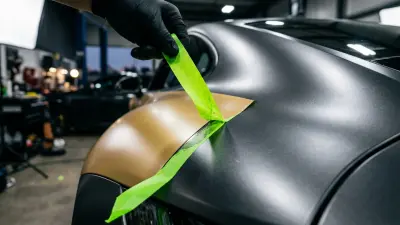
- Knifeless Tape: For creating precise, non-stressed cuts without using a blade on the paint. This technique helps maintain the integrity of the vinyl along cut lines, reducing stress that can lead to lifting. Use it for intricate designs or separating panels.
When to Call a Pro: Knowing Your Limits
While DIY wrapping can be rewarding, some issues are best left to the experts. If you’re consistently battling shrinkage, major adhesion failures, or widespread edge lifting across multiple panels, it might be time to consult a professional wrap shop. We have specialized tools (infrared thermometers for precise post-heating, professional surface energy testers, and specific primers) and years of experience that can save you significant time, frustration, and money in the long run. Sometimes, redoing a problematic section by a pro might cost $150-$500, which is far less than replacing an entire panel’s worth of expensive film (e.g., 1-2 linear meters of 60-inch wide Avery Supreme Wrapping Film can be $80-$160).
Final Thoughts
Conquering shrinkage, adhesion issues, and edge lifting comes down to a few core principles: meticulous surface preparation, intelligent stretch management, and diligent post-heating. Embrace these advanced techniques, and you’ll not only solve your wrap woes but also elevate your wrapping skills. Keep practicing, stay patient, and your vehicle wraps will look sharp and last for years – aiming for that 5-7+ year lifespan is totally achievable!