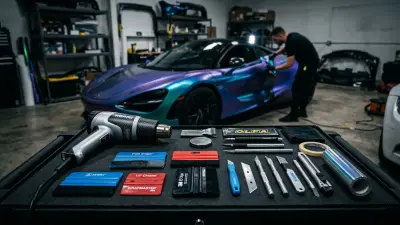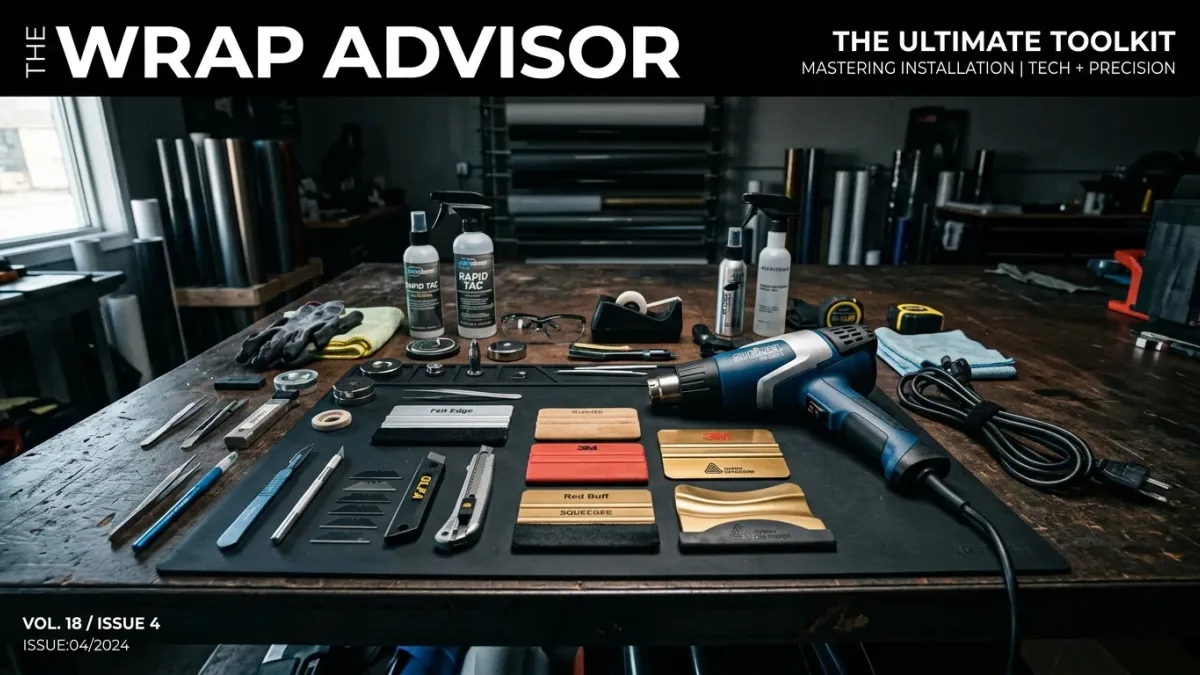
You’ve tackled your first few wraps. You understand how vinyl stretches, how heat helps it conform, and you’re getting more confident with your squeegee and knife. That’s fantastic progress! But if you're serious about elevating your work from "good for a DIY" to " indistinguishable from a pro shop" – the kind that lasts for years and truly protects the paint underneath – then it’s time to look beyond the starter kit. These aren't just shiny new gadgets; they're strategic investments that will dramatically improve your efficiency, prevent costly errors, and unlock a level of finish and durability that’s simply out of reach with basic tools. As someone who’s spent over 15 years in this trade, wrapping everything from compact hatchbacks to entire commercial truck fleets, I can tell you firsthand that these advanced tools are the true secret to consistent, high-quality results.
Precision Cutting & Edge Finishing: Beyond the Blade
While a fresh, sharp blade is undeniably fundamental to vehicle wrapping, relying solely on it for every cut, especially around sensitive areas, can be a recipe for disaster. The fear of scoring a client's pristine paint job, or even your own, is a constant shadow for many installers. Professional wrappers understand that truly clean, damage-free edges come from tools designed with both precision and protection in mind.
The Knifeless Tape Revolution
This is arguably the single biggest game-changer to emerge in the wrapping industry over the past decade. knifeless tape is a revolutionary product that allows you to cut vinyl film without ever bringing a blade near the vehicle's paint. It completely eliminates the risk of accidental scratches or cuts, which is invaluable on any car, but especially on custom paint jobs or rare classics.
How does it work? knifeless tape consists of a fine, high-strength filament embedded within a flexible, adhesive tape. You lay the tape down on the vehicle surface along your desired cut line, apply the vinyl film directly over it, and then simply pull the filament up through the vinyl. This action creates an incredibly clean, precise cut line in the film without ever touching the vehicle’s surface. It’s brilliant for intricate designs, creating perfect panel gaps, designing custom graphics, and achieving seamless overlaps.
You’ll find different variations of Knifeless tape tailored for specific tasks. 3M Knifeless Tape is the industry standard and my personal go-to, though brands like Hexis also offer excellent alternatives. For example, Design Line is fantastic for intricate curves and complex shapes, while Finish Line is ideal for long, straight cuts and creating perfect seams. Perf Line is specifically designed for cutting perforated window films. Imagine you're wrapping a meticulously restored classic car with an irreplaceable custom paint job. The thought of running a blade across that finish is terrifying, right? Knifeless tape completely eliminates that risk, giving you invaluable peace of mind and delivering a flawless, damage-free result every single time. It also significantly speeds up the process on complex cuts around door handles, mirrors, and body lines.
Specialized Blades and Safety Knives
Even with Knifeless tape, you'll still need traditional knives for certain tasks, such as trimming excess material or working in areas where tape isn't practical. However, not all knives are created equal. Professional installers don't just use any utility knife; they opt for precision tools with specific blade geometries and safety features.
My recommendation for trimming is an Olfa knife with 30-degree snap-off blades. The steeper angle of these blades allows for incredibly fine, precise cuts, which is crucial when trimming film around edges, in tight recesses, or through multiple layers. The snap-off feature ensures you always have a fresh, razor-sharp edge, which is paramount for clean cuts and preventing snags or tears in the vinyl. A dull blade is your enemy – it creates ragged edges and can compromise the integrity of the wrap. For example, when creating a chrome delete around window trim, the precision of a 30-degree blade is unmatched.
Another invaluable tool is a Snitty safety knife or a similar specialized tool designed for cutting the film's backing paper without scoring the vinyl itself. This might seem like a minor detail, but a tiny score in the vinyl can easily lead to a tear during application, especially when stretching the film, ruining an entire panel. Picture this: you're halfway through applying a large hood section of Avery Supreme Wrapping Film, and a small, unnoticed score from cutting the liner turns into a rip under tension. That's hours wasted and hundreds of dollars in material down the drain. A Snitty prevents this headache, allowing you to separate the liner cleanly and safely.

Mastering Heat & Adhesion: The Science of a Lasting Wrap
Heat is your best friend and your most dangerous foe in the world of vehicle wrapping. Too little heat, and the film won't conform properly; too much, and you'll burn through it, overstretch it, or damage its adhesive, leading to premature failure. Advanced tools provide the scientific precision needed to control this critical element.
Professional-Grade Heat Guns
If you're still using a hair dryer or a basic construction heat gun, it’s time for an upgrade. A professional-grade heat gun is an absolute must for consistent, high-quality results. These units offer features specifically designed for vinyl application, making your work faster, safer, and more precise.
They provide variable temperature settings, which are crucial for different films and applications. For instance, you might need a gentle 200-220°F (approx. 93-104°C) for subtle stretching and conforming premium cast vinyl (the high-quality, heat-activated film that conforms to complex curves without shrinking back, like 3M 2080 or Oracal 970RA). For the vital post-heating process, you’ll need a higher and more stable temperature, typically 250-300°F (approx. 121-149°C), to properly set the film's memory. These professional units also come with a range of interchangeable nozzles – wide nozzles for evenly heating larger areas like a hood or roof, and reducing nozzles for focused heat on tight corners, deep recesses, or intricate details. Most importantly, a professional unit maintains a consistent output temperature, preventing those erratic hot spots or sudden drops that can compromise the film's integrity and lead to bubbles or lifting.
The Indispensable IR Thermometer
This little device is a total game-changer for wrap longevity and often overlooked by beginners. An infrared (IR) thermometer allows you to accurately measure the surface temperature of the vinyl during and, most importantly, after application. Why is this so vital? It all comes down to post-heating.
Post-heating is the critical process of heating the film to a specific, manufacturer-recommended temperature after it's been laid down and trimmed. This step literally releases the film's "memory," ensuring it doesn't try to shrink back to its original flat state, especially in stretched or recessed areas like bumper curves, door handles, or deep body lines. Without an IR thermometer, you're essentially guessing the temperature, and guesswork leads to premature lifting, bubbling, and the dreaded "fingers" around edges months down the road. For example, if you're using a 3M 2080 series film, you'll want to post-heat all stretched areas to a minimum of 250°F (121°C). Avery Dennison Supreme Wrapping Film often suggests similar ranges. Consistent, accurate post-heating is the single most effective way to ensure a wrap lasts its full 5-7+ year lifespan without issues.
Primer and Edge Sealers: The Unseen Reinforcers
Sometimes, even the best adhesive needs a little help. For high-stress areas or specific materials, adhesion promoters and edge sealers are your insurance policy against premature failure. These often-invisible aids play a crucial role in extending the life of your wrap.
Adhesion promoters, such as 3M Primer 94 or Avery Dennison Primer, are liquids that enhance the bond between the vinyl and the substrate. Think of them as a super-glue for tricky spots. They’re indispensable for deep recesses, extreme compound curves (like on a heavily curved bumper), sharp edges, areas with minor surface imperfections, or around rivets on commercial vehicles. Applying a thin, even layer to these critical points before laying the film dramatically boosts the film's initial tack and long-term grip. This prevents the film from lifting in areas where it's under constant tension or exposed to harsh elements. I've found Primer 94 particularly useful when wrapping the complex mirrors of a 2024 Tesla Model Y or the intricate grille of a Ford F-150, where the film is stretched and stressed.
Edge sealers, like 3M Edge Sealer or specialized liquid laminates, provide an additional layer of protection. Applied carefully along the trimmed edges of the wrap, they create a physical barrier against moisture, dirt, and environmental contaminants that could otherwise creep under the film and compromise the adhesive. They are especially beneficial for vehicles exposed to harsh climates, off-road conditions, or frequently washed with high-pressure sprayers. Using an edge sealer on the lower sills or around wheel arches can easily add a year or two to your wrap's lifespan, preventing unsightly peeling and keeping the wrap looking sharp.
Specialized Application & Detail Tools: Flawless Finish
Even with perfect heat and cuts, the actual act of laying down and finishing the film requires a refined approach. Going beyond a single, generic squeegee means you can tackle any surface, any curve, and any detail with confidence and precision.
Advanced Squeegees and Application Felts
Your basic plastic squeegee is a good starting point, but it's like trying to do carpentry with only a hammer. Professional wrappers carry an arsenal of squeegees, each designed for a specific purpose. You'll find squeegees of different hardness levels (durometers) – from soft, flexible ones for delicate films and complex curves to harder, stiffer ones for applying firm pressure on large, flat panels and pushing out air efficiently. Brands like 3M, Avery Dennison, and Yellotools offer excellent varieties.
Furthermore, specialized application felts and buffers are non-negotiable. While some squeegees come with integrated felt, attaching high-quality microfiber felts or "Monkey Strips" to your squeegee is crucial for preventing scratches, especially on sensitive finishes like gloss black, satin, or chrome vinyls. These felts allow you to apply firm pressure without marring the film. You’ll also find specialty squeegees like those with curved edges for working into tight body lines, or flexible, narrow squeegees for reaching into deep crevices, like around door jambs or behind emblems. A full color change wrap on a car like a Porsche 911 demands a variety of squeegees to perfectly conform the film to its intricate curves and body lines without damaging the surface.
Rivet Brushes & Application Rollers
For certain types of vehicles, especially commercial fleets or older trucks, specific tools become absolutely indispensable. Rivet brushes and application rollers fall into this category, making challenging applications far more manageable and ensuring robust adhesion.
If you're wrapping a commercial fleet van – say, a Mercedes-Benz Sprinter or a Ford Transit Connect with dozens of rivets – the 3M Rivet Brush is an absolute non-negotiable. This tool is specifically designed to properly work the vinyl film into and around each rivet head, allowing the air to escape and ensuring full adhesion without tearing the film or creating unsightly air pockets around the fastener. Trying to do this with just a squeegee is an exercise in futility and will inevitably lead to lifting around the rivets. Similarly, small application rollers (often made of rubber or firm felt) are invaluable for deep channels, corrugated panels, or applying focused pressure in areas where a squeegee simply can't reach effectively. They ensure the film is firmly pressed into every groove and recess, eliminating trapped air and maximizing the bond, essential for the longevity of fleet graphics.
Air Release Tools & Removal Wheels
Even the most experienced installer can encounter a stubborn air bubble or face the daunting task of removing old, baked-on vinyl. Having the right tools for these situations can save hours of frustration and prevent damage.
For those tiny, persistent air bubbles that just won't squeegee out, a fine-tipped air release pen (like 3M’s specialized tool) is your surgical instrument. It allows you to precisely puncture the vinyl with minimal impact, letting the trapped air escape without leaving a visible mark. Used correctly, it can save a panel that would otherwise need to be removed and re-applied due to a single, stubborn bubble. On the other end of the spectrum, when it’s time to remove an old wrap, a specialized vinyl removal wheel (such as the Astro Pneumatic 400E Smart Eraser Pad) is a lifesaver. Removing aged, brittle vinyl and its adhesive residue can be incredibly labor-intensive and risky to the paint underneath if done improperly. These rubber wheels attach to a drill and safely abrade away old film and adhesive without damaging the vehicle's paint. This tool can cut hours off a removal job, especially on large surfaces like a full vehicle graphic removal from a delivery truck.
Investing in Your Craft: Costs, Longevity, and Smart Choices
The initial investment in advanced tools might seem significant, but when you consider the time saved, the reduction in wasted material, and the dramatic improvement in wrap longevity, they quickly pay for themselves. This isn't just about spending money; it's about smart investment in your skills and the quality of your work.
Tool Investment vs. DIY vs. Pro Shop
Let's put the cost into perspective. While a basic DIY setup might get you through a small project, truly professional results require a more robust toolkit. Here’s a general breakdown of estimated costs for different levels of tooling:
| Tool Category | Basic DIY Cost (Estimate 2025-2026) | Advanced DIY Cost (Estimate 2025-2026) | Pro Shop Investment (for perspective) |
|---|---|---|---|
| Cutting | $10-$30 (utility knife, basic blades) | $100-$250 (Knifeless Tape kit, Olfa knives, Snitty) | $500+ (bulk Knifeless, specialty blades, plotters) |
| Heat/Adhesion | $30-$70 (basic construction heat gun) | $200-$400 (pro heat gun, IR thermometer, primers/sealers) | $800+ (industrial heat guns, precise thermometers, bulk primers) |
| Application | $10-$20 (plastic squeegees) | $80-$200 (variety of squeegees, felts, rivet brush, rollers) | $400+ (specialized squeegees, pneumatic tools, large rollers) |
| Removal | $0 (fingernails, credit card) | $50-$150 (removal wheel, adhesive removers) | $300+ (industrial steam, specialized chemicals) |
| Total Estimated Range | $50-$120 | $430-$1000 | $2000+ (excluding large machinery) |
Investing $500-$1000 in advanced tools might seem like a lot for a DIY enthusiast, but consider the alternative. A full color change wrap on a new 2024 Tesla Model Y typically costs $4,200-$5,800 professionally, depending on the finish (matte vs. gloss) and complexity. If you attempt a DIY wrap with basic tools, you might save on labor, but you risk a subpar finish that lifts prematurely, lasting only 2-3 years. With the right advanced tools, your DIY job can rival a professional installation in terms of durability and finish, potentially extending the wrap's life to 5-7+ years, saving you