



Mastering Knifeless Tape for Flawless Car Wrap Cuts
Hey there, fellow wrap enthusiasts! If you’ve ever tackled a car wrap, you know the struggle of getting those perfectly straight, clean cut lines without risking damage to the vehicle’s paint. Traditional knives, no matter how sharp or careful you are, always carry that risk. That’s where knifeless tape comes in – it’s an absolute game-changer, allowing you to create intricate designs and seamless edges directly on the vehicle, completely eliminating the need for a blade on painted surfaces. As someone who’s wrapped hundreds of cars over 15 years, I can tell you, mastering this tool is a skill that elevates your work from good to truly professional.
Table Of Content
- Mastering Knifeless Tape for Flawless Car Wrap Cuts
- What is Knifeless Tape and Why Do You Need It?
- Choosing the Right Knifeless Tape for Your Project
- Prepping for Knifeless Application: The Foundation of Success
- Step-by-Step Knifeless Tape Application & Cutting Techniques
- 1. Laying the Tape Smoothly
- 2. Applying the Vinyl Over the Tape
- 3. The Filament Pull: The Moment of Truth
- 4. Post-Cut Finishing
- Advanced Tips & Troubleshooting
- Elevate Your Wrap Game with Knifeless Tape
What is Knifeless Tape and Why Do You Need It?
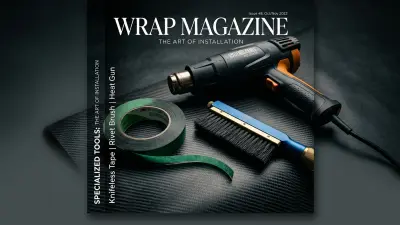
At its core, knifeless tape is a specialized adhesive tape with a visible, high-strength filament (or “thread”) embedded along its length. You lay the tape down on the vehicle surface, apply your vinyl wrap over it, and then simply pull the filament through the vinyl. This action creates a clean, precise cut without ever touching the paint with a blade.
Here’s why it’s indispensable:
- Zero Paint Damage: The biggest benefit. No more accidental scratches, even on delicate clear coats.
- Precision: Achieve incredibly sharp, consistent lines and intricate shapes that are difficult or impossible with a freehand knife.
- Efficiency: Faster than masking and cutting, especially for complex designs.
- Safety: Reduces the risk of injury from sharp blades.
- Professional Finish: The clean, hidden cuts result in a factory-like finish, especially for color changes and custom graphics.
Choosing the Right Knifeless Tape for Your Project
Not all knifeless tapes are created equal. Different types are designed for specific applications. The most popular and reliable brand is 3M, with a few key lines:
- 3M Design Line: This is your workhorse. It’s flexible and versatile, perfect for most general cutting, gentle curves, and creating complex designs. If you’re buying one type, start here.
- 3M Finish Line: Thinner and more rigid than Design Line, it’s ideal for very straight lines and tight, sharp corners. It produces an incredibly fine cut.
- 3M Bridge Line: Designed for bridging gaps between panels or creating overlaps. It has a wider adhesive strip and a stronger filament, making it easier to pull through thicker vinyl or multiple layers.
- 3M Perf Line: Specifically made for cutting perforated window film (like one-way vision graphics) or lighter films where you need to tear away the excess.
- 3M TriLine: As the name suggests, it allows you to create three parallel cut lines at once, perfect for accent stripes or specific design elements.
For most full color change wraps and custom graphics, I primarily use 3M Design Line and Finish Line. Keep a roll of each in your toolkit!
Prepping for Knifeless Application: The Foundation of Success
Just like with any vinyl application, preparation is paramount. A clean surface ensures proper adhesion of both the knifeless tape and the vinyl.
- Clean the Surface: Thoroughly wash the vehicle. Then, degrease the area where the tape will be applied using a 70% isopropyl alcohol solution. Any dirt, wax, or contaminants will compromise the tape’s adhesion, leading to filament breaks or poor cut lines.
- Plan Your Design: Before you even unroll the tape, visualize your cut lines. Measure, mark (with a low-tack painter’s tape or dry erase marker if needed), and mentally trace where the tape needs to go. This planning prevents wasted tape and ensures symmetry.
Step-by-Step Knifeless Tape Application & Cutting Techniques
Here’s how to apply knifeless tape and achieve those perfect cuts:
1. Laying the Tape Smoothly
- Start with an Anchor: Begin by firmly pressing down about 4-6 inches of tape to create a good anchor point.
- Follow Your Line: Slowly unroll the tape, pressing it down with light, even pressure. Don’t stretch the tape itself, as this can cause jagged cuts when the filament is pulled. Aim for smooth, consistent curves.
- Handling Corners: For sharp 90-degree corners, you can gently bend the tape around, creating a slight curve. For extremely tight angles or intricate designs, you might need to overlap two pieces of tape by about 1-2 inches. Ensure the filament from the top piece is pulled first.
- Ensure Overlap: Always leave at least 3-4 inches of excess tape (including the filament end) at the end of your run. This ensures you have enough to grip when it’s time to pull the filament.
2. Applying the Vinyl Over the Tape
- Install as Usual: Apply your vinyl wrap directly over the knifeless tape, just as you would for any other area.
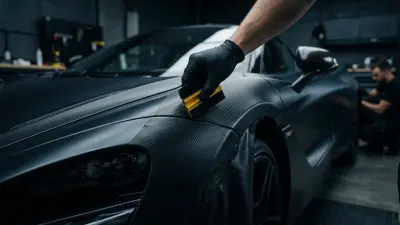
- Squeegee Firmly: Crucially, once the vinyl is laid, squeegee firmly over the entire path of the knifeless tape. This ensures excellent adhesion of the vinyl to the tape and helps define the cut line, making for a cleaner pull.
- Look for the Filament: You should be able to faintly see the outline of the filament under the vinyl. This confirms good contact.
3. The Filament Pull: The Moment of Truth
This is where precision matters most:
- Locate the Filament End: Find the exposed end of the filament from your overlap.
- Prepare Your Pull: Gently lift a small section of vinyl just enough to grasp the filament. Be careful not to lift the vinyl too much from the car surface.
- Pull at a Low Angle: Hold the filament and pull it at a low angle (ideally 15-45 degrees) *away* from the cut line, not straight up. Pulling at too high an angle can cause the filament to break or create a ragged edge.
- Smooth, Steady Motion: Apply consistent, steady tension. Don’t yank. Use your free hand to gently hold down the vinyl on either side of the cut line as the filament pulls through. This prevents the vinyl from lifting prematurely.
- If the Filament Breaks: Don’t panic! Find the broken end, gently lift the vinyl where it stopped, re-squeegee firmly, and restart your pull from that point. Sometimes, a quick hit with a heat gun can soften the vinyl slightly to help the filament through if it’s stuck.
4. Post-Cut Finishing
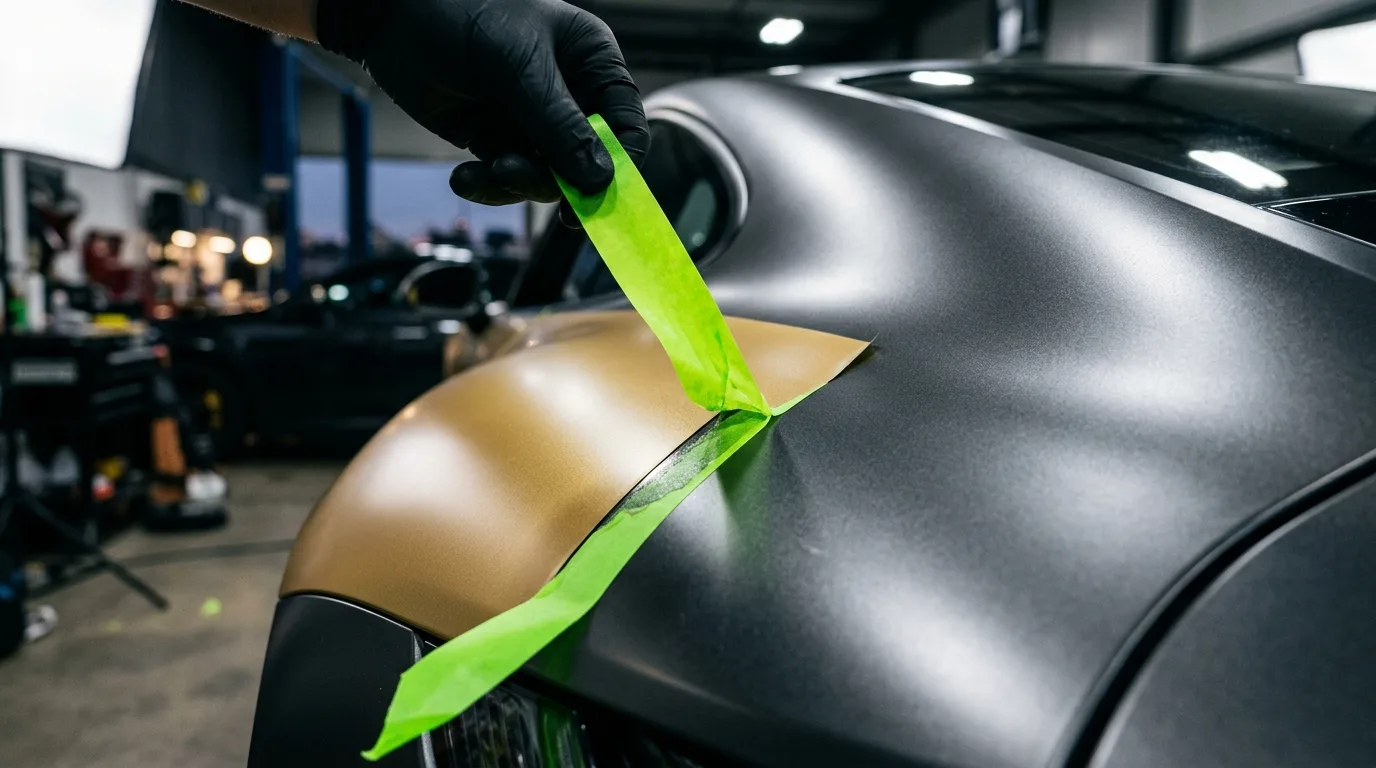
- Remove Excess: Once the cut is complete, carefully peel away the excess vinyl. Then, remove the knifeless tape and the filament from under the remaining vinyl.
- Post-Heat & Edge Seal: This step is critical for longevity. Using a heat gun, post-heat all cut edges to 200-220°F (93-104°C). This helps the vinyl “set” and prevents lifting. For critical edges, especially on compound curves, consider using an edge sealer pen for added security.
Advanced Tips & Troubleshooting
- Layering: For intricate, multi-line designs, you can layer knifeless tapes. Just remember to pull the top layer’s filament first.
- Compound Curves: On challenging contours, apply the knifeless tape with minimal tension, letting it conform naturally. Post-heating after the cut is even more important here.
- Practice Makes Perfect: Start on scrap pieces of vinyl or inconspicuous areas of the vehicle. The more you practice, the more confident you’ll become.
- Avoid Contamination: Always ensure the surface is impeccably clean before laying the tape. A speck of dust can cause the filament to snag or break.
Elevate Your Wrap Game with Knifeless Tape
Knifeless tape isn’t just a convenience; it’s a tool that allows you to achieve a level of professionalism and design freedom that’s hard to match with traditional methods. Whether you’re a DIY hobbyist or looking to step up your game, integrating these knifeless tape techniques into your wrapping process will undoubtedly lead to cleaner lines, happier customers, and a more enjoyable wrapping experience. Car Wrap Info is dedicated to helping you succeed, and mastering tools like this is a huge step in that direction. Happy wrapping!