


Ready to Dive into DIY Car Wrapping? Start Small, Wrap Smart!
Hey there, fellow car enthusiasts and aspiring wrappers! If you’re anything like me when I first started, the idea of transforming your car with a vinyl wrap is incredibly exciting, but the thought of tackling a whole vehicle can feel pretty daunting. You’ve probably seen those stunning full wraps and wondered, “Can I really do that?” The answer is absolutely, but just like learning any new skill, it’s best to start with the basics.
Table Of Content
- Ready to Dive into DIY Car Wrapping? Start Small, Wrap Smart!
- Why Start with Small, Simple Panels?
- Your Go-To Panels for a First DIY Wrap Project
- Choosing the Right Film for Beginners
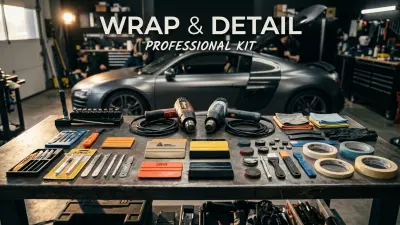
- Your Essential Beginner’s Tool Kit
- Basic Installation Tips for Small Panels
- Common Beginner Mistakes to Avoid
- Time and Cost for Your First Project
- Get Wrapping!
As your trusted guide from Car Wrap Info, with over 15 years of hands-on experience, I’m here to tell you that your first DIY car wrap project doesn’t have to be a full-blown challenge. In fact, starting with simpler panels is the smartest way to build your skills, confidence, and avoid costly mistakes. Let’s break down the best beginner-friendly panels and get you equipped for success.
Why Start with Small, Simple Panels?
Think of it like learning to cook: you don’t start with a soufflé; you start with scrambled eggs. Small panels offer a controlled environment to learn crucial techniques without the pressure of ruining a huge sheet of expensive film. You’ll master:
- Proper surface preparation.
- Applying consistent squeegee pressure.
- Controlling heat gun temperatures.
- Trimming with precision.
- Post-heating for longevity.
All these skills are directly transferable to larger, more complex projects down the road.
Your Go-To Panels for a First DIY Wrap Project
I’ve seen hundreds of beginners get great results on these pieces. Here are my top recommendations:
- Side Mirrors: These are fantastic! They’re small, often have simple curves, and are usually easy to remove from the vehicle, allowing you to work on a workbench. They teach you how to deal with slight contours and trim around edges.
- Door Handles: Similar to mirrors, door handles are small and often removable. They introduce you to working with cutouts and precise trimming. If you’re doing a chrome delete, these are perfect for practicing.
- Interior Trim Pieces: Dashboard accents, door panel inserts, or center console trim. The beauty here is you’re working in a clean, temperature-controlled environment, often with flat or gently curved surfaces. Plus, if you mess up, it’s not on the exterior of your car!
- Chrome Deletes (Window Trim, Grille Accents): These are excellent for practicing straight lines and precision cutting. Many kits are available, or you can use Knifeless tape (a filament-based tape that creates a clean cut line without a blade touching the paint) for perfectly straight edges. This builds confidence in your trimming skills.
- Fuel Door: Often a relatively flat, isolated panel. It’s a great spot to practice surface prep and applying a single piece of film without major stretching.
Choosing the Right Film for Beginners
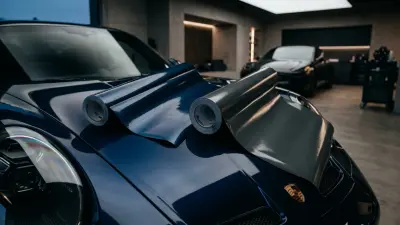
For your first project, you want a forgiving film. This means cast vinyl.
- Cast Vinyl: This is the premium, heat-activated film that conforms beautifully to complex curves without shrinking back. It’s typically 2.5–3 mil thick, highly durable, and designed for automotive applications. It’s more pliable, easier to reposition, and holds its shape better than calendered vinyl (a more affordable, stiffer film better suited for flat surfaces like fleet graphics).
Popular brands like 3M 2080 Series, Avery Dennison Supreme Wrapping Film, and Oracal 970RA are all excellent choices. You can buy small sheets or linear meters (e.g., 5 feet by 1 foot) of these films online or from local distributors for around $10-$30, perfect for practicing on mirrors or trim.
Your Essential Beginner’s Tool Kit
Don’t skimp on tools! Good tools make a huge difference.
- Heat Gun: Essential for stretching, conforming, and post-heating. A basic one with high/low settings is fine, but one with temperature control (e.g., 300-500°F / 150-260°C for activation/post-heating) is ideal.
- Squeegee: A medium-hard plastic squeegee with a felt edge (like a 3M Gold Squeegee with a felt buffer) is a must. The felt protects the film from scratches.
- Snitty/Utility Knife: Always use a fresh, sharp blade! Dull blades tear film and can scratch paint. An Olfa Graphic Art Knife is precise.
- Surface Cleaner: 70% Isopropyl Alcohol (IPA) and clean microfiber cloths are critical for removing contaminants.
- Magnets: (Optional but highly recommended) Vinyl application magnets hold the film in place, freeing up your hands.
- Knifeless Tape: (For chrome deletes) 3M Knifeless Finish Line Tape is excellent for clean cuts.
Expect to spend around $50-$100 for a decent starter tool kit.
Basic Installation Tips for Small Panels
- Clean, Clean, Clean! This is 90% of a successful wrap. Wash the panel, then use IPA to thoroughly degrease and remove any wax, polish, or residue. Contamination leads to bubbles and lifting!
- Dry Application: For cast vinyl, always apply dry. Wet application is generally not recommended for color change films.
- Anchor, Heat, Squeegee: Tack down a small section (your anchor point), gently heat the film to make it pliable, and then squeegee with firm, overlapping strokes from the center outwards. Don’t overstretch the film.
- Trim with Care:
Trim excess film about 1/4 inch past the edge, then tuck or cut precisely. Use a fresh blade and a light touch to avoid cutting paint.
Common Beginner Mistakes to Avoid
- Insufficient Cleaning: Dust, grease, or wax will cause bubbles and adhesive failure.
- Too Much Heat/Not Enough Heat: Excessive heat can damage the film; too little won’t activate the adhesive or make the film conform.
- Overstretching: This thins the film, compromises its durability, and almost guarantees shrinkage and lifting later.
- Dull Blades: Leads to ragged cuts and frustration. Change your blades often!
- Skipping Post-Heating: The most common reason for edges lifting on DIY wraps.
Time and Cost for Your First Project
For a pair of side mirrors or a few interior trim pieces, you’re looking at:
- Film Cost: ~$20-$50 for small rolls or sheets (e.g., 2-3 linear feet of 60-inch film).
- Tool Kit: ~$50-$100 for basic, quality tools.
- Time: 1-3 hours per panel, depending on complexity and how much you learn as you go. Patience is key!
Get Wrapping!
Starting with small, simple panels is the ideal gateway into the world of DIY car wrapping. You’ll gain invaluable experience, develop a feel for the material, and build the confidence needed to tackle bigger projects. So grab some film, get your tools ready, and make your first wrap a success! Happy wrapping, and remember, practice makes perfect.