


Unlock Professional Results: Your Essential Car Wrap Tool Kit
Alright, fellow enthusiasts and budding DIY wrappers! You’ve got the vision, you’ve picked your killer vinyl—maybe it’s a sleek 3M 2080 Satin Black or a vibrant Avery Supreme Wrapping Film Gloss Blue Metallic. But before you even think about laying that first piece of film, let me tell you something crucial: your tools are just as important as your technique.
Table Of Content
- Unlock Professional Results: Your Essential Car Wrap Tool Kit
- 1. The Mighty Squeegee: Your Primary Application Tool
- 2. The Heat Gun: Your Vinyl’s Best Friend
- 3. Precision Cutting Tools: Sharpness is Key
- 4. Surface Preparation Essentials: The Foundation of Adhesion
- 5. Application Aids & Detailing Tools
- 6. Measuring & Marking
- Investment & Longevity: What to Expect
As someone who’s spent over 15 years in the trenches, wrapping everything from compact cars to massive RVs, I’ve seen firsthand how the right gear can elevate a good wrap to a great one. And conversely, how cutting corners on tools leads to frustration, wasted film, and a less-than-stellar finish. This isn’t just about having any tool; it’s about having the right tools. Let’s build your expert-approved car wrap tool kit together!
1. The Mighty Squeegee: Your Primary Application Tool
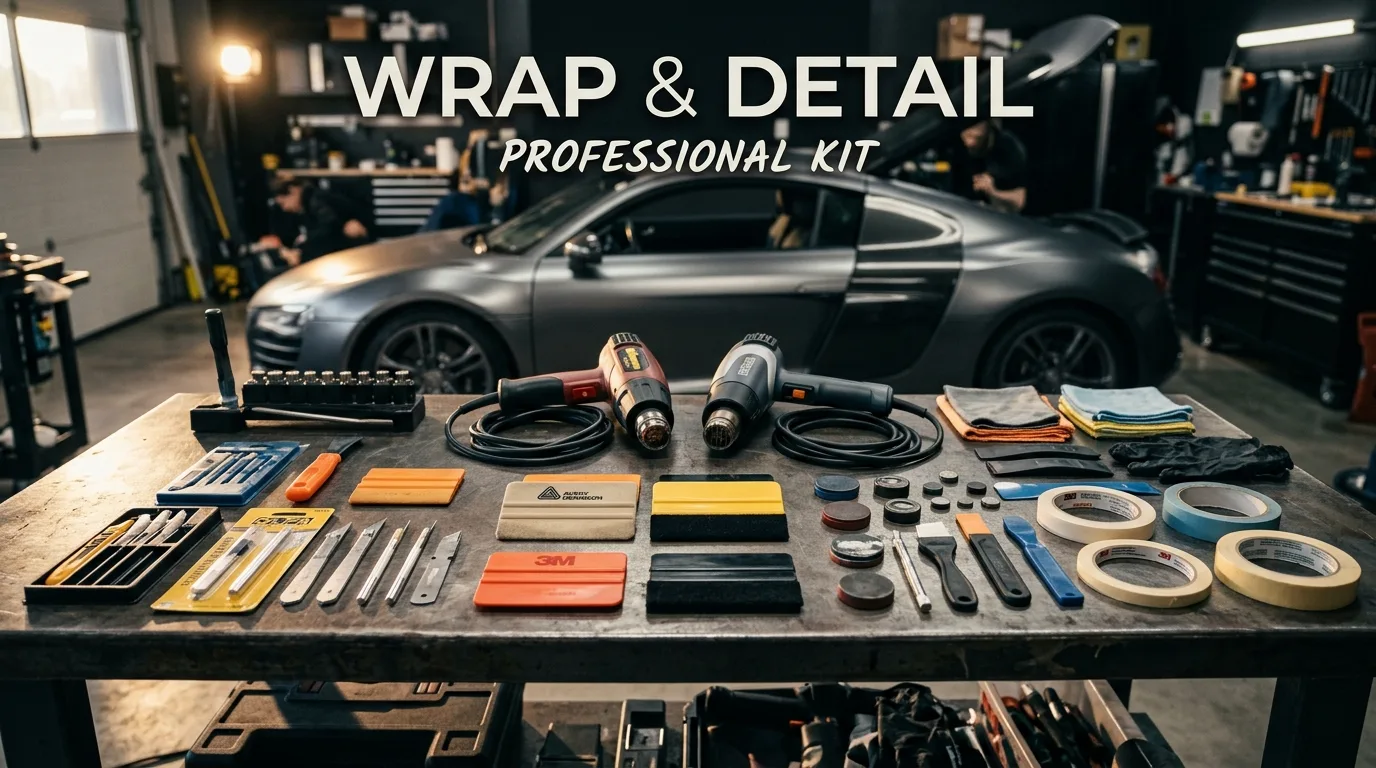
This is your most-used tool, hands down. A good squeegee helps you apply pressure, remove air bubbles, and adhere the vinyl smoothly. Don’t cheap out here!
- Types: You’ll want a variety.
- Hard Squeegee (e.g., 3M PA-1 Gold, Avery Pro Series): Excellent for general application on flat to moderately curved surfaces. Provides firm, even pressure. Always use with a felt edge cover!
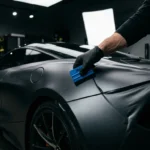
- Felt-Tipped Squeegee (e.g., 3M Blue Squeegee with Felt Edge): Softer and perfect for delicate films, glossy finishes, or when working around complex curves where you want to minimize the risk of scratching. The felt edge prevents marring the vinyl.
- Plastic or PTFE Squeegees (e.g., Lil’ Chizler): Small, rigid tools ideal for tucking vinyl into tight seams, around trim, or under weather stripping.
- Expert Tip: Always keep a few different types on hand. And remember, the cleaner your squeegee and its felt edge, the cleaner your application.
2. The Heat Gun: Your Vinyl’s Best Friend
Vinyl wrap, especially premium cast vinyl (the stretchy, conformable film like 3M 2080 or Avery SWF, designed for complex curves without shrinking back), needs heat to activate its adhesive, stretch into recesses, and set its memory. A good heat gun is non-negotiable.
- Recommendations:
- Steinel HG 2120 E or HG 2320 E: Industry standard. Reliable, offers precise temperature control (usually 120-1200°F) and airflow settings.
- Milwaukee M18 Fuel Cordless Heat Gun: Fantastic for mobility, especially if you’re working in different areas or don’t want to deal with cords.
- Technique: Use low to medium heat (around 150-250°F surface temperature) for stretching and forming. For post-heating (crucial for longevity and preventing lift, where you heat stretched areas to 200-220°F surface temp to lock the film’s memory), you’ll need higher, controlled heat.
3. Precision Cutting Tools: Sharpness is Key
Clean cuts make for clean finishes. Dull blades are a recipe for disaster, leaving jagged edges or worse, cutting into your paint.
- Snap-Off Knife (e.g., Olfa SVR-2 or NT Cutter A-300): Always use a fresh, sharp 30-degree carbon steel blade. Snap off dull segments frequently.
- Knifeless Tape (e.g., 3M Finish Line or Design Line): This is a game-changer! It’s a filament tape that lets you cut through vinyl without ever touching your vehicle’s paint. You lay it down, apply the vinyl over it, then pull the filament through the vinyl for a perfect, clean cut. Essential for intricate designs and protecting your vehicle’s original finish.
- Expert Tip: Never cut directly on the vehicle’s paint. Use knifeless tape or trim excess film away from the body.
4. Surface Preparation Essentials: The Foundation of Adhesion
Adhesion is everything. If your surface isn’t immaculate, your wrap won’t stick, or it will lift prematurely. This is where many DIYers fail.
- Cleaning Solution: A thorough wash with car soap first, then follow up with a dedicated surface prep cleaner (e.g., 3M Prep Solvent-70 or a 70% Isopropyl Alcohol (IPA) solution).
- Lint-Free Towels: Microfiber cloths are great, but ensure they are absolutely clean and lint-free. Contaminants like dust, wax, or silicone are the enemy of vinyl adhesion.
5. Application Aids & Detailing Tools
- Magnets: Strong neodymium magnets are invaluable for holding large panels of vinyl in place during initial positioning, preventing sag and making alignment easier.
- Rivet Brush (e.g., 3M Rivet Brush): Specifically designed to conform vinyl into textured surfaces like rivets or diamond plate, ensuring proper adhesion.
- Tucking Tools (e.g., Small Plastic Tuck Tools): For neatly tucking edges into tight gaps and seams.
- Application Gloves (e.g., Nylon or Cotton Gloves): Essential to reduce friction, prevent fingerprints and oils from your skin transferring to the adhesive, and allow the vinyl to glide smoothly as you position it. Avoid latex or nitrile gloves as they can create static and pick up dust.
6. Measuring & Marking
- Tape Measure: For accurate film cuts and panel alignment.
- Masking Tape (e.g., 3M Painter’s Tape): Great for temporary positioning, creating hinge methods, and marking cut lines.
Investment & Longevity: What to Expect
A basic, quality DIY car wrap tool kit (including a decent heat gun, a few squeegees, a good knife, knifeless tape, gloves, and cleaner) will likely set you back around $150-$300. Investing in these tools upfront will save you countless headaches and wasted film, extending your wrap’s life well beyond the typical 3-5 years, potentially pushing 5-7+ years with proper installation and maintenance.
Remember, guys, professional wrapping is an art, but it’s built on a foundation of solid technique and the right equipment. Don’t let cheap tools sabotage your hard work. Arm yourself with this essential kit, take your time, and you’ll be amazed at the professional results you can achieve right in your own garage.
For more detailed guides and product reviews, keep an eye on Car Wrap Info!