



Hey there, fellow wrap enthusiasts!
If you’ve tackled a flat hood or roof, you know the immense satisfaction of transforming your vehicle. The smooth, clean lines, the fresh color – it’s a great feeling. But let’s be honest: the real challenge, and where many DIYers (and even some newer pros) get tripped up, is those complex, curvy panels. We’re talking about the multi-dimensional bumpers, the often-tiny yet intricate side mirrors, and those deceptively simple-looking door handles. As someone who’s wrapped hundreds of vehicles over 15+ years, I can tell you these areas demand patience, precision, and the right techniques. Don’t worry, I’m here to share the real-world advice you need to conquer them and elevate your wrap game.
Table Of Content
- Hey there, fellow wrap enthusiasts!
- The Non-Negotiable Foundations for Flawless Finishes
- 1. Choose the Right Material: Cast Vinyl is Your Best Friend
- 2. Prepping for Perfection: Impeccable Surface Preparation
- 3. The Art of Heat Management: Your Heat Gun is Key
- Decoding the Bumper Wrap – The Ultimate Challenge
- 1. The Case for Bumper Removal
- 2. Strategic Film Application on Bumpers
- Conquering Side Mirrors – Small But Mighty
- 1. The Mirror Disassembly Advantage
- 2. Wrapping Strategies for Mirror Caps
- Mastering Door Handles – The Detail That Makes the Difference
- 1. Handle Types and Removal for Perfection
- 2. The “Handle Hack”: Precision and Patience
- Beyond Installation: Ensuring Longevity and a Pro Finish
- 1. Reinforce with Post-Heating and Edge Sealing
- 2. Maintenance for Maximum Longevity
Mastering these tricky panels isn’t just about making your vehicle look good; it’s about ensuring the longevity and durability of your wrap in the most high-stress areas. A poorly wrapped bumper or mirror is a prime candidate for lifting, bubbling, or premature wear, spoiling the entire aesthetic. My goal today is to arm you with the knowledge and actionable steps to approach these challenges with confidence, making costly mistakes a thing of the past.
The Non-Negotiable Foundations for Flawless Finishes
Before we even think about touching a specific panel, let’s lock in some universal truths that are absolutely critical for success on complex curves. These aren’t suggestions; they are the bedrock of a professional, long-lasting wrap.
1. Choose the Right Material: Cast Vinyl is Your Best Friend
This is non-negotiable for complex curves. You simply *must* use cast vinyl. Unlike calendered vinyl – which is thicker, stiffer (typically 4-5 mil), and better suited for flat surfaces or simple curves like those on a box truck – cast vinyl is a premium, thin (typically 2.5–3.5 mil), heat-activated film designed specifically to conform to extreme, multi-directional curves without shrinking back or lifting. It’s manufactured in a way that minimizes internal stress, allowing it to stretch and hold its shape better. Popular brands like 3M’s 2080/1080 series, Avery Dennison’s Supreme Wrapping Film, Oracal’s 970RA, Hexis Skintac, and Arlon’s Ultimate PremiumPlus offer fantastic cast options renowned for their conformability and adhesive performance. Don’t skimp here; using anything less will guarantee headaches, frustration, and a failed wrap on these panels.
2. Prepping for Perfection: Impeccable Surface Preparation
Even on the smallest parts, contamination is the enemy. It’s the primary cause of bubbles, lifting edges, and adhesive failure. Every panel, regardless of size, must be surgically clean. This means a multi-step process: first, a thorough wash with car soap, ensuring all dirt and grime are removed. Next, use a clay bar to remove embedded contaminants like tar, sap, and industrial fallout that washing alone can’t touch. Finally, a meticulous degrease with a 70% isopropyl alcohol (IPA) wipe. Don’t just wipe; scrub into every crevice, seam, and edge. For areas like bumpers and mirrors, I always recommend removing any emblems, trim pieces, and, ideally, the panel itself. While removal adds time, it’s the only way to achieve true edge wrapping and maximum adhesion, ensuring a seamless, durable finish.
3. The Art of Heat Management: Your Heat Gun is Key
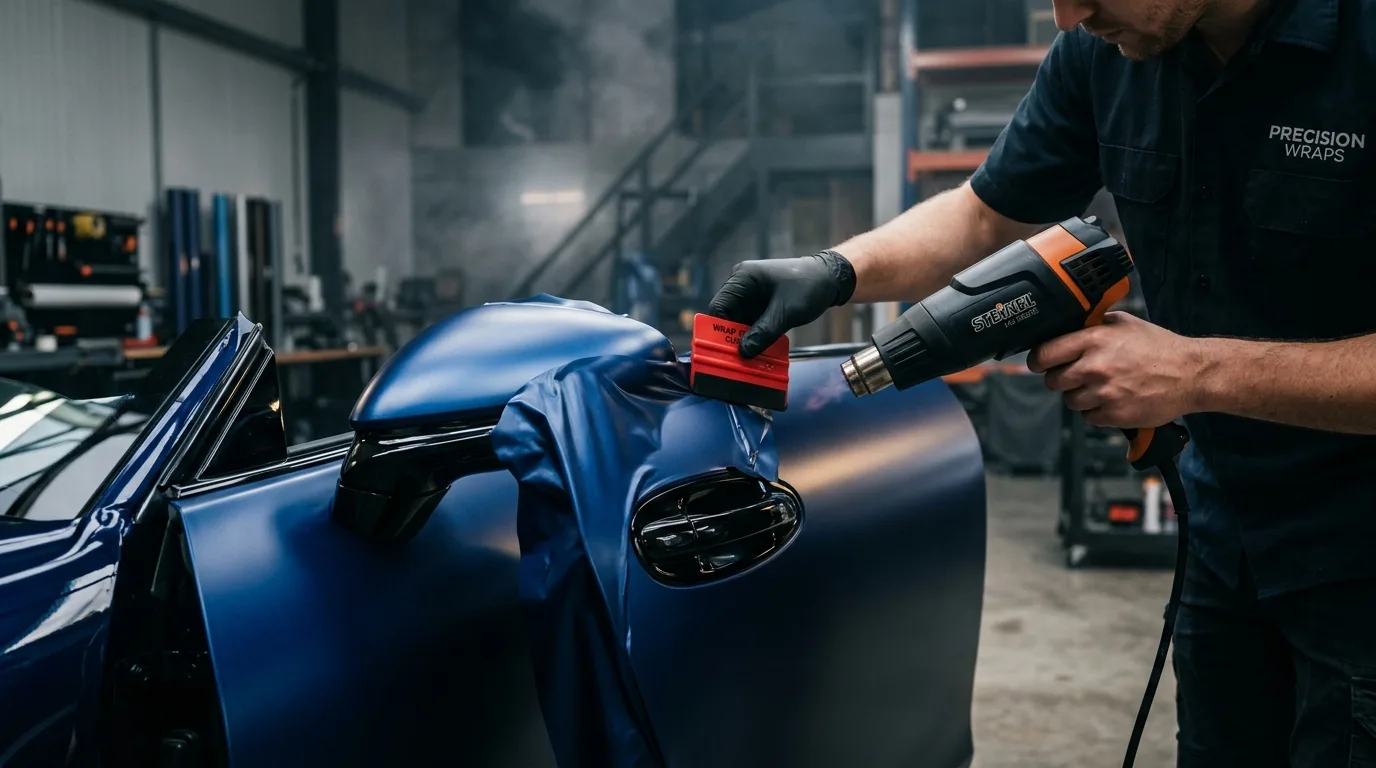
Your heat gun is arguably your most important tool when tackling complex curves. Use it to relax the film, allowing it to stretch into recesses, release tension, and activate the adhesive for optimal bond. For most cast films, you’ll be working with temperatures around 180-220°F (82-104°C) during application to achieve conformability. However, always check the film manufacturer’s guidelines, as specific films might have slightly different ideal ranges. Critically, post-heating is a step many DIYers skip, but it’s vital for durability. After the film is applied and trimmed, you must evenly heat the entire wrapped surface, especially on curves and edges, to about 200-220°F (93-104°C). This process “sets” the memory of the vinyl, preventing it from shrinking back to its original shape and lifting, particularly in high-stress areas.
Decoding the Bumper Wrap – The Ultimate Challenge
Bumpers are often the most intimidating part of any full vehicle wrap, and for good reason. They’re a symphony of deep curves, sharp angles, integrated grilles, sensor cutouts, and sometimes even complex aerodynamic elements. A full wrap on a bumper can easily take 3-6 hours for a seasoned installer, and for a beginner, it can feel like an all-day wrestling match.
1. The Case for Bumper Removal
My golden rule: always try to remove the bumper from the vehicle. While it adds an hour or two to the total project, the benefits are immense. Removing the bumper allows you to wrap around all edges, tucking the film behind for maximum adhesion and a truly hidden cut line. This eliminates visible seams, reduces the risk of lifting from road debris or pressure washing, and gives you far better access for cleaning and application. Imagine trying to wrap the inside of a wheel arch or a sensor cutout while the bumper is still on the car – it’s a nightmare. Once removed, clean both sides thoroughly, paying extra attention to hidden edges and recessed areas where dirt loves to hide.
2. Strategic Film Application on Bumpers
When applying film to a bumper, think strategically. Don’t try to cover the entire bumper with one massive, unmanaged sheet. Start by finding a central, relatively flat area to lay down your initial anchor point. From there, you’ll be employing several key techniques:
- Bridging: For deep recesses (like fog light housings or grille openings), you’ll need to bridge the film across the recess, stretching it tightly. Then, using heat and controlled pressure, work the film into the recess gradually, starting from the center and pushing outwards. This prevents material from bunching up.
- Relief Cuts: Don’t be afraid to make small, strategic relief cuts (slits in the film, usually 1/4 to 1/2 inch) in areas where the film is severely stretching or bunching on tight corners. These cuts allow the material to relax and lay flat. Just be sure to overlap the cuts slightly with additional material as you work, or plan to use Knifeless tape (specifically Design Line) for clean cuts around complex shapes.
- Pre-Stretching: On convex curves, a slight pre-stretch of the film can help it conform better. However, be careful not to overstretch, as this can thin the film and make it prone to shrinking back. Work in small sections, using your squeegee (a 3M Gold or Blue squeegee with a felt edge is excellent) to push the film down while applying gentle heat.
- Post-Heating is Non-Negotiable: After the film is fully applied and trimmed, go back over the entire bumper, especially all curves, edges, and recesses, with your heat gun. Aim for that 200-220°F (93-104°C) range. This step is what makes the adhesive truly bond and prevents the film’s “memory” from pulling it back and causing lifting later. A full front bumper on a modern sedan like a 2024 Tesla Model 3 can consume 2-3 linear meters of 60-inch film and easily take a skilled installer 3-5 hours to wrap perfectly.
Conquering Side Mirrors – Small But Mighty
Side mirrors might seem like small components, but they often present some of the most frustrating challenges due to their extreme compound curves, tight clearances, and sometimes multi-piece construction. They are a true test of patience and precision.
1. The Mirror Disassembly Advantage
Similar to bumpers, removing the mirror caps is almost always the best approach. Most modern vehicles allow for the painted mirror cap to be unclipped or unscrewed from the mirror housing, providing you with a standalone piece that’s much easier to manipulate and wrap cleanly. This allows for full edge wrapping and tucking, preventing unsightly seams and improving durability. Once removed, clean every nook and cranny meticulously, as dust and wax residues are notorious for causing issues on these small, smooth surfaces.
2. Wrapping Strategies for Mirror Caps
Mirror caps come in various shapes, from relatively smooth, single-piece designs to highly contoured, multi-faceted ones.
- Single-Piece Method: For simpler mirror caps, start by placing a piece of film large enough to cover the entire cap. Find your anchor point on the most prominent convex curve. Then, using controlled heat and gentle stretching, work the film around the contours. The key here is to manage tension – you want enough stretch to conform, but not so much that the film thins out or causes stress marks. Use a soft felt-tip squeegee for delicate surfaces.
- Two-Piece or Segmented Approach: For highly complex mirror caps with extreme recesses or sharp creases, a single piece of film might be impossible without excessive stretching or ugly wrinkles. In these cases, consider a two-piece or segmented approach. This involves strategically cutting the film into two or more sections that meet at a natural body line or crease. The trick is to overlap the pieces minimally and make a clean, precise cut (often with Knifeless Finish Line tape) to create a virtually invisible seam.
Regardless of the method, once the film is laid, trim precisely, leaving enough material to tuck around the edges. Use a 30-degree utility knife blade for the sharpest cuts. Post-heating is extra critical here, as mirrors are exposed to constant wind, rain, and temperature fluctuations. Ensure every edge and curve is thoroughly heated to lock in the adhesive. I once wrapped a set of gloss black mirrors on a Mercedes C-Class that had an extremely aggressive curve. I tried the one-piece method three times before realizing a discreet, perfectly aligned two-piece application with knifeless tape was the only way to achieve a truly flawless, long-lasting finish.
Mastering Door Handles – The Detail That Makes the Difference
Door handles are often overlooked as a challenge, but a poorly wrapped handle screams “DIY” louder than almost any other panel. They’re small, frequently touched, and subject to constant wear and tear. A perfect handle wrap elevates the entire vehicle’s finish.
1. Handle Types and Removal for Perfection
Door handles typically fall into two categories:
- Cup-style handles: These are the traditional handles where you pull a lever in a recessed cup.
- Pull-out handles: Common on modern cars like Teslas, where the handle pops out.
For virtually all handle types, removal is paramount. Trying to wrap a handle while it’s still attached to the car is an exercise in frustration and compromise. Removing the handle allows you to wrap the film fully around the edges, tucking it for a factory-like finish. This also gives you ample access for thorough cleaning, which is crucial as handles accumulate significant grime and hand oils.
2. The “Handle Hack”: Precision and Patience
Here’s how to tackle handles like a pro:
- Prep the Film: Cut a piece of film that’s slightly larger than the handle itself – enough to overlap all edges.
- Initial Placement & Heat: For cup-style handles, start by anchoring the film in the deepest part of the cup. For pull-out handles, find a central, flat area. Apply gentle heat to relax the film, allowing it to conform to the basic shape.
- Working into Recesses: Use your finger (protected with a glove) or a soft plastic squeegee (like a 3M rivet brush for textured areas or a specialized detail squeegee) to push the film into the recesses and around the curves. Work slowly, applying heat to stretch and conform the film without overstretching.
- Precision Trimming: This is where the magic happens. Use a fresh, sharp 30-degree blade to trim the excess film. For the edges that tuck into the handle’s mechanism or base, trim cleanly, leaving just enough material to tuck. A small, thin hard card or plastic pick can help you tuck the edges securely without damaging the film. For edges that meet the body when the handle is reinstalled, consider using Knifeless Perf Line tape to create a perforated tear line, ensuring a super clean, consistent edge.
- Post-Heating: Once trimmed and tucked, thoroughly post-heat the entire handle. Remember, these are high-touch areas, so ensuring the adhesive is fully activated and the film’s memory is set is critical for preventing early lifting.
Wrapping a set of four door handles typically requires less than half a linear meter of 60-inch film but can take an hour or two for a professional to get absolutely perfect.
Beyond Installation: Ensuring Longevity and a Pro Finish
Your work isn’t done just because the film is laid. To ensure your meticulously wrapped bumpers, mirrors, and handles last the expected 5-7+ years, you need a few final steps and a proper maintenance routine.
1. Reinforce with Post-Heating and Edge Sealing
I cannot stress post-heating enough. It’s the final, crucial step that guarantees the film’s long-term adhesion, especially on those challenging curves and edges. Go over every single square inch of the wrapped panels one last time with your heat gun, ensuring the film reaches that 200-220°F (93-104°C) threshold. For high-stress areas or exposed edges on bumpers and mirrors, applying an edge sealer (like 3M Edge Sealer Tape or a liquid edge sealer) can provide an extra layer of protection against lifting from harsh weather, road debris, or pressure washing. This is particularly useful for vehicles that see a lot of highway miles or are frequently exposed to the elements.
2. Maintenance for Maximum Longevity
Proper care will significantly extend the life of your wrap.
- Washing: Wash your wrapped vehicle every 1-2 weeks with a pH-neutral car soap. Avoid abrasive brushes or sponges. For tricky panels, pay attention to potential dirt buildup around edges.
- Avoid High-Pressure Washing on Edges: While you can pressure wash a wrapped car, be extremely cautious around edges, especially on bumpers and mirrors. Keep the nozzle at least 1-2 feet away and avoid directing a concentrated stream directly at seams or tucked edges, as this can force water under the film and cause lifting.
- Waxing and Ceramic Coatings: Most vinyl wraps can benefit from a liquid spray wax or a ceramic coating designed for vinyl. These products add an extra layer of UV protection and make cleaning easier. However, always ensure the product is wrap-safe; avoid abrasive waxes or those containing petroleum distillates.
- Regular Inspections: Periodically check the edges of your bumpers, mirrors, and handles for any signs of lifting. If you catch a small lift early, a quick re-heating and re-squeegee can often fix it before it becomes a larger problem.
By following these post-installation and maintenance tips, you’re not just wrapping your car; you’re investing in its long-term aesthetic and protection, ensuring those tricky panels look sharp for years to come.