



Introduction: The Art of the Perfect Cut
Welcome back to Car Wrap Info! You’ve spent hours prepping your vehicle and meticulously laying down that beautiful vinyl. Now comes the moment of truth: the trim. This isn’t just about cutting away excess; it’s about defining the edges of your masterpiece. A sloppy trim can ruin an otherwise perfect wrap, leading to lifting, peeling, and an unprofessional look. But with the right techniques and tools, you can achieve factory-like precision that makes your wrap truly shine and last for years.
Table Of Content
- Introduction: The Art of the Perfect Cut
- Why Precision Trimming is Non-Negotiable
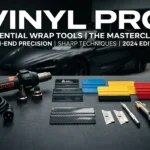
- Your Essential Arsenal: Tools for Flawless Cuts
- Advanced Trimming Techniques: Beyond the Basics
- The “Floating Knife” Method
- Conquering Curves and Complex Areas
- Mastering Knifeless Tape
- The Critical Step: Post-Heating for Longevity
- The Final Touches: Sealing the Deal
- Common Trimming Traps to Avoid
- Wrap It Up
Why Precision Trimming is Non-Negotiable
Think of trimming as the final brushstroke on a painting. It’s what separates a DIY attempt from a professional finish. Clean, precise cuts are crucial for several reasons:
- Durability: Properly trimmed and post-heated edges are less likely to lift, especially in high-traffic areas or around complex curves. This extends the life of your wrap, helping you achieve that 5-7+ year longevity.
- Aesthetics: Seamless edges that mimic OEM paint lines are the hallmark of a high-quality wrap. No one wants to see jagged cuts or exposed paint where the vinyl should be.
- Protection: While the wrap protects your paint, cleanly finished edges prevent dirt and moisture from getting underneath, which can compromise adhesion.
Your Essential Arsenal: Tools for Flawless Cuts
Before we dive into techniques, let’s ensure you have the right tools. A sharp blade is your best friend, and a dull one is your worst enemy.
- Precision Knives: Invest in an Olfa 30-degree snap-off blade knife (like the Olfa A-1 or SVR-2). The sharper angle allows for finer, more precise cuts. Always use a fresh blade for each major section or at the first sign of drag. For heavier cuts or thicker films like PPF (Paint Protection Film) (which is typically 4–5 mil thick compared to 2.5–3.5 mil for color change vinyl), a 59-degree blade might be preferred for durability, but for fine vinyl trimming, stick to 30-degree.
- Knifeless Tape: This revolutionary product allows you to cut vinyl without touching the vehicle’s paint. Essential for complex cuts on sensitive areas. Popular types include 3M Knifeless Tape (Design Line for straight cuts, Finish Line for curves, Perf Line for perforated media).
- Squeegee: Not just for application, a firm squeegee can help hold down vinyl near an edge while you trim, providing tension and stability.
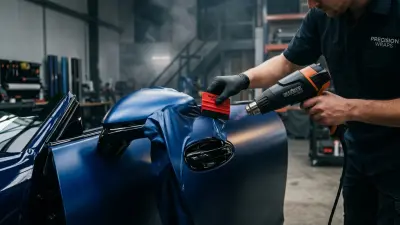
- Heat Gun: Critical for post-heating edges to lock in the vinyl’s memory. Aim for temperatures around 200-220°F (90-105°C).
- Snitty/Trim Tool: A small, plastic cutting tool that safely trims excess film without risk to the paint, especially useful for window trims.
Advanced Trimming Techniques: Beyond the Basics
The “Floating Knife” Method
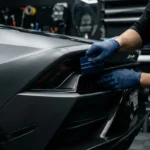
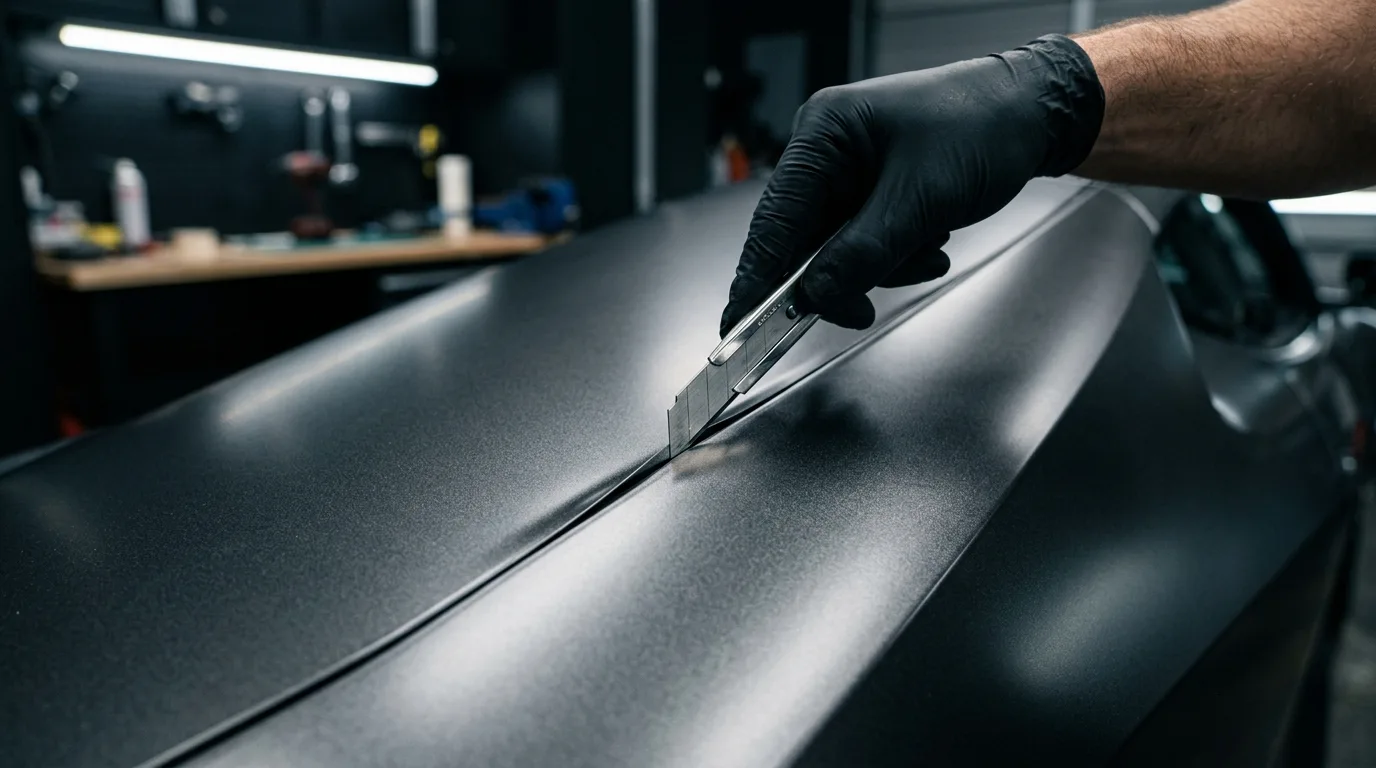
This is a fundamental technique for cutting along panel gaps and body lines without damaging the paint. Instead of pressing the blade against the vehicle, you “float” the very tip of the blade along the seam, using the gap itself as your guide. Apply just enough pressure to cut the vinyl, letting the knife glide effortlessly. Your blade should be almost parallel to the surface for the cleanest, shallowest cut. This is vital when wrapping areas like the edges of a 2024 Tesla Model Y’s hood or around the headlights of a Ford F-150.
Conquering Curves and Complex Areas
When trimming around intricate shapes like mirrors, door handles, or emblems, stretch the vinyl slightly over the edge and trim with an outward slicing motion. This creates a slight “overhang” that can then be tucked. For deep recesses or inside door jambs, make small, strategic relief cuts to allow the vinyl to relax and tuck smoothly without bridging or excessive tension.
Mastering Knifeless Tape
This is where pros save time and prevent costly mistakes. Knifeless Tape works by embedding a thin filament into the adhesive layer. Once applied under the vinyl, you pull the filament through the vinyl, creating a perfect cut line.
- Application: Apply the Knifeless Tape along your desired cut line on the bare paint (e.g., creating a clean line for a two-tone wrap on a roof or a chrome delete line).
- Film Overlay: Lay your vinyl wrap over the tape, making sure it adheres well.
- Pulling the Filament: Locate the end of the filament, pull it at a 45-degree angle, and slowly zip it through the vinyl. The key is consistent, slow tension.
- Removal: Peel away the excess vinyl and carefully remove the Knifeless Tape backing.
Knifeless tape is fantastic for creating seamless cuts on visible areas like a straight line along the bottom of a car for a two-tone look, or for cutting out intricate shapes around emblems without risking paint damage.
The Critical Step: Post-Heating for Longevity
After trimming, especially with premium cast vinyl (like 3M 2080/1080 series, Avery Supreme Wrapping Film, Oracal 970RA), the vinyl has a “memory.” It wants to revert to its original flat state, which can cause edges to lift. Post-heating “sets” this memory into its new stretched or conformed shape.
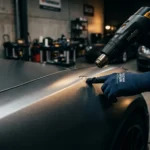
- Technique: Using your heat gun, heat all edges and areas of significant stretch to 200-220°F (90-105°C). Use an infrared thermometer for accuracy.
- Dwell Time: Hold the heat for 10-15 seconds on each section.
- Pressure: Immediately after heating, firmly rub the area with a gloved hand or soft squeegee to ensure maximum adhesion.
This step is often overlooked by DIYers but is absolutely essential for a wrap to last 5-7+ years.
The Final Touches: Sealing the Deal
Once trimmed and post-heated, a few more steps ensure a perfect finish:
- Tucking Edges: Use a tucking tool (often the corner of a squeegee or a specialized plastic tool) to tuck any exposed vinyl edges into panel gaps or under seals for a clean, hidden finish.
- Edge Sealer: For critical areas like bumpers, rocker panels, or areas prone to stone chips, consider applying an edge sealer (like 3M Edge Sealer 3950). This clear liquid creates a protective barrier, preventing lifting and extending wrap life.
- Final Inspection: Walk around the entire vehicle, checking every edge and corner for any signs of lifting, bubbles, or imperfections. Reheat and press down any questionable spots.
Common Trimming Traps to Avoid
- Dull Blades: Leads to jagged cuts, tearing, and excessive pressure, risking paint damage. Change blades frequently!
- Cutting into Paint: The most common and frustrating mistake. Always use the “floating knife” method or Knifeless Tape.
- Not Post-Heating: Guaranteed early edge lifting. Don’t skip this step.
- Rushing: Trimming takes patience and a steady hand. Take your time, especially on complex areas.
Wrap It Up
Mastering precision cuts is the difference between a good wrap and a fantastic one. By using sharp tools, understanding advanced techniques like Knifeless Tape, and diligently post-heating your edges, you’ll not only achieve a flawless, professional finish but also ensure your wrap stands the test of time. Keep practicing, and you’ll be trimming like a seasoned pro in no time!