


Decoding Vehicle Wrap Costs: Your Definitive Guide
You’ve seen those stunning vehicles on the road – the ones that make you do a double-take with their unique colors, incredible finishes, or seamless paint protection. You’re probably thinking, “I want that! But how much does a vehicle wrap actually cost?” It’s one of the most common questions I get at the shop, and honestly, there’s no single magic number. It’s like asking how much a house costs – it depends on so many variables.
Table Of Content
- Decoding Vehicle Wrap Costs: Your Definitive Guide
- What Influences the Price Tag of a Vehicle Wrap?
- The Material Matters: From Cast to PPF
- Vehicle Size and Complexity: Not All Wraps Are Created Equal
- Typical Cost Ranges for Different Vehicles & Wrap Types (2025-2026)
- Full Color Change Wraps
- Partial Wraps & Accents
- Paint Protection Film (PPF)
- DIY vs. Professional Installation: The Real Cost Equation
- DIY Costs & The Hidden Pitfalls
- Professional Installation: What You’re Truly Paying For
- Getting an Accurate Quote & Maximizing Value
- Factors to Discuss with Your Installer
- Long-Term Value & Maintenance
- Ready to Transform Your Ride?
As someone who’s spent over 15 years knee-deep in vinyl, wrapping hundreds of vehicles from daily drivers to exotic supercars, I understand the desire for a clear answer. That’s why I’m here to break down the real factors influencing vehicle wrap costs for 2025-2026. My goal is to give you a practical “cost calculator” so you can budget accurately, whether you’re a DIY enthusiast or looking to hire a pro. Let’s dive in.
What Influences the Price Tag of a Vehicle Wrap?
Before we talk numbers, we need to understand what actually drives the cost. Think of it as a recipe: the ingredients, the size of the meal, and the chef’s skill all play a part. For wraps, it boils down to three core elements: the material you choose, the size and complexity of your vehicle, and who does the installation.
The Material Matters: From Cast to PPF
The type of film you select is perhaps the biggest cost differentiator. There’s a wide world of vinyl out there, each with its own characteristics and price point.
- Cast Vinyl: This is the premium stuff, the gold standard for full vehicle wraps. Cast vinyl is a high-quality, heat-activated film (typically 2.5–3 mil thick) that starts as a liquid, allowing it to be cast into a very thin sheet. This manufacturing process makes it incredibly flexible, conformable to complex curves and recessed areas without shrinking back over time. Brands like 3M 2080/1080 series, Avery Supreme Wrapping Film, Oracal 970RA, Hexis, and Arlon are top-tier cast films. They offer superior durability (5-7+ years), a wider range of colors and finishes, and excellent long-term adhesion. Naturally, they come at a higher cost due to their performance and longevity.
- Calendered Vinyl: If you’re on a tighter budget or only wrapping flat surfaces, calendered vinyl might come up in conversation. This film (typically 3.5–4.5 mil thick) is produced by rolling molten vinyl through calendars (rollers) to form a sheet. It’s stiffer, less conformable, and has a higher tendency to shrink over time, making it less ideal for complex curves. While more affordable, it’s better suited for flat panel graphics, temporary applications, or smaller accents, and typically has a shorter lifespan (1-3 years). Most reputable shops won’t use calendered film for a full color change wrap due to its limitations.
- Paint Protection Film (PPF): This is a beast of its own. PPF (often 4–5 mil thick) is a clear, thermoplastic urethane film that’s designed to protect your vehicle’s original paint from stone chips, scratches, bug splatters, and environmental contaminants. It’s much thicker and more durable than color change vinyl, often featuring self-healing properties. Brands like Xpel Ultimate Plus, Suntek Reaction, and 3M Scotchgard Pro Series are industry leaders. Because of its advanced technology and protective qualities, PPF is significantly more expensive than even the highest-grade cast vinyl.
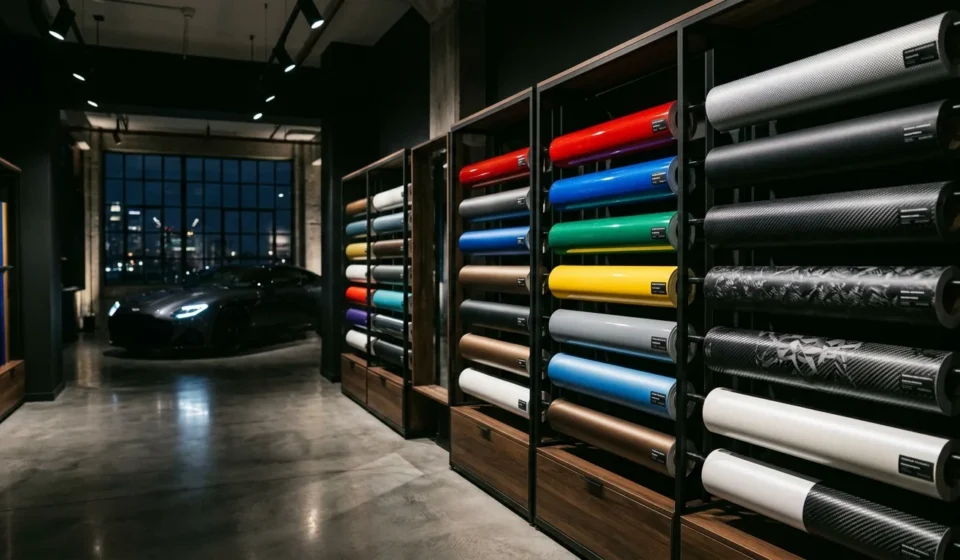
- Special Finishes: Beyond standard gloss, matte, or satin finishes, you can opt for specialty films like chrome, brushed metal, carbon fiber textures, color-shift (chameleon), or even reflective vinyl. These unique looks are visually striking but can add anywhere from 30% to 100% to the material cost due to their specialized production.
Vehicle Size and Complexity: Not All Wraps Are Created Equal
It stands to reason that wrapping a tiny two-door coupe will cost less than wrapping a massive crew cab truck. More surface area means more material and, crucially, more labor hours. But it’s not just about size; complexity plays a huge role.
A vehicle with many sharp angles, deep recesses, intricate body lines, or numerous removable parts (door handles, mirrors, bumpers, spoilers) will demand significantly more time and skill. For example, a full wrap on a 2024 Tesla Model Y, with its smooth curves, typically takes 15–18 linear meters of 60-inch film. In contrast, wrapping a Ford F-150 crew cab often requires 18–22 linear meters of 60-inch film, and the labor hours can be double that of a Model Y due to the larger, more complex panels, grille, and trim. Every curve, every corner, every cutout adds time for precise cutting, stretching, and post-heating.
Typical Cost Ranges for Different Vehicles & Wrap Types (2025-2026)
Alright, let’s get to some concrete numbers. Remember, these are general ranges for professional installation using high-quality cast vinyl (like 3M 2080 or Avery SWF) and assume good paint condition. Specific quotes will always vary by region, shop reputation, and chosen material.
Full Color Change Wraps
This is where your vehicle gets a complete aesthetic transformation, covering almost every painted surface.
- Small Cars (e.g., Honda Civic, Mazda Miata, Toyota Corolla): Expect to pay around $2,800–$4,500.
- Mid-Size Sedans/Small SUVs (e.g., BMW 3 Series, Tesla Model 3, Audi Q5): The range typically falls between $3,500–$5,500.
- Large Sedans/Mid-Size SUVs (e.g., Tesla Model Y, Mercedes-Benz E-Class, Jeep Grand Cherokee): You’re looking at $4,200–$5,800.
- Large SUVs/Trucks (e.g., Ford F-150 Crew Cab, Chevrolet Tahoe, Cadillac Escalade): These behemoths can cost anywhere from $5,000–$8,000+, especially if they have intricate grilles or lift kits.
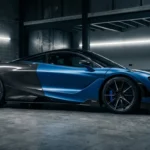
- Exotic/Luxury Vehicles (e.g., Porsche 911, Lamborghini Huracan): Due to their intricate body lines, high-value components, and meticulous installation requirements, costs can easily jump to $6,000–$12,000+.
As mentioned, opting for specialty films like chrome, color-shift, or textured finishes will add a significant premium, often increasing the cost by 30% to 100% or more depending on the film and vehicle.
Partial Wraps & Accents
Not everyone wants a full color change. Sometimes, a few strategic accents can make all the difference.
- Chrome Delete: Covering all the chrome trim around windows, grilles, and badges with gloss black or matching vinyl usually costs $300–$800.
- Roof Wrap: A popular choice for a contrasting look, a roof wrap typically runs $400–$900.
- Hood Wrap: Similar to a roof wrap, a contrasting hood can cost $300–$700.
- Racing Stripes or Graphics: Depending on complexity and size, these can range from $400–$1,500+.
- Interior Trim Wrap: For a personalized touch inside, expect $200–$600, depending on the number of pieces.
Paint Protection Film (PPF)
This is about protection, not just aesthetics. The cost reflects the superior material and precise installation required.
- Full Front Protection (Bumper, Full Hood, Fenders, Mirrors): This common package can cost $1,800–$3,500+, depending on the vehicle and specific coverage.
- Full Vehicle PPF: For ultimate paint preservation, wrapping the entire car in PPF will typically range from $5,000–$8,000+ for standard vehicles. For larger trucks or intricate luxury cars, it can easily exceed $10,000.
DIY vs. Professional Installation: The Real Cost Equation
This is where many aspiring wrappers get tripped up. The allure of saving money by doing it yourself is strong, but the reality often involves hidden costs and frustrations. What would you do in this situation? Try to save a few hundred dollars now, or invest in a quality job that lasts for years?
DIY Costs & The Hidden Pitfalls
If you’re considering a DIY approach, you’ll need to account for more than just the film itself. A full vehicle’s worth of quality cast vinyl might run you anywhere from $600–$1,500 (depending on film type and vehicle size). Then there are the tools: a good heat gun, professional squeegees, a sharp knife, snips, magnets, Knifeless tape, surface cleaner, and perhaps a rivet brush for trucks. These tools alone can easily set you back another $200–$500 for a decent starter kit.
But here’s the kicker: the biggest DIY cost is usually wasted material and your own time. Imagine spending $800 on film for your first DIY full wrap on your 2020 Honda Civic. You mess up a bumper panel, miscut a fender, and struggle with a door handle. Suddenly, you’ve bought an extra 5-10 linear feet of film (another $100-$200) and spent 40+ hours of your weekend, only to end up with bubbles, lifting edges, or an inconsistent finish. The learning curve is steep, and mistakes are expensive. Plus, improper installation can lead to paint damage during removal, negating any initial savings.
Professional Installation: What You’re Truly Paying For
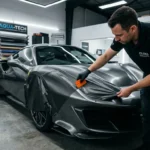
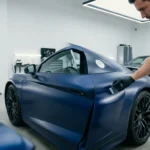
When you hire a professional shop, you’re not just paying for labor; you’re investing in expertise, specialized tools, a clean environment, and a warranty. A seasoned installer like myself has spent thousands of hours perfecting techniques: proper surface preparation (which is half the battle!), correct squeegee pressure to prevent bubbles, precise cutting with minimal knife usage on paint, controlled heat gun temperatures for stretching and post-heating, and meticulous edge sealing to ensure longevity.
A professional wrap includes thorough cleaning, paint decontamination, and sometimes even minor paint correction before the wrap goes on. They use specific tools like a 3M rivet brush for textured surfaces or specialized squeegees for deep recesses. They also have a dust-free, climate-controlled environment, which is crucial for a flawless finish. The peace of mind that comes with a professionally installed wrap, often backed by a reputable shop’s warranty (typically 1-3 years on labor), is invaluable. It helps your wrap achieve its maximum lifespan of 5–7+ years and ensures a clean, damage-free removal when the time comes.
Getting an Accurate Quote & Maximizing Value
So far we’ve covered the general costs and what influences them. Now, let’s get to the really critical point: how to get an accurate quote and ensure you’re getting the best value for your money. Don’t just pick the cheapest option – that’s a common mistake that often leads to disappointment down the road.
Factors to Discuss with Your Installer
When you contact a shop, be prepared to discuss specifics. Provide your vehicle’s exact year, make, and model. Clearly state your desired finish (gloss, matte, satin, chrome, etc.) and whether you want a full wrap, partial wrap, or PPF. Be honest about your vehicle’s current paint condition – existing rust, deep scratches, or peeling clear coat might require paint repair first, which is an additional cost. A good shop will want to perform a pre-inspection to identify any potential issues or areas of complexity.
Ask about their process: What kind of film do they use? What’s included in the prep work? Do they remove door handles, mirrors, or trim for a seamless finish? What kind of warranty do they offer on both the material and their labor? A transparent shop will walk you through every step and justify their pricing. In my opinion, a shop that focuses only on the lowest price often cuts corners on materials or labor, which you’ll regret later.
Long-Term Value & Maintenance
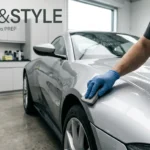
A vehicle wrap isn’t just an expense; it’s an investment. Not only does it transform your car’s appearance, but a quality wrap also protects your original paint, preserving its resale value. To maximize your investment, proper maintenance is key. Wash your wrapped vehicle every 1-2 weeks using pH-neutral car soap (like Chemical Guys Mr. Pink or Adam’s Car Wash Shampoo) and soft microfiber towels, avoiding harsh chemicals or abrasive brushes. You can even apply ceramic coatings specifically designed for vinyl (like Gyeon Q2 Matte or CarPro Cquartz Lite) to enhance protection and simplify cleaning. This routine will help your wrap last its full 5-7+ years, keeping your car looking sharp and protected.
Ready to Transform Your Ride?
Hopefully, this guide on Car Wrap Info has pulled back the curtain on vehicle wrap costs for you. While the final price tag can vary widely, understanding the factors at play – the material, your vehicle, and the installer’s expertise – empowers you to make an informed decision. Don’t let the numbers scare you; instead, see it as an investment in a personalized, protected vehicle that truly reflects your style.
Now that you have a clearer picture, I encourage you to reach out to reputable wrap shops in your area. Get detailed quotes, ask plenty of questions, and choose an installer who communicates clearly and instills confidence. Your dream vehicle transformation is closer than you think!