


Why Flawless Prep is Your Wrap’s Best Friend
Alright folks, listen up! If you’re diving into the world of car wraps – whether it’s a full-color change, a sleek chrome delete, or protecting your paint with PPF – there’s one golden rule that separates the pros from the “oops” moments: surface preparation. As your seasoned wrap shop owner, I can tell you that 80% of a successful, long-lasting wrap comes down to how well you prep the surface. Skip this crucial stage, and you’re inviting bubbles, lifting edges, poor adhesion, and a premature failure that no amount of fancy film can fix. This isn’t just about making it look good; it’s about making it stick and last for years.
Table Of Content
- Why Flawless Prep is Your Wrap’s Best Friend
- The Essential Prep Toolkit for DIY & Pros
- Your Step-by-Step Guide to Perfect Surface Prep
- Step 1: The Deep Clean Wash – Get Rid of the Grime
- Step 2: Decontamination – A Must-Do
- Step 3: The Critical Panel Wipe
- Step 4: Addressing Paint Imperfections
- Step 5: Final Checks & Dusting
- Crucial Mistakes to Avoid During Prep
A vinyl wrap, whether it’s a premium 2.5–3 mil cast vinyl (the high-quality, heat-activated film that conforms beautifully to complex curves without shrinking back) or a robust 4–5 mil PPF (Paint Protection Film), relies entirely on a clean, smooth, and contaminant-free surface to bond properly. Let’s get into the nitty-gritty of how to achieve that.
The Essential Prep Toolkit for DIY & Pros
Before you even think about unrolling that gorgeous roll of 3M 2080 or Avery Supreme Wrapping Film, gather these essentials:
- Two Buckets: One for wash soap, one for rinsing your wash mitt.
- pH-Neutral Car Wash Soap: Avoid anything with waxes or gloss enhancers. Meguiar’s Gold Class or Chemical Guys Mr. Pink are good choices.
- Microfiber Wash Mitts & Drying Towels: Keep them clean and separate for different stages.
- Clay Bar Kit: Including a clay bar and a dedicated clay lubricant. Popular brands include Mothers or Meguiar’s.
- Iron & Tar Remover: Products like CarPro Iron X or Gyeon Tar will save you a lot of elbow grease.
- Isopropyl Alcohol (IPA) Solution: A 70% IPA to 30% distilled water mix is standard, or use a dedicated wrap prep cleaner like 3M Surface Prep Cleaner.
- Lint-Free Microfiber Towels: Have a dozen on hand for the final wipe-down.
- Plastic Trim Removal Tools: Essential for safely detaching emblems, badges, and certain trim pieces.
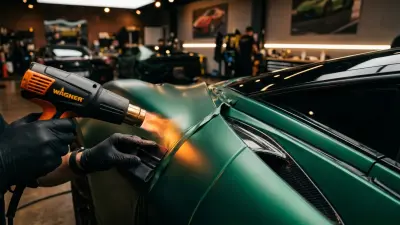
- Heat Gun: Useful for softening adhesive on emblems or old decals.
- Compressed Air Blower (Optional but Recommended): For drying tight crevices and blowing out dust.
Your Step-by-Step Guide to Perfect Surface Prep
Step 1: The Deep Clean Wash – Get Rid of the Grime
This isn’t just a quick rinse; it’s a thorough cleansing. Start by parking your vehicle in a cool, shaded area, away from direct sunlight. The goal is to remove all loose dirt, dust, and grime.
- Rinse Thoroughly: Use a pressure washer or hose to remove as much loose debris as possible.
- Two-Bucket Method: Fill one bucket with your pH-neutral car wash soap and water, and the other with plain clean water. Dip your wash mitt into the soap bucket, wash a section of the car, then rinse the mitt in the plain water bucket before going back to the soap. This prevents scratching.
- Wash from Top Down: Work in small sections, ensuring every panel is scrubbed gently but effectively.
- Rinse Again: Flood the car with water to minimize water spots.
- Dry Completely: Use high-quality microfiber drying towels. Ensure no water remains in door jambs, around mirrors, or in crevices.
Step 2: Decontamination – A Must-Do
Washing only removes surface dirt. Your car’s paint is bombarded daily with contaminants you can’t see, like industrial fallout, rail dust, tree sap, and tar. These need to go!
- Tar Remover: Spray a tar remover onto any noticeable tar spots, let it dwell for a few minutes (check product instructions), and gently wipe away with a clean microfiber.
- Iron Remover: Apply an iron remover (it often turns purple as it reacts with iron particles) to the entire painted surface. This product lifts embedded metallic fallout. Let it dwell, then rinse thoroughly.
- Clay Bar Treatment: This is critical. Knead a piece of clay until it’s flat. Spray a generous amount of clay lubricant onto a small section of your car’s paint. Gently glide the clay back and forth over the lubricated area. You’ll feel it grab initially, then glide smoothly as contaminants are picked up. Fold and knead the clay frequently to expose a fresh surface. Repeat until the entire vehicle’s paint feels glass-smooth. This removes deeply embedded dirt, brake dust, and other contaminants that a wash simply can’t touch.
- Final Rinse & Dry: After claying, give the car one last rinse and dry it completely.
Step 3: The Critical Panel Wipe
Even after washing and decontamination, microscopic oils, fingerprints, and residues can remain. This is where your IPA solution or dedicated wrap prep cleaner comes in.
- Mix Your IPA: If using isopropyl alcohol, a 70% IPA to 30% distilled water ratio is perfect. Pour it into a spray bottle.
- Spray and Wipe: Work panel by panel. Spray a generous amount of your IPA solution onto a section. Immediately wipe it down with a clean, lint-free microfiber towel. Then, use a second dry, clean microfiber towel to buff it dry. This ensures no residue is left behind.
- Focus on Edges: Pay extra attention to all edges, door jambs, around lights, under mirrors, and inside body lines. These are prime areas for dirt and oils to hide and cause lifting later.
Step 4: Addressing Paint Imperfections
Vinyl wraps conform to the surface underneath. This means any deep scratches, dents, rust spots, or peeling clear coat will be amplified, not hidden, by the wrap. For a truly flawless finish:
- Dents & Deep Scratches: Ideally, these should be repaired before wrapping. The wrap will follow the contour of a dent, making it visible.
- Peeling Clear Coat/Rust: These areas must be sanded smooth and potentially re-primed or painted. The wrap won’t adhere to unstable surfaces, and it will likely peel off, taking more paint with it.
- Emblem & Trim Removal: For a seamless look, remove all badges, emblems, and potentially door handles or mirrors. Use plastic trim tools to pry them off carefully after heating the adhesive with a heat gun to soften it. Don’t forget to clean any adhesive residue left behind with an adhesive remover and then an IPA wipe.
Step 5: Final Checks & Dusting
Just before application, do one last sweep. Use compressed air to blow out any dust or debris from crevices, panel gaps, and around windows. Give the entire car another quick wipe with a fresh, dry microfiber towel to ensure there’s absolutely no dust. Your shop environment should also be as clean and dust-free as possible.
Crucial Mistakes to Avoid During Prep
- Skipping Decontamination: This is the biggest culprit for wrap failure. Don’t think a simple wash is enough.
- Using Waxy Soaps or Quick Detailers: Any product with wax, silicone, or gloss enhancers will create a barrier that the vinyl cannot bond to. Stick to pure, pH-neutral soaps.
- Not Cleaning Edges & Recesses: These hidden areas are notorious for holding dirt and causing edge lifting. Be meticulous!
- Using Dirty Towels: A dirty towel can reintroduce contaminants or scratch the paint. Always use fresh, clean microfibers.
- Applying to Damaged Paint: A wrap is not a fix for bad paint. It will highlight imperfections and might not adhere properly to flaking or rusted surfaces.
- Working in Direct Sunlight: Products can dry too quickly, leaving residues, and the heat can make decontamination less effective.
At Car Wrap Info, we can’t stress this enough: proper surface preparation is the bedrock of a successful, long-lasting vehicle wrap. Take your time, be thorough, and treat this stage with the respect it deserves. Your stunning new wrap will thank you for it with years of flawless appearance!