Vinyl Wrap Protection: Is PPF or Ceramic Coating Right For You?
Protecting Your Investment: PPF vs. Ceramic Coating Over Your Vinyl Wrap
So, you’ve taken the plunge and transformed your ride with a stunning vinyl wrap. Awesome choice! But now you’re probably wondering, “How do I keep this masterpiece looking fresh for years?” Good question. While the vinyl itself offers a layer of protection against minor abrasions and UV rays, many vehicle owners want to add an extra shield. This is where the debate of paint protection film (PPF) versus Ceramic Coating comes into play, even over a vinyl wrap. As someone who’s seen countless wraps come and go, let’s break down these options so you can make an informed decision.
Table Of Content
- Protecting Your Investment: PPF vs. Ceramic Coating Over Your Vinyl Wrap
- Understanding Your Vinyl Wrap’s Needs
- Deep Dive: paint protection film (PPF) Over Vinyl Wrap
- Benefits of PPF Over a Vinyl Wrap
- Drawbacks of PPF Over a Vinyl Wrap
- Deep Dive: Ceramic Coating Over Vinyl Wrap
- Benefits of Ceramic Coating Over a Vinyl Wrap
- Drawbacks of Ceramic Coating Over a Vinyl Wrap
- PPF vs. Ceramic Coating: The Head-to-Head
- Making Your Decision: Which is Right for Your Wrapped Vehicle?
- Pro Tips for Protecting Your Wrap
Understanding Your Vinyl Wrap’s Needs
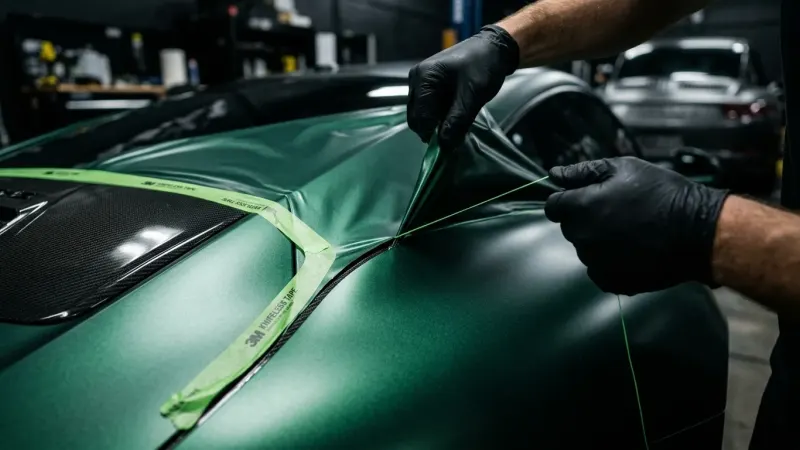
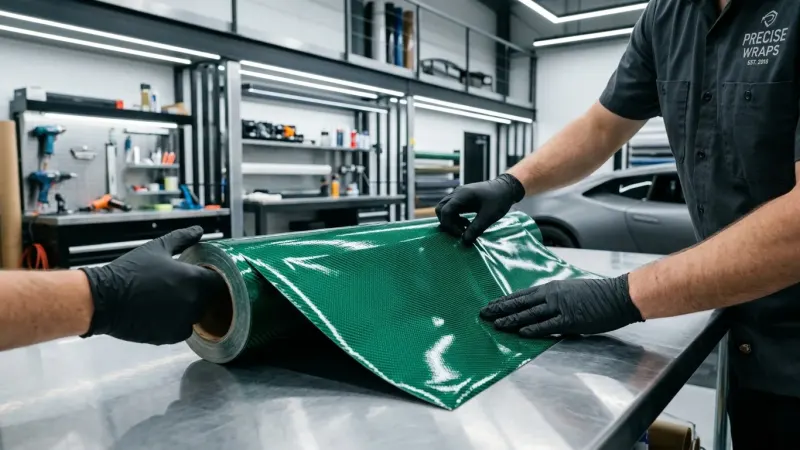
First, let’s remember what a vinyl wrap is. It’s typically a thin, durable PVC film (like cast vinyl – the premium, heat-activated film that conforms to complex curves without shrinking back, usually 2.5-3.5 mil thick) applied directly to your vehicle’s paint. Its primary job is to change color or add graphics, but it also acts as a sacrificial layer against light scratches, swirls, and environmental contaminants. However, it’s not invincible. It can still be chipped by rocks, stained by bird droppings, or suffer from prolonged UV exposure.
Deep Dive: paint protection film (PPF) Over Vinyl Wrap
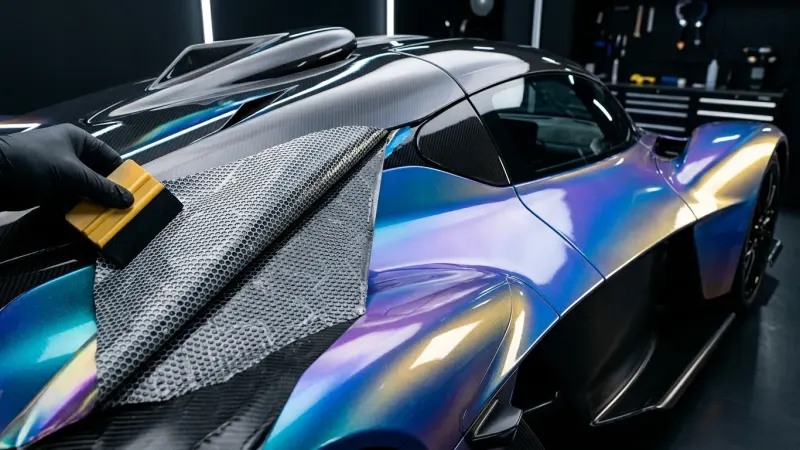
What is PPF? Paint Protection Film (PPF) is a clear, thermoplastic urethane film, typically 4-10 mil thick, that’s applied to painted surfaces (or in this case, wrapped surfaces) to protect them from stone chips, scratches, bug splatters, and other road debris. It’s often referred to as “clear bra.” Modern PPF is self-healing, meaning minor swirl marks and scratches disappear with heat.
Benefits of PPF Over a Vinyl Wrap:
- Superior Physical Protection: This is PPF’s biggest advantage. It offers robust defense against rock chips, deep scratches, and scuffs that a vinyl wrap alone might not withstand.
- Self-Healing Properties: Most quality PPF automatically “heals” light scratches and swirl marks when exposed to heat (like sunlight or warm water).
- Enhanced Longevity: By taking the brunt of impacts, PPF significantly extends the lifespan of your underlying vinyl wrap, keeping it pristine for 7-10+ years.
- UV Protection: It provides excellent UV resistance, further safeguarding your vinyl wrap from fading.
- Gloss or Matte Finish: You can choose a clear gloss PPF to enhance a gloss wrap, or a matte PPF (e.g., Xpel Stealth) to preserve the look of a matte vinyl wrap.
Drawbacks of PPF Over a Vinyl Wrap:
- Cost: Applying PPF over an entire wrapped vehicle is a significant investment, often adding 50-70% to the cost of the wrap itself for high-impact areas (e.g., full front including bumper, hood, fenders on a Tesla Model 3 could add $1,800-$3,000). A full-body PPF over a wrap can easily double the total cost.
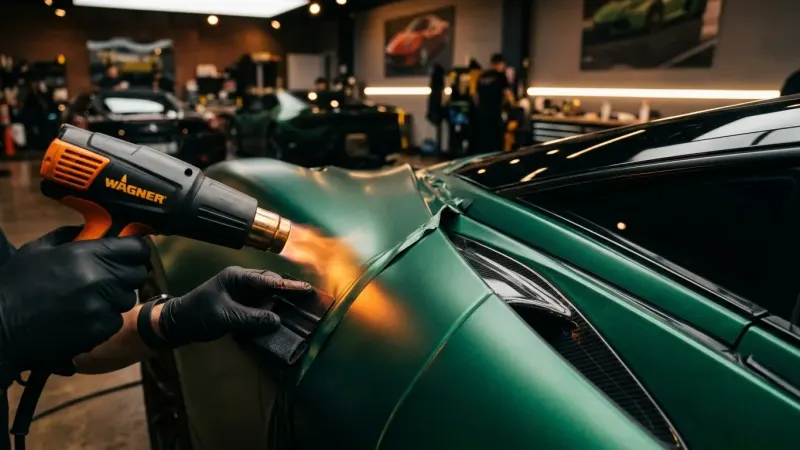
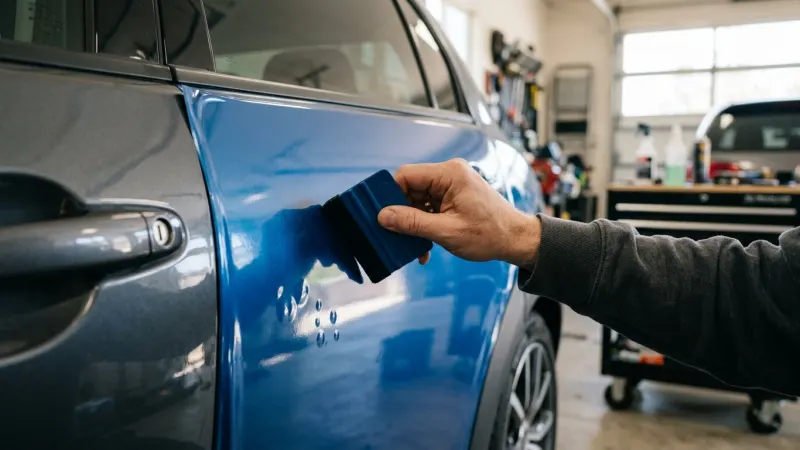
- Installation Difficulty: Applying PPF is a specialized skill. Doing it over a vinyl wrap requires even more precision to avoid trapping air or moisture between the two films. Professional installation is highly recommended.
- Potential for Texture: While modern PPF is incredibly clear, a double layer of film *can* sometimes introduce a very subtle texture or orange peel effect if not perfectly installed.
Popular Brands: 3M Scotchgard Pro Series, Xpel Ultimate Plus, SunTek Reaction.
Deep Dive: Ceramic Coating Over Vinyl Wrap
What is Ceramic Coating? A ceramic coating is a liquid polymer solution that, when applied, chemically bonds with the surface it’s protecting, creating a hydrophobic layer. It’s often silica (SiO2) or titanium dioxide (TiO2) based. For vinyl wraps, there are specific formulations designed to work with the film’s surface without damaging it or altering its finish (especially crucial for matte wraps).
Benefits of Ceramic Coating Over a Vinyl Wrap:
- Hydrophobicity & Easy Cleaning: This is ceramic coating’s superpower. It makes the surface incredibly slick, causing water, dirt, and grime to bead up and roll off. This makes washing your wrapped vehicle much faster and easier.
- UV Protection: It adds an extra layer of defense against harmful UV rays, helping to prevent your vinyl wrap from fading or discoloring.
- Enhanced Gloss/Satin: A gloss ceramic coating will make your gloss wrap pop even more. For matte or satin wraps, specialized matte ceramic coatings (e.g., Gyeon Quartz MOHS Matte, CarPro CQuartz Lite for Matte) will maintain the desired finish while adding protection.
- Chemical Resistance: Provides increased resistance to chemical etching from bird droppings, bug guts, and certain environmental pollutants.
- Longevity: A quality ceramic coating can protect your wrap for 2-5 years, depending on the product and maintenance.
Drawbacks of Ceramic Coating Over a Vinyl Wrap:
- No Physical Impact Protection: This is the crucial difference. Ceramic coatings do NOT protect against rock chips, deep scratches, or significant physical impacts. It’s a surface protectant, not an impact absorber.
- Requires Meticulous Prep: The wrap must be absolutely spotless and decontaminated before application for proper bonding.
- Application Can Be Finicky: While DIY kits are available (e.g., CarPro CQuartz Lite, Ethos Ceramic Wax Pro), improper application can lead to high spots or streaking, which can be difficult to correct on vinyl.
Popular Brands: Gyeon Quartz, CarPro CQuartz, Feynlab, Ethos. Ensure you select a product compatible with vinyl wraps, especially for matte finishes.
PPF vs. Ceramic Coating: The Head-to-Head
Let’s summarize the key differences:
- Protection Type:
- PPF: Physical barrier against impacts, chips, scratches.
- Ceramic Coating: Surface barrier against contaminants, UV, chemicals, and provides hydrophobicity.
- Cost:
- PPF: Significantly more expensive (professional full front can be $1,800-$3,000+).
- Ceramic Coating: More affordable (DIY kits $50-$200; professional application $300-$800).
- Longevity:
- PPF: 7-10+ years.
- Ceramic Coating: 2-5 years.
- Maintenance Benefits:
- PPF: Self-healing for minor scratches.
- Ceramic Coating: Extreme hydrophobicity, significantly easier cleaning.
- Impact on Appearance:
- PPF: Can be gloss or matte.
- Ceramic Coating: Can be gloss or matte, enhances existing finish.
Making Your Decision: Which is Right for Your Wrapped Vehicle?
Here’s how to choose based on your needs and budget:
- Go with PPF if:
- Your wrapped vehicle is a daily driver, sees frequent highway use, or you live in an area prone to road debris.
- You want the absolute best physical protection against rock chips and deep scratches.
- Budget is less of a concern.
- Go with Ceramic Coating if:
- Your primary goal is easier cleaning, enhanced gloss/satin, and protection from UV and chemical etching.
- You’re looking for a more budget-friendly option.
- You understand it won’t stop rock chips.
- Consider the Hybrid Approach (My Top Recommendation):
- This is often the best of both worlds for many enthusiasts. Apply PPF to the high-impact areas (front bumper, hood, fenders, side mirrors, rocker panels) where rock chips are most common.
- Then, apply a ceramic coating over the rest of the wrapped vehicle, including the PPF-protected areas. This gives you maximum physical protection where you need it most, combined with the incredible ease of cleaning and UV protection over the entire surface.
Pro Tips for Protecting Your Wrap:
- Cure Time is Crucial: Always let your new vinyl wrap fully degas and cure for at least a week (ideally two) before applying any additional protection. This allows the adhesive to fully bond and any trapped gasses to escape.
- Cleanliness is Next to Godliness: Whether applying PPF or ceramic, the surface of your wrap must be absolutely pristine. Any dust, fingerprints, or contaminants will be permanently trapped or cause bonding issues.
- Product Compatibility: For matte or satin wraps, always use PPF or ceramic coatings specifically designed for those finishes to avoid unwanted shine or blotching.
- Professional Installation: While ceramic coatings can be DIY-friendly with care, PPF installation is best left to experienced professionals.
Ultimately, adding an extra layer of protection to your vinyl wrap is a smart move that will help preserve its appearance and extend its life. Whether you choose the robust shield of PPF, the slick defense of ceramic coating, or a smart combination of both, you’re investing in keeping your vehicle looking sharp for years to come. Happy wrapping!