

Ceramic Coating Your Car Wrap: Boost Shine, Extend Life & Simplify Cleaning

Unlock Your Wrap’s Full Potential: The Power of Ceramic Coating
You’ve invested in a beautiful car wrap, whether it’s a striking color change, a sleek matte finish, or a custom graphic. Now, how do you protect that investment, keep it looking flawless, and make cleaning a breeze? The answer, my friends, is ceramic coating. For years, ceramic coatings have been the secret weapon for painted surfaces, offering incredible protection and an unparalleled gloss. But what about vinyl wraps? Honestly, the benefits for wraps are just as revolutionary, sometimes even more so!
Table Of Content
- Unlock Your Wrap’s Full Potential: The Power of Ceramic Coating
- The “Why”: Benefits of Ceramic Coating Your Car Wrap
- The “What”: Choosing the Right Ceramic Coating for Vinyl
- The “How”: Step-by-Step Application Guide for a Flawless Finish
- Prep is Paramount: The 90% Rule
- Application Techniques for a Seamless Finish
- Post-Application Care for Maximum Longevity
- Common Mistakes & Pro Tips for Longevity
- Maintain Your Masterpiece: Keep That Shine Alive
As someone who’s wrapped hundreds of vehicles over 15 years, from Car Wrap Info, I’ve seen firsthand the difference a quality ceramic coating makes on a vinyl surface. It’s not just about aesthetics; it’s about extending the life of your wrap, protecting it from the elements, and drastically cutting down your maintenance time. If you think your wrap already looks good, just wait until you see it after a proper ceramic application.
The “Why”: Benefits of Ceramic Coating Your Car Wrap
Let’s cut to the chase: why should you even consider ceramic coating your vinyl wrap? Simply put, it adds a layer of protection and enhances its appearance in ways traditional waxes or sealants can’t match. A ceramic coating is typically a liquid polymer that chemically bonds with the surface it’s applied to, creating a durable, sacrificial layer. Most quality coatings are silicon dioxide (SiO2) based, which forms a hard, glass-like shield.
For vinyl wraps, these benefits are amplified. First, you get incredible UV protection. The sun’s harsh rays are the number one enemy of vinyl, causing fading, cracking, and premature aging. A ceramic coating acts like a powerful sunscreen, significantly slowing down this degradation. Second, it creates a super hydrophobic surface. This means water beads up and rolls right off, taking dirt and grime with it. Cleaning becomes incredibly easy – often just a quick rinse is enough. Third, you gain enhanced chemical resistance, protecting your wrap from bird droppings, bug splatters, and road contaminants that can etch into the vinyl if left too long. And finally, the aesthetic boost: gloss wraps achieve a deeper, richer shine, while matte or satin wraps get an incredible, clean, and velvety feel without altering their intended finish.
The “What”: Choosing the Right Ceramic Coating for Vinyl
This is where precision matters. Not all ceramic coatings are created equal, and more importantly, not all are suitable for vinyl wraps. Applying a coating meant solely for clear-coated paint could lead to issues like cracking, hazing, or poor adhesion on your wrap. You need a product specifically formulated or proven to be compatible with vinyl.
In my experience, dedicated “vinyl & PPF” (Paint Protection Film) ceramic coatings are your best bet. These formulations are designed to flex with the material and adhere properly without causing any adverse reactions. Some popular and reliable brands that offer such products include Gyeon Quartz Q2 CanCoat EVO (excellent for ease of use and gloss), CarPro CQuartz Lite (versatile and user-friendly), Adam’s Polishes Graphene Ceramic Coating Advanced (known for durability and slickness), and Feynlab Ceramic Lite. These typically come in a thinner consistency compared to heavy-duty paint coatings, ensuring they don’t add unwanted thickness or change the texture of your wrap, especially on matte finishes. Always check the product description for compatibility with vinyl or PPF. You’re looking for something that won’t build up a thick, rigid layer that might crack or peel from the more flexible vinyl.
The “How”: Step-by-Step Application Guide for a Flawless Finish
Alright, let’s get down to brass tacks. Applying a ceramic coating isn’t rocket science, but it absolutely demands patience and meticulous preparation. Skimping on the prep will lead to disappointing results, guaranteed.
Prep is Paramount: The 90% Rule
Honestly, 90% of a successful ceramic coating application is in the preparation. If the surface isn’t perfectly clean, the coating won’t bond correctly, and you’ll end up with streaks, high spots, or poor durability. Imagine this situation: you’ve just spent hours wrapping your dream car, and you’re excited to coat it. You rush the wash, miss a spot of tar, and apply the coating. Later, that tar spot shows up as a permanent, unsightly blemish under your new coating. Frustrating, right? Don’t let that be you.
- Thorough Wash: Start with a comprehensive two-bucket method wash using a pH-neutral car shampoo. Work top-down, ensuring every inch of the wrap is free of loose dirt. Rinse thoroughly with deionized water if possible to prevent water spots.
- Decontamination: This is critical. Use an iron remover product (like CarPro Iron X or Gyeon Iron) to dissolve embedded metallic particles. Spray on, let it dwell (it’ll “bleed” purple), and rinse well. For stubborn contaminants like tar or tree sap, use a dedicated tar remover sparingly and gently wipe with a microfiber. For a final physical decontamination, you can very gently use a fine-grade clay bar or mitt with plenty of lubrication, but be extremely careful not to mar the vinyl, especially on matte wraps.
- Surface Preparation Spray: After rinsing and drying the vehicle completely (using fresh, clean microfiber drying towels), you need to use an IPA (isopropyl alcohol) solution (15-20% IPA to distilled water) or a dedicated panel prep spray (like Gyeon Prep or CarPro Eraser). This step removes any remaining oils, waxes, or polishing residues that would prevent the ceramic coating from bonding. Work in small sections, spraying and immediately wiping with a clean microfiber towel. Flip the towel often.
Once prepped, ensure you’re working in a clean, dust-free environment, ideally indoors and out of direct sunlight. The ambient temperature should be between 60-80°F (15-27°C) for optimal flash times.
Application Techniques for a Seamless Finish
Now for the actual application. Less is often more with ceramic coatings.
- Read Instructions: Every coating is slightly different. Always read the manufacturer’s instructions for flash times and curing.
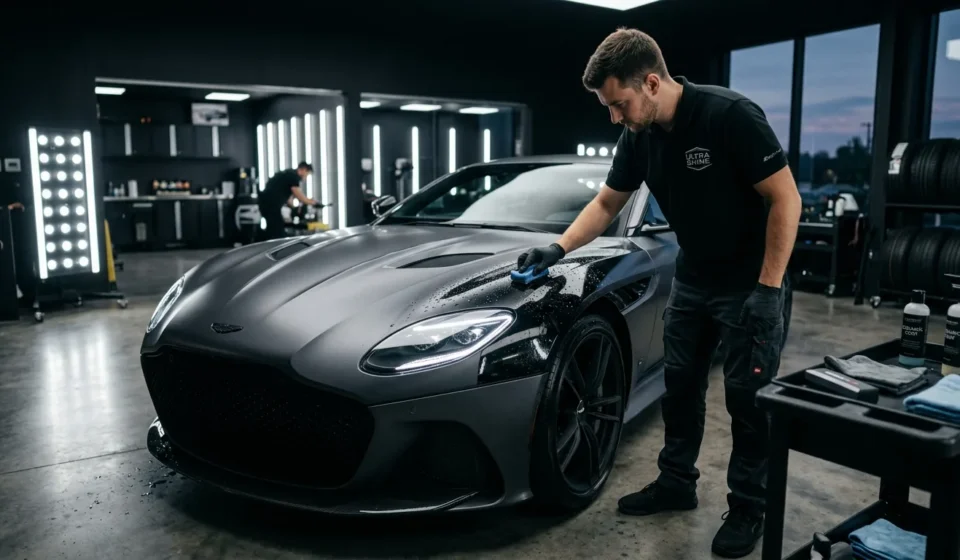
- Apply to Applicator: Dispense a few drops of the coating onto a suede applicator wrapped around a foam block. Don’t saturate it.
- Work in Small Sections: Typically, a 2×2 ft (60×60 cm) section is ideal. Apply the coating in a cross-hatch pattern (horizontal passes, then vertical passes) to ensure even coverage.
- Observe Flash Time: The coating will “flash” – you’ll see a rainbow effect or a slight haze forming. This is the solvent evaporating. The time this takes depends on temperature and humidity.
- Level and Buff: Immediately after flashing (or within the recommended time window), gently buff the section with a clean, short-nap microfiber towel. Use light pressure. Then, with a second, clean, plush microfiber towel, do a final buff to remove any streaks or “high spots” (areas where too much product was left behind). High spots are the bane of ceramic coating – they can be very difficult to remove once cured.
- Repeat: Continue this process panel by panel, always overlapping slightly into the previous section to ensure full coverage. I recommend doing two layers for maximum durability, waiting the manufacturer’s recommended time between coats (usually 1-2 hours).
Post-Application Care for Maximum Longevity
The first 24-48 hours after application are crucial. Avoid getting the vehicle wet during this period to allow the coating to fully cure. If it does get wet, gently pat dry immediately. For the first week, avoid harsh chemicals or automated car washes. Stick to gentle hand washes.
Common Mistakes & Pro Tips for Longevity
Even seasoned pros make mistakes, but you can avoid the most common ones:
- Not Prepping Enough: As mentioned, this is the biggest culprit for poor results. Don’t skip steps!
- Over-Application: Too much product creates high spots and makes buffing difficult, leading to streaks. Use just enough to see it on the surface.
- Working in Direct Sunlight or Hot Panels: This causes the coating to flash too quickly, making it impossible to level properly. Always work in the shade or indoors, and ensure the surface is cool to the touch.
- Using the Wrong Microfibers: Invest in high-quality, edgeless microfiber towels specifically for coating application and removal. Have plenty on hand and rotate them frequently.
- Applying to Damaged or Old Wraps: Ceramic coatings won’t fix existing damage like deep scratches, fading, or lifting edges. Address these issues before applying. If your wrap is already showing significant signs of wear (e.g., beyond 5 years of age on a standard 3M 2080 or Avery SWF film), a ceramic coating might not provide the expected longevity or aesthetic improvement.
- Edge Sealing: For wraps, consider using a dedicated edge sealer (like 3M Edge Sealer) before applying the ceramic coating to areas prone to lifting, such as door jambs, intricate curves, or recessed areas. This adds an extra layer of protection against peeling.
When it comes to costs for a professional ceramic coating application on a full wrap, expect to pay anywhere from $700-$1,500, depending on the size of the vehicle (e.g., a compact sedan like a Honda Civic vs. a large SUV like a Chevy Tahoe) and the coating’s durability. DIY will obviously be much cheaper, typically just the cost of the coating kit and supplies, ranging from $70-$200. However, the time and effort you put in are significant. Is it worth it? I believe so, as it will likely extend your wrap’s lifespan by 1-2 years beyond its typical 5-7 year expectancy with proper maintenance, not to mention the improved aesthetics and ease of cleaning.
Maintain Your Masterpiece: Keep That Shine Alive
So, you’ve coated your wrap. Now what? Maintenance is key to making that coating last. Wash your vehicle regularly, ideally every 1-2 weeks, using a pH-neutral shampoo. Avoid abrasive brushes or harsh chemicals. Many ceramic coating brands also offer maintenance sprays or “boosters” that you can apply after washes to refresh the coating’s hydrophobic properties and slickness. These are fantastic for extending the life of your primary coating.
Remember, a ceramic coating isn’t bulletproof. It reduces the risk of damage but doesn’t eliminate it. Drive safely, park smart, and treat your coated wrap with the respect it deserves. It’s an investment that will keep your vehicle looking sharp and protected for years to come.