

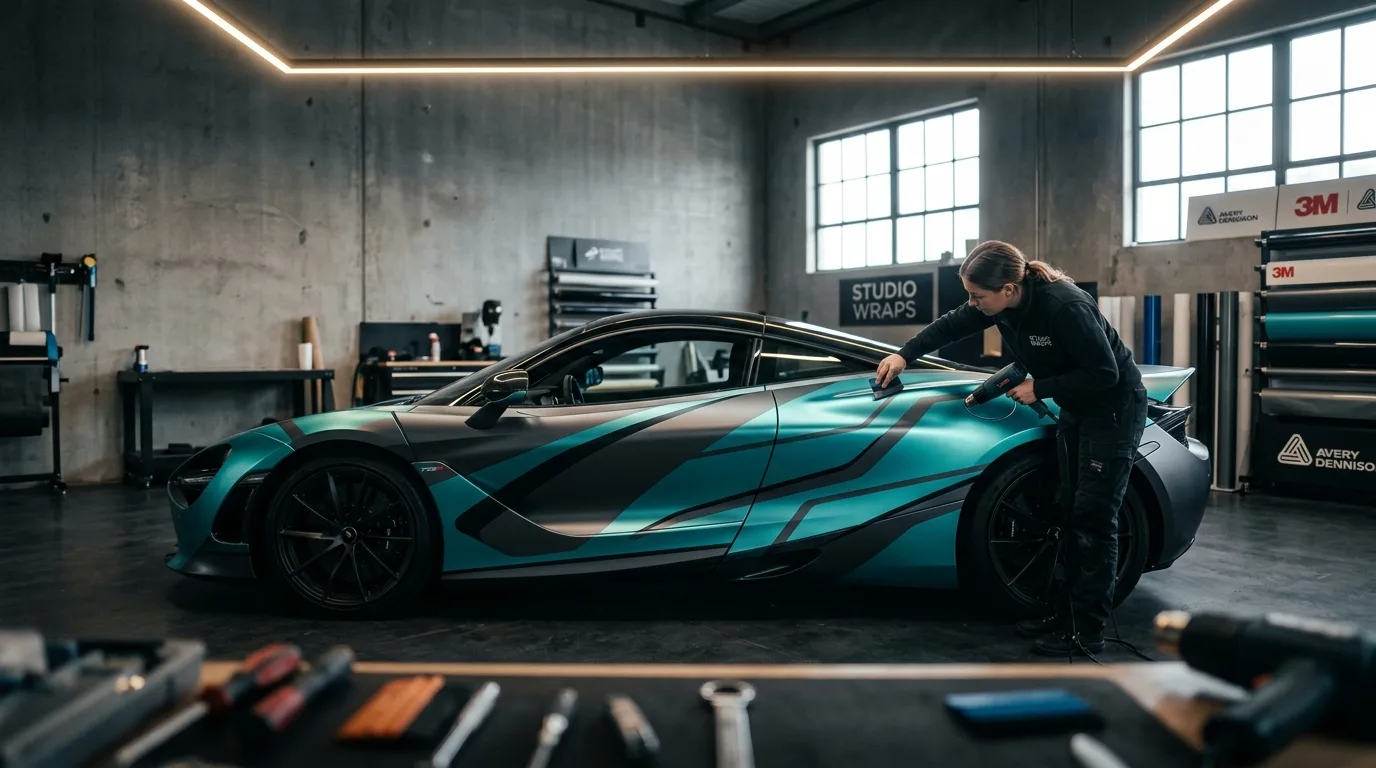

The Ultimate Guide to custom vehicle graphics: From Concept to Application
Hey there, fellow car enthusiasts! As someone who’s spent over 15 years knee-deep in vinyl, transforming countless vehicles, I can tell you that few things personalize a ride quite like custom graphics. We’re not just talking about full color change wraps here, though those are fantastic. Today, we’re diving into the exciting world of custom vehicle graphics – from simple decals to intricate partial wraps – and how to bring your unique vision to life.
Table Of Content
- The Ultimate Guide to custom vehicle graphics: From Concept to Application
- Phase 1: Concept & Design – Dreaming Up Your Graphics
- Phase 2: Material Selection – The Right Film for the Job
- Phase 3: Application – Bringing the Design to Life
- Maintenance for Maximum Longevity
- DIY vs. Professional Installation & Cost Considerations
- Your Vehicle, Your Statement
Custom vehicle graphics are essentially any design, logo, text, or image applied to your vehicle using adhesive vinyl film. This can range from small spot graphics (like a business logo on a door or a cool decal on a window) to racing stripes, intricate patterns, or even partial wraps that cover significant sections of your vehicle, creating a unique livery without fully changing its base color.
Phase 1: Concept & Design – Dreaming Up Your Graphics
This is where the magic begins! Before any vinyl touches your paint, you need a clear vision. What message do you want to convey? What style speaks to you? Are you looking for a subtle enhancement or a bold statement?
- Brainstorming Your Vision: Think about your vehicle’s lines, your personal style, or your brand identity. Do you want something sleek and minimalist, aggressive and sporty, or artistic and abstract?
- Working with a Designer: Unless you’re a seasoned graphic designer yourself, I highly recommend consulting a professional. They understand how designs translate to a 3D surface. Make sure they can provide files in a vector format (like .AI or .EPS). Why vector? Because it means the design can be scaled to any size without losing resolution or becoming pixelated – crucial for large vehicle applications!
- Vehicle Templates: A good designer will use a precise vehicle template for your exact make, model, and year (e.g., a 2024 Tesla Model Y or a Ford F-150 crew cab). This ensures the design fits perfectly, avoiding issues with door handles, body lines, or wheel wells.
Phase 2: Material Selection – The Right Film for the Job
Choosing the right vinyl is paramount for durability and appearance. For custom graphics, especially those involving printed designs, we typically use specialized print films.
- Cast Vinyl vs. calendered vinyl:
- Cast Vinyl: This is the premium choice for most vehicle graphics, especially if they involve curves or complex shapes. Cast vinyl (like 3M IJ180 or Avery MPI 1105) is produced by pouring liquid polymer onto a casting sheet, resulting in a very thin (around 2-2.5 mil), stable film that conforms beautifully to contours without shrinking back over time. It offers superior longevity (5-7+ years) and excellent print quality.
- Calendered Vinyl: A more economical option, calendered vinyl (around 3-4 mil) is produced by rolling molten polymer through rollers. It’s stiffer and more prone to shrinkage, making it better suited for flat surfaces or temporary graphics. For custom vehicle graphics meant to last, I always recommend cast.
- Popular Brands: Look for trusted names like 3M (especially the IJ180 or IJ280 series), Avery Dennison (MPI 1105 or MPI 1460 series), and Oracal (Orajet series). These films are engineered for vehicle applications and offer excellent printability and conformability.
- Laminate: After printing, graphics are always covered with a clear protective laminate (typically 1.5-2 mil thick). This laminate protects the print from UV rays, abrasion, and environmental contaminants, extending the graphic’s life and enhancing its gloss or matte finish.
Phase 3: Application – Bringing the Design to Life
Even the best design and material can fail with poor installation. Here’s a simplified breakdown of the professional application process for graphics:
- Thorough Cleaning & Prep: This is non-negotiable. The vehicle surface must be immaculately clean, free of dirt, wax, grease, and contamination. We use a two-step process: a good car wash, followed by a surface prep cleaner (like isopropyl alcohol or a dedicated wrap prep spray) and often a clay bar treatment to remove embedded contaminants. Trust me, any speck of dust will show through the vinyl.
- Accurate Placement: Using detailed measurements, masking tape, and often a level, the graphic is precisely positioned on the vehicle. This is critical for symmetry and alignment, especially with stripes or complex patterns.
- Weeding & Pre-Masking: For cut vinyl graphics (e.g., text or logos), the excess vinyl around the design (“weeding”) is removed. Then, a “pre-mask” or “transfer tape” is applied over the graphic to hold all elements in place during transfer to the vehicle.
- Installation Technique:
- Dry Application: Most modern vehicle graphics are applied dry. The liner is peeled back, and the graphic is carefully laid onto the surface.
- Squeegee Work: Using a high-quality felt-tipped squeegee (like a 3M Blue or Gold squeegee), steady, overlapping strokes are used to adhere the vinyl, pushing air bubbles out towards the edges. Consistent pressure is key to avoid trapping air or stretching the film.
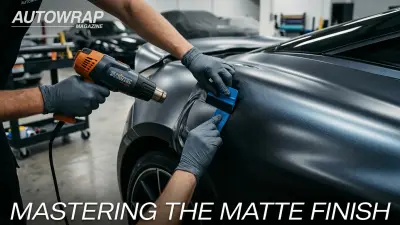
- Heat & Conformity: For curves and contours, a heat gun (set typically around 180-220°F or 80-105°C) is used sparingly to soften the vinyl, allowing it to conform without overstretching.
- Post-Heating: This step is often overlooked by DIYers but is crucial for longevity. After installation, the entire graphic (especially edges and stretched areas) is post-heated to around 200-220°F (90-105°C). This reactivates the adhesive, allowing it to “set” in its new shape and preventing lifting or shrinkage, ensuring your graphics last the full 5-7+ years they’re designed for.
- Edge Sealing (Optional but Recommended): For high-stress areas or exposed edges, a liquid edge sealer (like 3M Edge Sealer Tape or a liquid edge seal pen) can be applied to further secure the graphic and prevent lifting.
Maintenance for Maximum Longevity
Just like a full wrap, custom graphics need proper care:
- Washing: Hand wash with pH-neutral car soap and a soft microfiber mitt. Avoid automated car washes, especially those with brushes, and harsh chemicals.
- Avoid Waxing: Most vinyl doesn’t need traditional wax. Use wrap-safe detail sprays or ceramic coatings specifically designed for vinyl to protect the film and enhance its finish.
- Prompt Cleaning: Remove bird droppings, bug splatters, and sap as soon as possible to prevent etching or staining.
DIY vs. Professional Installation & Cost Considerations
While small decals can be a fun DIY project, complex graphics, stripes, or partial wraps are best left to professionals. A professional installer has the experience, specialized tools (like a precise plotter for cutting, laminator for protection, and proper heat guns), and environment (dust-free bay) to ensure a flawless, long-lasting finish.
Cost Breakdown (2025-2026 Estimates):
- Small Spot Graphics/Decals: $50 – $300 (depending on size, complexity, and quantity).
- Racing Stripes (hood, roof, trunk): $400 – $1,200+ (depending on design complexity, material, and vehicle size).
- Partial Wraps (e.g., roof, hood, or side livery): $800 – $2,500+ (significantly varies based on coverage area, complexity, and detail required).
These prices include design consultation, material, printing, laminating, and professional installation. For example, a custom livery on a sports car might cost more than simple stripes on a sedan due to intricate design and installation time.
Your Vehicle, Your Statement
Custom vehicle graphics are an incredible way to make your car, truck, or motorcycle truly yours. Whether it’s for personal expression, branding, or just adding some flair, remember that attention to detail at every stage – from the initial concept to the final post-heating – is what guarantees a stunning, durable result. Don’t be afraid to think big, and always prioritize quality materials and professional execution for graphics that turn heads for years to come. Happy wrapping!