

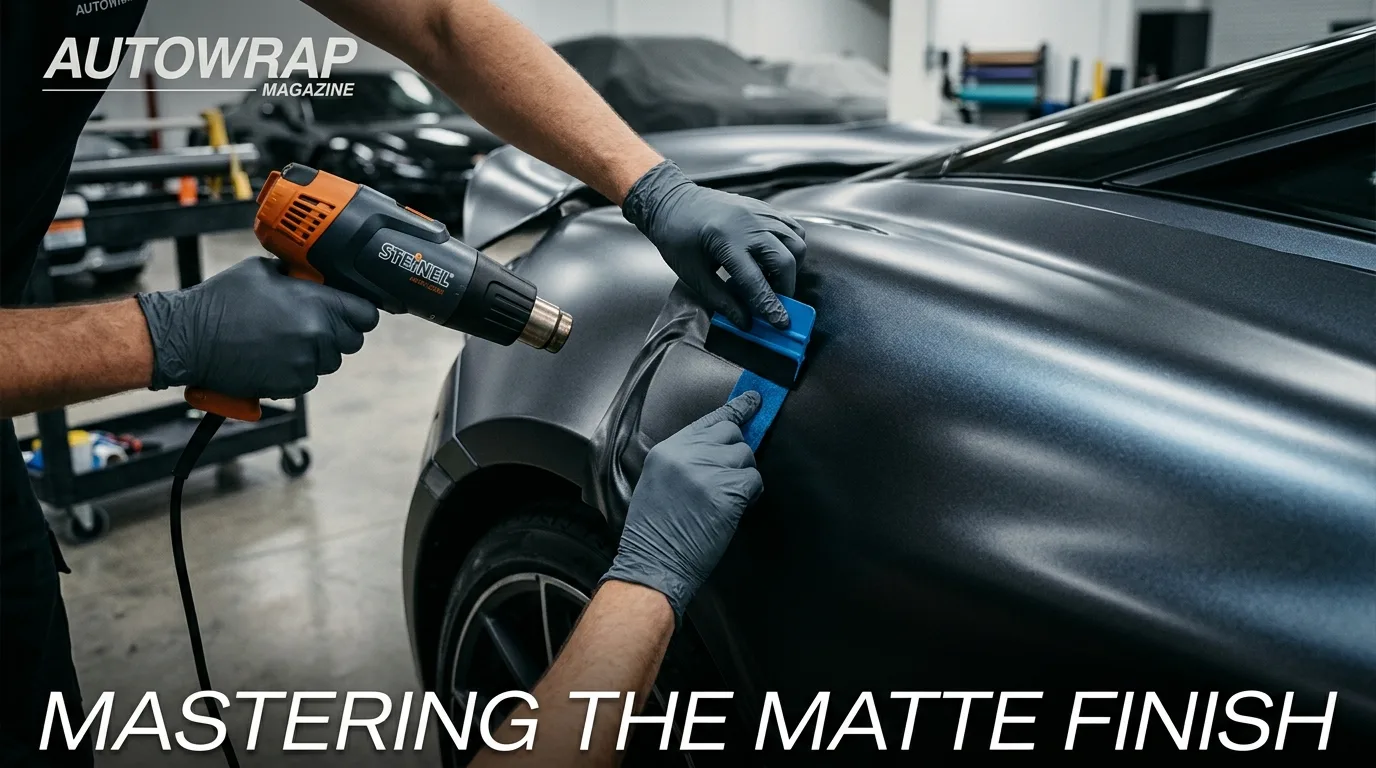

Don’t Sweat the Small Stuff: Expert Tips for Repairing Minor Car Wrap Damage
As a professional wrap installer who’s seen hundreds of vehicles come and go, I can tell you one thing for sure: even the best car wraps can suffer minor dings, scratches, or lifted edges over time. It’s just part of life on the road! But here’s the good news: most minor damage is completely fixable, often without needing a full panel re-wrap. With the right tools and a little know-how, you can keep your vehicle looking sharp and extend the life of your vinyl. Think of me as your trusted local wrap shop owner, guiding you through the process.
Table Of Content
- Don’t Sweat the Small Stuff: Expert Tips for Repairing Minor Car Wrap Damage
- General Principles for Any Wrap Repair
- 1. Tackling Scratches on Your Car Wrap
- Light Scratches & Swirl Marks
- Deeper Scratches (Not Through the Film)
- 2. Repairing Tears and Punctures
- Small Tears, Nicks, or Pinholes
- Larger Tears Requiring a Panel Patch or Re-wrap
- 3. Fixing Lifting Edges
- Essential Tools for DIY Wrap Repair
- When to Call a Pro
General Principles for Any Wrap Repair
Before diving into specific fixes, remember these core principles:
- Cleanliness is King: Always start with a spotless surface. Any dirt or debris trapped under the vinyl will cause issues. Use an IPA (Isopropyl Alcohol) solution (70% rubbing alcohol) to degrease and clean the area thoroughly.
- Gentle Heat is Your Friend: A heat gun is an indispensable tool. It softens the vinyl, allowing it to relax and conform. Always use it on a low to medium setting (around 150-250°F or 65-121°C) and keep it moving to avoid overheating, which can damage the film or paint.
- Patience and Precision: Rushing leads to mistakes. Take your time, especially with cuts and squeegee work.
- Know Your Film: Most high-quality color change films are cast vinyl – a premium, heat-activated film that conforms to complex curves and has “memory,” meaning it wants to return to its original flat state, which is great for minor repairs. Cheaper calendered vinyl is stiffer and less forgiving.
1. Tackling Scratches on Your Car Wrap
Scratches are perhaps the most common form of minor wrap damage. How you fix them depends on their depth.
Light Scratches & Swirl Marks
Many modern cast vinyl films, like 3M 2080/1080 series or Avery Supreme Wrapping Film, have a degree of self-healing capability, especially if they’re gloss or satin finishes. PPF (Paint Protection Film) is even better at this.
- Clean the Area: Use IPA and a microfiber cloth to remove any surface dirt.
- Apply Gentle Heat: Use your heat gun on a low setting (around 150-200°F / 65-93°C). Briefly warm the scratched area, moving the heat gun constantly.
- Rub Gently: With a clean, soft microfiber cloth, gently rub the scratched area. The heat helps the vinyl’s surface layers relax and re-level.
- Inspect: Often, light scratches will disappear or become significantly less noticeable.
Deeper Scratches (Not Through the Film)
If a scratch is deeper but hasn’t fully penetrated the vinyl, it might be more challenging, but still worth a try:
- Follow the steps for light scratches, applying slightly more heat (but still carefully!).
- Consider a specialized wrap-safe cleaner/polish. Products from 3M or Avery are designed to be gentle on vinyl and can help diminish the appearance of stubborn marks. Always test on an inconspicuous area first.
Pro Tip: If you feel a “catch” when running your fingernail over the scratch, it’s likely too deep for heat alone and may require a patch or panel re-wrap for perfection.
2. Repairing Tears and Punctures
Tears, especially from small road debris or bumps, can be intimidating, but small ones are fixable.
Small Tears, Nicks, or Pinholes
For anything smaller than a quarter, a patch can work wonders if done correctly.
- Clean Thoroughly: Remove all dirt, wax, and grime from the torn area and surrounding vinyl using IPA.
- Prepare Your Patch: Ideally, you saved some scrap pieces from your original wrap installation. Cut a small, slightly oversized piece of matching vinyl. For best results, use a sharp knife (e.g., Olfa 30-degree blade) and round the corners of your patch slightly. This prevents sharp points from lifting later.
- Apply the Patch: Carefully apply the patch over the damaged area. Use minimal initial pressure.
- Squeegee and Heat: Work out any air bubbles with a felt-tipped squeegee, starting from the center of the patch outwards. Then, use your heat gun (around 200-220°F / 93-104°C) to post-heat the patch, especially its edges. This activates the adhesive and ensures it conforms and sticks.
- Edge Sealer (Optional but Recommended): For high-stress areas like bumpers or mirrors, apply a thin layer of 3M 8588 Edge Sealer around the patch’s perimeter for extra security.
Larger Tears Requiring a Panel Patch or Re-wrap
For more significant damage, such as a scrape on a bumper or fender, you have two main options:
- Seamless Panel Patch: This is a pro technique but DIY-able with patience.
- Clean and Cut: Thoroughly clean the damaged area. Using a ruler or straight edge, carefully cut out the damaged section of vinyl in a clean, geometric shape (e.g., a rectangle) that covers the tear entirely.
- Apply New Vinyl: Cut a new piece of matching vinyl slightly larger than the cutout. Apply it over the hole, ensuring it overlaps the existing wrap by about 1/4 to 1/2 inch on all sides.
- The “Bridge Cut”: Place a piece of masking tape or a strip of paper over the overlapping area to protect the paint. With an extremely sharp blade, cut through both layers of vinyl simultaneously along a straight line that spans the overlap. Remove the excess top and bottom layers.
- Squeegee and Post-Heat: Carefully remove the cutout piece from underneath and the trimmed excess from the top. You should now have a perfectly butted joint. Squeegee down the new piece firmly, then thoroughly post-heat the entire area to around 200-220°F (93-104°C) using an IR thermometer to confirm.
- Cost: A DIY patch like this might only cost you the scrap vinyl and your time. A shop might charge $100-$300 for a small, simple patch.
- Panel Re-wrap: If the damage is extensive, covers a large area, or you simply want a flawless finish, replacing the entire affected panel’s wrap is the best option. For example, re-wrapping a single door panel on a 2024 Tesla Model Y might cost $300-$600 at a professional shop, depending on the film and complexity. This ensures color consistency and avoids visible seams.
3. Fixing Lifting Edges
Lifting edges are usually a sign of insufficient prep, improper post-heating, or sometimes, environmental stress. This is often the easiest fix!
- Clean the Area: Gently lift the edge slightly more to expose the underlying paint and the adhesive side of the vinyl. Clean both surfaces meticulously with IPA and a clean microfiber cloth. Remove any dust, wax, or residue.
- Apply Heat: Using your heat gun on a low to medium setting (around 200-250°F / 93-121°C), gently warm the lifted section of vinyl. The film will become pliable, and the adhesive will reactivate.
- Re-Squeegee: Starting from the securely adhered section and working towards the lifted edge, firmly squeegee the vinyl back down. Ensure all air is pushed out and the edge is fully re-adhered.
- Post-Heat Critically: This is the most crucial step for lifting edges. Once the vinyl is back down, thoroughly post-heat the entire re-adhered edge to 200-220°F (93-104°C), confirming with an IR thermometer. This locks in the adhesive’s memory and ensures long-term adhesion. Hold the heat for a few seconds per spot.
- Edge Sealer (Highly Recommended): For areas prone to lifting (e.g., wheel wells, door jambs, intricate curves), apply a thin bead of 3M 8588 Edge Sealer along the very edge after post-heating. This provides an extra layer of protection against the elements. Allow it to cure fully (check product instructions, usually 24-48 hours).
Essential Tools for DIY Wrap Repair
- Heat Gun: Variable temperature is a must.
- IR Thermometer: Critical for accurate post-heating to ensure adhesive activation (e.g., Ryobi, Milwaukee, or cheaper alternatives).
- Felt-Tipped Squeegee: Protects the vinyl surface during application.
- Sharp Knife: An Olfa 30-degree snap-off blade is ideal for precise cuts.
- IPA (Isopropyl Alcohol) Spray Bottle: For cleaning and degreasing.
- Microfiber Cloths: Several clean ones are essential.
- 3M 8588 Edge Sealer: Highly recommended for critical areas.
- Matching Scrap Vinyl: Always keep small offcuts from your original wrap for future repairs!
When to Call a Pro
While many minor issues can be DIY, know your limits. If the damage is extensive, you don’t have matching film, or you’re simply uncomfortable with the repair process, don’t hesitate to contact a professional wrap shop. They have the expertise, specialized tools, and material stock to ensure a perfect, seamless repair. Remember, preserving your wrap means preserving your paint and your investment!