Save Your Wrap: Easy Fixes for Scratches, Tears, & Lifting Edges
Don’t Panic! Repairing Minor Damage to Your Car Wrap
As a seasoned wrap expert with over 15 years in this business, I’ve seen it all – from perfect installations to minor mishaps. The good news? While your vehicle wrap is incredibly durable and designed to last 5-7+ years, it’s not invincible. Scratches, small tears, or a lifting edge can happen. But before you despair, know this: most minor damage is completely fixable! At Car Wrap Info, we believe in empowering you with the knowledge to keep your ride looking sharp. Let’s dive into how you can tackle these common issues like a pro.
Table Of Content
- Don’t Panic! Repairing Minor Damage to Your Car Wrap
- First Things First: Prepare for Any Repair
- Repairing Scratches on Your Car Wrap
- 1. Light Surface Scratches (Clear Coat Only)
- 2. Deep Scratches (Through the Vinyl)
- Fixing Tears and Punctures in Your Wrap
- 1. Small Tears and Pinholes
- 2. Larger Tears or Rips
- Taming Lifting Edges on Your Wrap
- Essential Tools for Your Wrap Repair Kit
- Prevention is the Best Medicine
- When to Call a Professional
First Things First: Prepare for Any Repair
No matter the damage, proper preparation is key to a successful repair. Always start with a clean surface!
- Clean the Area: Use a mild soap and water solution to wash the damaged area and a generous surrounding perimeter. Rinse thoroughly.
- Degrease: Wipe the area with a 70% isopropyl alcohol (IPA) solution and a clean microfiber cloth. This removes any wax, grease, or contaminants that could prevent proper adhesion.
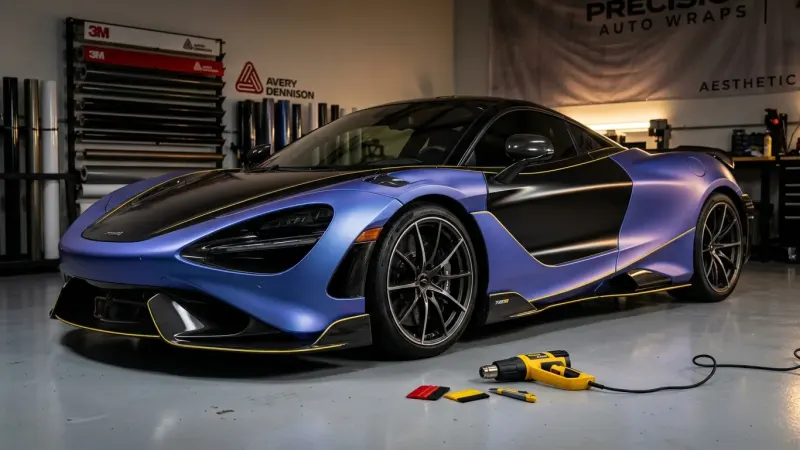
- Gather Your Tools: Have everything ready before you start. You’ll typically need a heat gun, a soft felt-tipped squeegee, clean microfiber cloths, and potentially a sharp knife or a small piece of matching vinyl.
Repairing Scratches on Your Car Wrap
Scratches are the most common complaint, and their fix depends on their depth.
1. Light Surface Scratches (Clear Coat Only)
Many premium cast vinyl films, like 3M 2080/1080 series, Avery Supreme Wrapping Film, or Oracal 970RA, have a clear protective layer (often 2.5–3 mil thick) that can sometimes “self-heal” or be buffed out.
- Heat Treatment: Gently warm the scratched area with a heat gun on a low setting (around 150-180°F or 65-82°C). The heat helps the vinyl relax and sometimes allows the clear layer to resettle.
- Gentle Rubbing: With a clean microfiber cloth, lightly rub the warmed area. Avoid excessive pressure.
- Vinyl Cleaner/Polish: For persistent light scratches, a specialized vinyl wrap cleaner or polish can help diminish their appearance. Always test on an inconspicuous area first.
Pro Tip: If you applied Paint Protection Film (PPF) (typically 4-8 mil thick) over your color change wrap, minor scratches on the PPF will often self-heal with sunlight or a little warm water, thanks to its advanced elastomeric polymer topcoat.
2. Deep Scratches (Through the Vinyl)
If a scratch has gone through the vinyl layer to the paint underneath, it cannot be “healed.” Your options are patching or panel replacement.
- Patching: For small, isolated deep scratches, you can apply a small, color-matched vinyl patch. This is often more noticeable but can prevent further damage.
- Panel Replacement: For larger, more visible deep scratches, or if you want an invisible repair, replacing the entire damaged panel (e.g., a door, fender) is the best option. This usually requires professional help due to the skill needed for seamless matching and reinstallation.
Fixing Tears and Punctures in Your Wrap
Tears can range from tiny pinholes to significant rips. Here’s how to approach them:
1. Small Tears and Pinholes
- Clean and Dry: Ensure the area is spotless and completely dry.
- Clear Vinyl Patch: For inconspicuous repairs, especially on solid colors, you can use a small, clear vinyl patch. Cut it slightly larger than the tear, rounding the corners to prevent future lifting.
- Color-Matched Patch: If you have a scrap piece of your original wrap film, cut a small, precise patch with rounded corners. This will blend much better.
- Application: Carefully apply the patch over the tear, ensuring no air bubbles. Use your squeegee from the center outwards.
- Heat and Squeegee: Gently heat the patch (180-200°F or 82-93°C) and firmly squeegee to activate the adhesive and conform it to the surface.
2. Larger Tears or Rips
For more substantial damage, you have two main choices:
- Visible Patch Repair: This is a DIY-friendly option but will likely leave a visible seam.
- Trim the torn edges neatly with a sharp knife, removing any frayed or lifted vinyl.
- Cut a piece of matching vinyl (from your scrap, if available) that overlaps the damaged area by at least 1-2 inches on all sides. Round the corners of your patch.
- Clean the entire area thoroughly, including the exposed paint if visible.
- Carefully apply the patch, aligning the pattern or grain if applicable. Use your squeegee to remove air bubbles.
- Heat the patch (180-200°F or 82-93°C) and squeegee firmly, paying close attention to the edges.
- Post-heat the entire patched area (200-220°F or 93-105°C) to ensure maximum adhesion.
- Seamless Panel Replacement: This is the professional route for an invisible repair. A skilled installer will carefully remove the damaged panel of vinyl and replace it with a fresh piece, ensuring perfect color and pattern alignment. While more costly, it restores the wrap to its original glory. For example, replacing a single door panel on a vehicle could range from $200-$600 depending on the vehicle (like a 2024 Tesla Model Y door vs. a Ford F-150 crew cab door) and complexity.
Taming Lifting Edges on Your Wrap
Lifting edges are often a sign of insufficient post-heating during installation, poor surface prep, or sometimes impact. They are usually easy to fix if caught early!
- Clean the Lifted Area: Gently peel back the lifted edge a little further if needed to clean the exposed adhesive and the paint underneath with IPA.
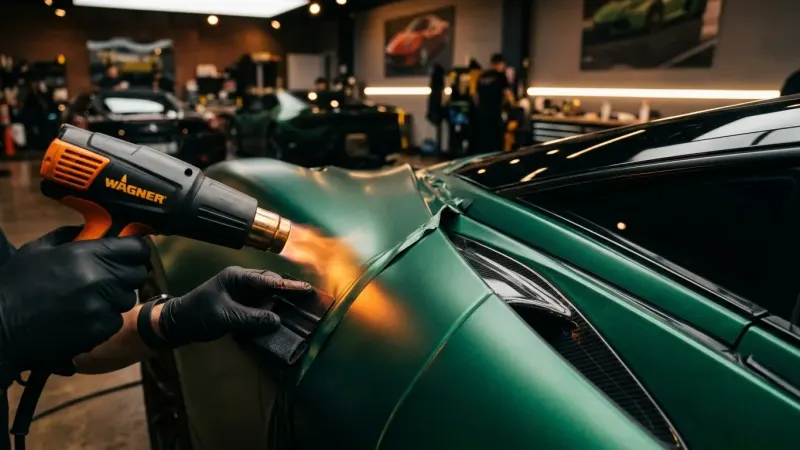
- Reactivate the Adhesive: Using your heat gun on a low-medium setting (around 180-220°F or 82-105°C), gently warm the vinyl and the exposed adhesive. You’ll feel the vinyl become pliable.
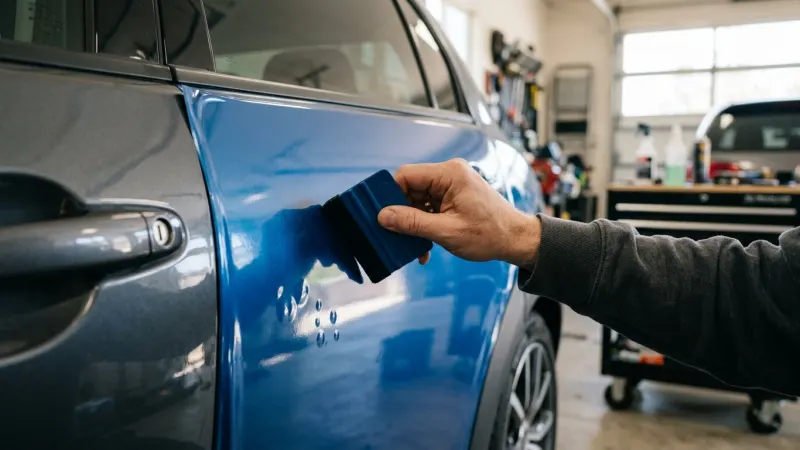
- Squeegee Firmly: Starting from the already-adhered section, firmly squeegee the lifted edge back down, working towards the very edge. Apply steady pressure.
- Post-Heat Thoroughly: Once re-adhered, post-heat the entire edge section to 200-220°F (93-105°C). This is crucial! It “sets” the adhesive, preventing future lifting. Use an IR thermometer if you have one to ensure you hit the target temperature.
- Consider Edge Sealer/Primer: For stubborn areas prone to lifting, like around wheel wells or complex curves, a vinyl primer (e.g., 3M Edge Sealer or Avery Primer 94) can provide extra adhesion. Apply it sparingly to the vehicle’s paint before re-adhering the vinyl.
Essential Tools for Your Wrap Repair Kit
- Heat Gun: A must-have for reactivating adhesive and relaxing vinyl.
- Soft Felt-Tipped Squeegee: For smooth application and pushing out air.
- Microfiber Cloths: For cleaning and wiping.
- Isopropyl Alcohol (IPA): For surface prep.
- Sharp Knife/Razor Blades: For precise trimming of patches. An Olfa or 3M wrap knife is ideal.
- Optional: IR thermometer (for accurate post-heating), vinyl primer/edge sealer, scrap vinyl from your original wrap.
Prevention is the Best Medicine
While repairs are possible, preventing damage is always better:
- Professional Installation: Ensures proper prep, application, and critical post-heating.
- Regular, Gentle Cleaning: Wash your wrapped vehicle frequently with wrap-safe cleaners. Avoid harsh chemicals or abrasive brushes.
- Avoid Automated Car Washes: The aggressive brushes can lift edges and scratch the vinyl. Hand washing is always best.
- Consider PPF: For high-impact areas like the front bumper, hood, or rocker panels, applying PPF over your color change wrap provides an extra layer of self-healing protection.
When to Call a Professional
While many minor repairs can be DIY, don’t hesitate to contact a professional wrap shop for:
- Large or complex tears where a patch would be unsightly.
- Damage to multiple panels.
- If you don’t have matching scrap vinyl for a seamless patch.
- Anytime you’re not confident in achieving a satisfactory result. A good shop can often make the damage disappear without a trace.
Don’t let minor damage ruin your wrap experience. With these tips from Car Wrap Info, you’re now equipped to tackle common issues and keep your wrapped vehicle looking fantastic for years to come!