Understanding Vinyl Film Thickness: Why Mil Matters for Your Car Wrap
As a seasoned car wrap specialist, I've seen countless vehicles transformed by vinyl. One of the most common questions I get from car owners, DIY enthusiasts, and even fellow hobbyists is about "film thickness" or "mil." It's a critical factor that directly impacts how your wrap looks, performs, and lasts. On Car Wrap Info, we're here to break down exactly what film thickness means and how to choose the right "mil" for your next project.
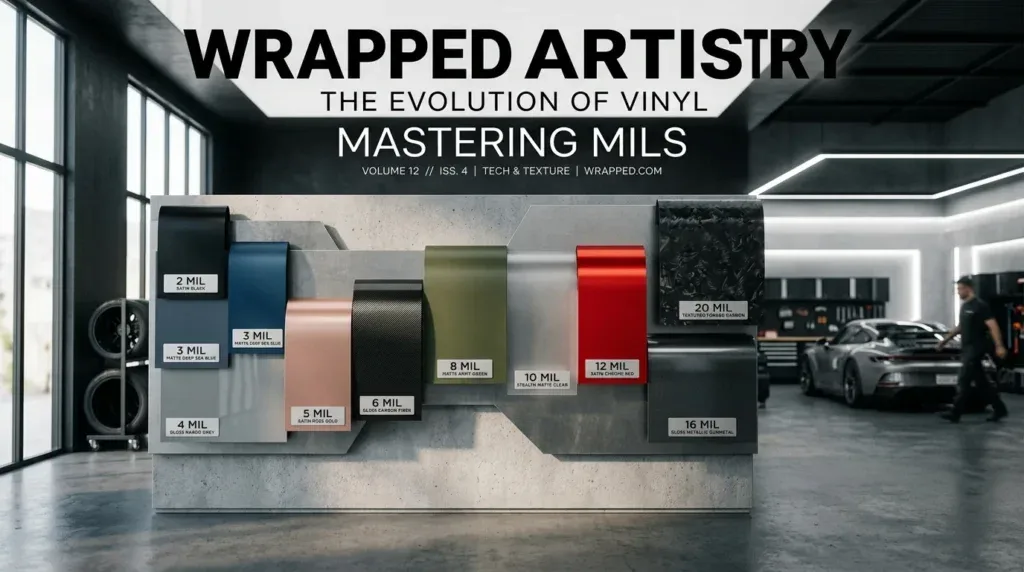
First things first: What is mil? In the world of vinyl wraps, "mil" is not short for millimeter. It stands for one-thousandth of an inch (0.001 inches). So, a 3 mil film is 0.003 inches thick. Understanding this measurement is key to selecting the right material for durability, conformability, and ease of installation.
The Relationship Between Mil, Durability, and Conformability
Generally speaking, a thicker film often means more physical durability, offering better resistance against minor scratches, stone chips, and abrasions. However, thinner films typically offer superior conformability – meaning they can stretch and adhere more easily to complex curves, deep recesses, and intricate body lines without excessive tension or risk of lifting.
Common Film Types and Their Typical Thicknesses
1. Cast Vinyl (Color Change Wraps)
- Typical Thickness: 2.5–3.5 mil (including adhesive layer)
- Explanation: Cast vinyl is the premium, heat-activated film of choice for full vehicle color changes. It's manufactured by pouring liquid vinyl onto a casting sheet, which allows it to shrink very little (less than 0.5%) after application. Despite being relatively thin, its manufacturing process makes it incredibly flexible and dimensionally stable. This low shrinkage is crucial for wraps that need to last 5-7+ years without pulling back from edges or recesses.
- Best For: Full wraps on vehicles with complex curves (e.g., a 2024 Tesla Model Y, Porsche 911), chrome deletes, and intricate accents.
- Popular Brands: 3M 2080/1080 series, Avery Dennison Supreme Wrapping Film, Oracal 970RA, Hexis Skintac, Arlon Ultimate PremiumPlus.
2. Calendered Vinyl (Graphics, Short-Term Wraps)
- Typical Thickness: 3–4 mil (excluding adhesive)
- Explanation: calendered vinyl is a more affordable, stiffer film made by extruding vinyl through rollers. This process stretches the material, causing it to have a higher "memory" and tendency to shrink back over time (up to 3-5%). It's thicker than cast vinyl but less conformable and durable in the long run, typically lasting 1-3 years.
- Best For: Flat surfaces, simple vehicle graphics, temporary signage, and short-term promotional wraps (e.g., fleet graphics on side panels of a box truck).
3. paint protection film (PPF)
- Typical Thickness: 4–10 mil (including adhesive)
- Explanation: PPF is a clear, thermoplastic urethane film designed specifically for paint protection. Its substantial thickness is what gives it its incredible impact resistance, protecting against rock chips, scratches, and road debris. Premium PPFs often feature a self-healing topcoat and hydrophobic properties. The increased thickness makes it less pliable than cast vinyl for extreme curves and requires different installation techniques, often involving more slip solution.
- Best For: High-impact areas like bumpers, hoods, fenders, mirrors, and rocker panels. A full front PPF on a Ford F-150 might use 6-8 mil film for maximum protection.
- Popular Brands: XPEL Ultimate Plus, Suntek Reaction, 3M Scotchgard Pro Series, STEK DYNOshield.
How Thickness Impacts Installation and Longevity
For DIY wrappers and pros alike, film thickness dictates your approach:
- Thinner Films (2.5-3.5 mil cast): Easier to conform to tight corners and deep recesses with minimal heat. However, they are more delicate and prone to overstretching or tearing if handled improperly. Squeegee pressure needs to be consistent but not excessive. Post-heating these films to 180-200°F (82-93°C) after installation is crucial to set the adhesive and prevent lifting, especially in recessed areas.
- Thicker Films (4-10 mil PPF): More forgiving against small mistakes like light scratches during installation, but require more heat to become pliable for complex shapes. They are less prone to tearing but can be harder to manipulate without proper technique and tools like slip solutions (water/alcohol mixture) and tack solutions. Achieving seamless edges can be more challenging. While providing superior protection, expect a professional full PPF install on a vehicle like a Tesla Model 3 to cost $5,000-$8,000, reflecting the material cost and specialized labor.
Choosing the Right Mil for Your Project
When deciding, consider these factors:
- Application Type:
- Full Color Change: Stick with 2.5-3.5 mil cast vinyl for best conformability and longevity.
- paint protection: Opt for 6-8 mil PPF for excellent impact resistance. For motorcycles, where chips are more common, an 8-10 mil PPF might be ideal for tank and fairing protection.
- Simple Graphics/Flat Panels: 3-4 mil calendered vinyl can be cost-effective if minimal curves are involved and longevity isn't paramount.
- Vehicle Complexity: The curvier your vehicle, the more you'll appreciate the conformability of thinner cast films. A Dodge Challenger with its relatively flat panels might be more forgiving than a Nissan GT-R with its intricate curves.
- Desired Longevity: If you want a wrap to last 5-7+ years, premium cast vinyl or high-quality PPF is essential.
- DIY Skill Level: For beginners, a slightly thicker cast film (around 3.2 mil) might feel a bit more robust than a 2.5 mil film, offering a slight buffer against accidental tears without sacrificing too much conformability. However, be aware that thicker films like PPF are considerably harder to install for a DIYer.
Practical Tips & Common Mistakes to Avoid
- Don't Overstretch Thinner Films: While conformable, cast vinyl can be overstretched, leading to adhesive failure or color distortion. Use minimal tension, letting the heat do the work.
- Thickness Isn't Everything: A 2.5 mil premium cast vinyl is superior to a 4 mil economy calendered film for a full wrap. Always consider the film type along with its thickness.
- Master Heat Application: Different thicknesses react differently to heat. For example, a heat gun setting of 750-900°F (400-480°C) held at a distance is often used for cast vinyl, focusing on relaxation rather than extreme stretching.
- Edge Sealing: Regardless of thickness, properly edge sealing (using a liquid edge sealer) crucial for areas prone to lifting, like wheel wells or door edges, especially for DIY projects.
Choosing the right film thickness is a fundamental step in achieving a successful and long-lasting car wrap. By understanding the properties of different mil measurements and film types, you're well on your way to making an informed decision that meets your vehicle's needs and your personal expectations. Happy wrapping!