Disclosure: As an Amazon Associate, we earn from qualifying purchases.
Paint Protection Film (PPF) and color-change vinyl wrap serve two completely distinct primary functions: PPF is a thick, self-healing polyurethane barrier designed to absorb rock chips and scratches, while vinyl wrap is a thinner PVC film engineered primarily to alter a vehicle's color and aesthetic finish. While color-infused PPF films are emerging in the market, traditional 3M automotive vinyl wrap offers superior color variety and lower material costs, whereas clear or matte PPF provides unmatched physical defense for high-impact zones.
Understanding Material Differences: PPF vs. Vinyl Wrap
To choose the right material for your build, you need to understand the structural physics behind these two options. Vinyl wrap—such as 3M 2080 Series, Avery Supreme Wrapping Film, or Oracal 970RA—is made of cast vinyl (typically 3.2 mil to 4.5 mil thick including the adhesive layer). Cast vinyl is manufactured by pouring liquid PVC onto a casting sheet, making it lightweight, flexible, and capable of conforming to deep channels and compound curves when heated. It offers hundreds of colors, including gloss, satin, matte, and carbon fiber textured finishes.
Conversely, PPF is built from thermoplastic polyurethane (TPU), usually measuring 6 mil to 8 mil thick (roughly double to triple the thickness of vinyl). TPU features a clear coat layer with self-healing properties: lightweight scratches disappear under sunshine or light ambient heat. Because PPF is significantly denser, it acts as a physical cushion against flying road debris, rock chips, and severe bug splatter that would instantly puncture standard vinyl film.
| Feature / Spec | Cast Vinyl Wrap (e.g., 3M 2080) | Paint Protection Film (PPF) |
|---|---|---|
| Primary Material | Polyvinyl Chloride (PVC) | Thermoplastic Polyurethane (TPU) |
| Typical Thickness | 3.2 – 4.5 mil (0.08 – 0.11 mm) | 6.0 – 8.0 mil (0.15 – 0.20 mm) |
| Primary Function | Aesthetic custom color & finish | Impact protection against rock chips |
| Application Method | Dry application (air-release adhesive) | Wet application (slip & tack solutions) |
| Self-Healing Properties | No (heat resets surface tension only) | Yes (topcoat heals swirl marks with heat) |
| Lifespan | 5 to 7 years (vertical surfaces) | 7 to 10 years |
| Avg. Full Vehicle Cost (2025–2026) | $3,200 – $4,800 | $4,500 – $7,500+ |
Installation Demands: Dry Application vs. Wet Application
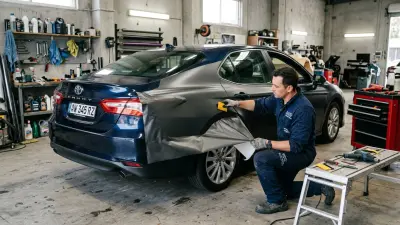
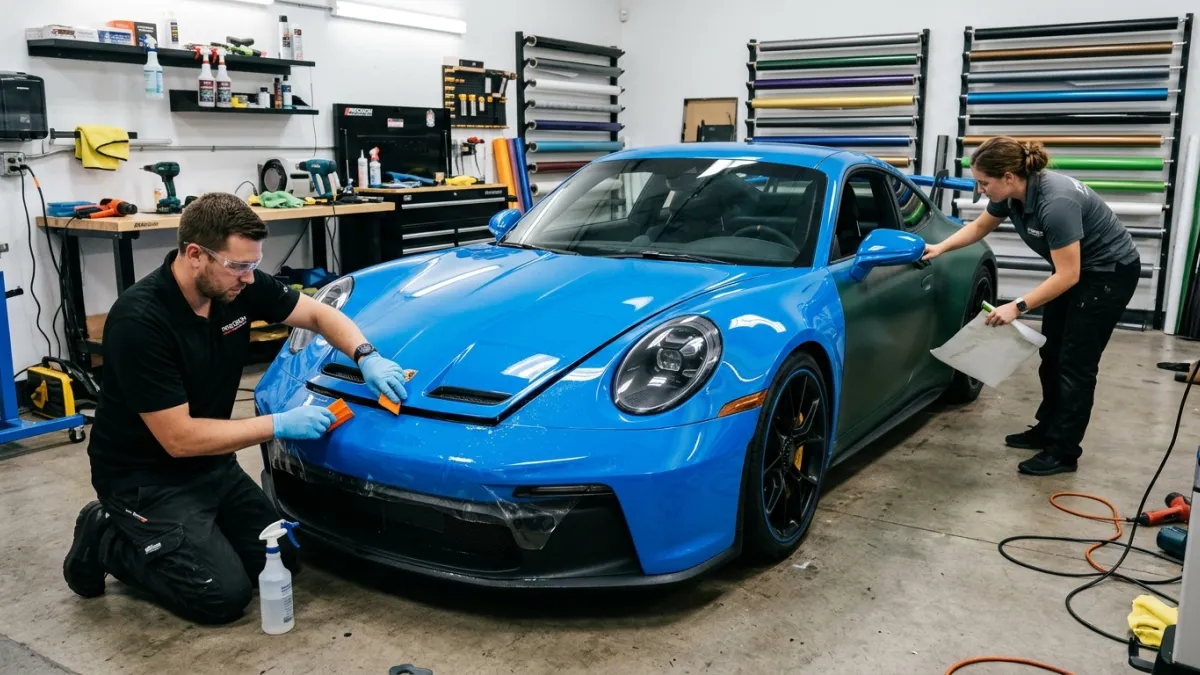
Installing vinyl wrap relies on a dry application technique. Modern cast vinyl films feature micro air-release channels embedded in the acrylic adhesive layer, allowing trapped air to escape easily when smoothed with a felt squeegee. In contrast, PPF requires a wet installation method using a mix of water, baby shampoo (slip solution), and isopropyl alcohol mixed with water (tack solution). Understanding these contrasting workflows prevents costly material waste.
Required Tools for Installation
DIAMOND PRO TECH – Diamond Wrap PPF & Vinyl – Hydrophobic Protection for Protective Film & Vinyl; Ultra-Slick Nanodiamond Coating; 18 Months of Protection; Self-Cleaning Properties (50 milliliters)

- Heat gun with digital temp display: Vital for post-heating cast vinyl and warming thick PPF during edge tucking.
- Infrared thermometer: Ensures precise post-heating temp readings.
- Squeegees: Hard felt-edge squeegee for dry vinyl; firm yellow/pink rubber squeegee for wet PPF liquid displacement.
- Cutting tools: Knifeless Tape (Design Line / Finish Line) to avoid cutting paint, and fresh 30-degree stainless steel blades.
- Slip & Tack Sprayers: 32 oz spray bottles containing soap/water slip solution and 10–15% IPA tack solution (for PPF).
Critical Heat Gun Temperature for Vinyl Wrap
Heat management dictates whether your wrap job lasts five years or lifts within five days. When working with 3M vinyl wrap for cars, heat is used to relax the film during stretch and to set its memory during post-heating.
During the stretching phase, maintain your heat gun temperature for vinyl wrap around 120°F to 140°F (50°C to 60°C). Overheating above 160°F during application softens the adhesive excessively and distorts color finishes, particularly on matte or textured vinyl.
Once the vinyl is laid into deep recessed areas or wrapped around panel edges, you must perform post-heating. Post-heating breaks the film's original structural memory so it does not pull back. For 3M 2080 series, heat the film to 200°F – 220°F (93°C – 104°C) measured with an infrared thermometer. For Avery SWF, aim for 175°F – 195°F (80°C – 90°C). Keep the heat gun moving continuously to avoid scorching the topcoat.
How to Wrap PPF Corners Without Creases
Wrapping corners with thick TPU film is one of the most challenging skills for DIYers and apprentices. Because PPF is wet-applied and thicker than vinyl, standard stretching techniques cause finger wrinkles and edge lifting. Here is the step-by-step process professional shops use:
- Flush out residual slip solution: Spray a 10% isopropyl alcohol and distilled water solution under the corner cap to wash out all slippery soap residue.
- Stretch to tension points outside the edge: Pull the film outward past the panel corner at a 45-degree angle. Distribute the tension evenly across the face of the panel rather than pulling directly on the corner tip.
- Tack the anchor point: Squeegee down the film roughly 2–3 inches behind the corner edge using firm pressure to lock the anchor point in place.
- Warm and stretch the corner overhang: Apply gentle warm air from your heat gun (110°F–120°F) or hot water to make the thick TPU pliable. Gently stretch the remaining overhang down and around the corner.
- Squeegee out moisture and lock: Use your thumb or a soft rubber squeegee to push all remaining alcohol solution out from under the edge. Hold the corner under light pressure for 15–20 seconds until the tack solution bonds.
- Trim cleanly: Leave roughly 1/8 inch (3 mm) of film to wrap around the back of the door or hood edge. Never cut directly on the sharp corner apex.
Cost Breakdown: Materials and Professional Labor
DEWALT 20V MAX Heat Gun, Cordless, Up to 990 Degrees, 42 Minutes of Run Time, LED Light, Heatgun with Flat and Hook Nozzle Attachments,Tool Only (DCE530B)

Budgeting accurately requires factoring in vehicle size, finish complexity, and material pricing. A standard sedan requires approximately 55 to 60 linear feet (17–18 meters) of 60-inch wide film.
For standard solid colors, a high-quality 3M vinyl wrap for cars material roll costs between $650 and $900. However, specialty films command premium pricing: 3M textured vinyl wrap for cars cost ranges from $850 to $1,300 per roll depending on whether you choose matrix black, brushed metal, or carbon fiber textures (like 3M 2080 Black Carbon Fiber CFS12).
Professional installation pricing reflects labor intensity:
- Full Vinyl Color Change Wrap: $3,200 to $4,800 (e.g., standard midsize sedan or compact crossover like a Tesla Model 3).
- Full Vehicle Clear PPF Coverage: $4,500 to $7,500+ depending on paint complexity and edge wrapping depth.
- Front-End PPF Protection Package: $1,500 to $2,400 (covers front bumper, hood, fenders, and side mirrors).
- DIY Full Vinyl Wrap Project: $700 to $1,200 total (roll of 3M 2080 film, Knifeless tape, squeegees, heat gun, and surface prep chemicals).
Long-Term Maintenance and Care Routine
Extending the lifespan of vinyl wraps and PPF to the 5–7+ year mark demands proper washing procedures and chemical safety.
- Wash Intervals: Hand wash every two weeks using a pH-neutral automotive shampoo. Avoid touchless car washes that utilize harsh high-pH or low-pH chemical prep soaps.
- Pressure Washing Safety: Maintain a minimum distance of 12 to 18 inches between the pressure washer nozzle and vehicle surface. Keep spray angles perpendicular; never spray directly at wrap seams or tucked edges at a 45-degree angle. Keep water pressure below 2,000 PSI.
- Surface Protection: Apply ceramic coatings specially formulated for vinyl or PPF (such as Gtechniq Halo or CarPro Skin). Ceramic coatings add hydrophobic protection, preventing oil, bird droppings, and industrial fallout from staining porous vinyl topcoats. Never apply traditional carnauba waxes containing petroleum distillates to matte or satin vinyl.
Sources
Chemical Guys, Mr. Pink Foam Party Wash & Wax Soap, Tangerine, 1 Gallon

- 3M Commercial Solutions - Automotive Wrap Films
- Avery Dennison Graphics Solutions
- ORAFOL Americas Graphic Products
Frequently Asked Questions
Can you apply PPF directly over a vinyl wrap?
While physically possible, applying clear PPF directly over vinyl wrap is generally not recommended by manufacturers. The aggressive adhesive of PPF can pull up or distort vinyl during installation or removal. If maximum protection and color change are both desired, consider buying factory color-infused PPF films instead.
What heat gun setting should I use for post-heating 3M vinyl wrap?
Set your heat gun so that the vinyl surface temperature reaches between 200°F and 220°F (93°C to 104°C). Always use an infrared thermometer to verify heat levels across recessed contours and stretched edges to prevent future lifting.
How long should I wait before washing a newly wrapped vehicle?
Wait at least 48 to 72 hours after installation before washing your vehicle. This gives the acrylic adhesive on vinyl or the moisture under PPF adequate time to fully cure and establish a maximum bond to the factory clear coat.