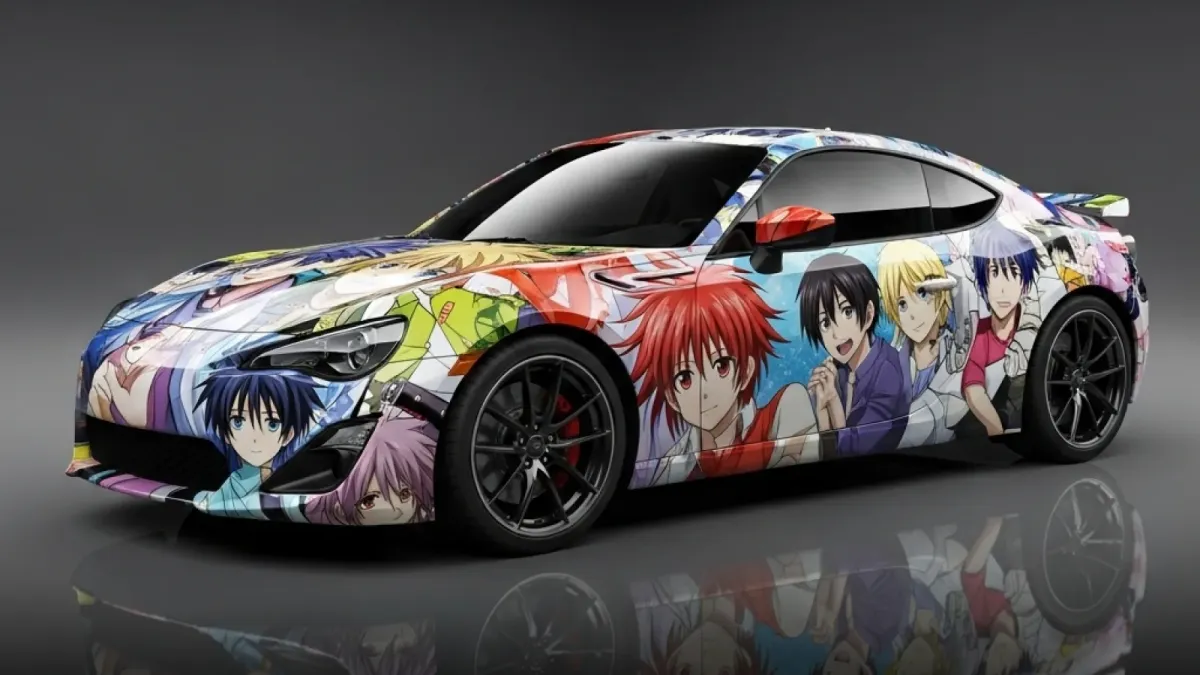
Quick answer: Anime car wraps range from $600 for partial hood and door layouts to $3,500–$6,000+ for full-vehicle custom printed designs installed professionally. To prevent shrinking and fading, these wraps require high-grade 2.0 to 3.2 mil premium cast vinyl (such as 3M IJ180Cv3 or Avery Dennison MPI 1105) laminated with a UV-blocking clear coat.
Understanding Itasha Culture and Materials: Cast vs. Calendered Vinyl
Creating an anime wrap is fundamentally different from installing a solid color-change film like 3M 2080 or Avery SW900. With an anime wrap, a high-resolution digital file is printed onto a specialized printable vinyl substrate using eco-solvent, latex, or UV-curable inks, and then sealed with an optical laminate. Choosing the wrong underlying material is the single biggest mistake DIYers and inexperienced shops make when building an itasha project.
Printable vinyl comes in two primary forms: cast and calendered. Cast vinyl (typically 2.0 to 2.5 mil thick before lamination) is liquid-poured during manufacturing, resulting in a dimensionally stable film with zero memory. It easily stretches up to 30% to conform around deep bumper recesses, door handles, and complex body lines without pulling back. calendered vinyl (3.0 to 6.0 mil thick) is extruded through heavy rollers; it retains a memory of being flat and will shrink, lift, and crack within months if applied to curved automotive panels.
When ordering printed panels, always ensure the media and the gloss or matte laminate are matched from the same brand family. Mixing a 3M printable base with a cheap off-brand laminate leads to premature delamination, tunnel bubbling, and severe discoloration under sunlight.
Installer tip: Printed graphics handle heat differently than standard solid-color films. When post-heating edges and deep channels on printed cast vinyl, keep your heat gun moving and target strictly 195°F to 205°F (90°C to 95°C) using an infrared digital thermometer. Overheating printed vinyl breaks down the protective UV laminate, causing ink distortion and dulling the vibrant colors of your artwork.
Designing Your Anime Wrap: Vectors, Resolution, and Panel Alignment
A stunning anime wrap relies heavily on file quality and precise vehicle measuring. You cannot simply pull a wallpaper off Google Images and stretch it across a vehicle hood; doing so results in heavy pixelation and blurry lines. Artwork must be created at full scale (1:1 ratio) at a minimum of 100–150 DPI (dots per inch), or built as scalable vector graphics in programs like Adobe Illustrator.
Professional wrap designers utilize specialized 2D dimensional vehicle templates (such as Pro Vehicle Outlines or Badwrap) tailored to the exact year, make, and trim of the car. These templates allow designers to position key elements—like a character's face or text in Japanese Katakana—away from door jams, handles, body seams, and deep cutouts where graphics get trimmed or distorted.
Consider how body lines split artwork. Place major focal points across broad, flat surfaces like the hood or side doors. If artwork crosses over door seams, print an extra 1 to 2 inches of bleed to wrap clean inner edges without stretching the graphic thin.
| Vinyl Type / Substrate | Thickness (Base + Lamination) | Expected Lifespan | Best Application | Approx. Material Cost (25 Yds) |
|---|---|---|---|---|
| Premium Cast (3M IJ180Cv3 / Avery MPI 1105) | 3.2 - 4.0 mil total | 5 to 7 Years | Full vehicle wraps, complex curves, bumpers | $750 – $1,100 |
| Intermediate Calendered (Orafol 3551 / Arlon 510) | 4.5 - 6.0 mil total | 2 to 3 Years | Flat panels, hood accents, short-term graphics | $300 – $500 |
| Perforated Window Film (50/50 or 60/40) | 6.0 - 8.0 mil total | 1 to 2 Years | Rear windshields, side rear windows | $150 – $250 |
Cost Breakdown for Anime Car Wraps in 2026
Pricing for anime wraps depends on graphic design fees, print material quality, vehicle size, and installation labor. Unlike standard color-change wraps where material comes pre-finished off the roll, itasha projects require custom graphic illustration or file licensing, which adds to the base cost.
A full custom wrap on a mid-sized sedan or coupe (requiring roughly 18 to 22 linear meters / 60 feet of 60-inch film) typically ranges from $3,500 to $6,000+. Graphic design fees alone can account for $400 to $1,200 of that budget depending on whether the illustrator creates custom artwork from scratch or uses existing high-res assets.
If you are looking for budget-friendly alternatives, partial wraps provide incredible visual impact at a fraction of the price. Wrapping just the hood or side doors usually costs between $600 and $1,800 installed. DIY kits using pre-printed anime vinyl rolls run $150 to $450, but require patience, surface prep tools, and proper knife-handling techniques like using knifeless tape to avoid scoring vehicle paint.
- Design Phase: $300 – $1,200 (Custom digital illustration & template fitting)
- Print & Lamination Production: $800 – $1,500 (High-grade cast media + UV laminate)
- Surface Preparation & Professional Labor: $1,500 – $3,000 (Deep cleaning, disassembly, precision laying, post-heating)
- Total Estimated Turnkey Cost: $2,600 – $5,700+
Step-by-Step DIY Installation & Surface Preparation
flawless wrap adhesion starts with meticulous paint prep. Wash the vehicle with a wax-free strip soap to eliminate road grime. Next, treat the paint with a clay bar to remove embedded contamination, followed by a thorough wipedown using a 70% Isopropyl Alcohol (IPA) and 30% distilled water mixture to eliminate residual grease or polish oils.
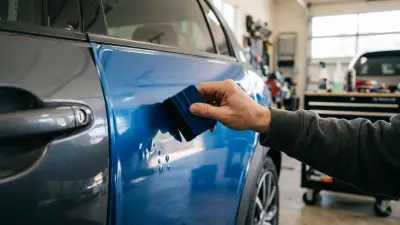
During installation, work in a climate-controlled room kept between 68°F and 75°F (20°C to 24°C). Lay out your printed panels using masking tape hinges to lock down positioning. Peel back the release liner and work from the center outward using a soft felt-edge squeegee at a 45-degree angle to push air out through air-release channels built into cast vinyls (such as 3M Comply or Avery Comply technology).
To avoid distorting printed faces or intricate graphics, never pull heated film aggressively across sharp corners. Instead, feed the vinyl evenly into recesses using glassing techniques (stretching the film flat over an open area before laying it down). Finish all trimmed edges with a fresh 30-degree snap-off blade, seal inner edges, and post-heat every stretched area to lock the graphic memory permanently.
Maintenance and Longevity Tips for Printed Vinyl
Proper maintenance protects your printed artwork from fading, yellowing, or edge lifting. Hand wash your wrapped vehicle every two weeks using a pH-neutral car shampoo free of added gloss enhancers or waxes. Avoid automated drive-through car washes with rigid bristles, as they scratch the clear laminate layer and dull graphic clarity over time.
If pressure washing, keep the nozzle tip at least 18 inches away from wrap edges and spray at a perpendicular angle; direct high-pressure spray underneath an edge will strip vinyl off the paint immediately. Apply a wrap-safe ceramic coating or specialized vinyl sealant every 6 months to add hydrophobic properties and enhanced UV protection against harsh sunlight.
When selecting your film and installer, choose a shop that uses premium cast vinyl backed by a solid manufacturer warranty. For long-term durability and crisp graphics, request high-resolution vector artwork printed on cast media like 3M IJ180Cv3 or Avery MPI 1105. Start by measuring your target panels and consulting with an experienced wrap designer to bring your vision to life safely.
Frequently Asked Questions
Does an anime car wrap damage original factory paint?
No, high-quality cast vinyl wraps protect factory paint from minor rock chips, UV rays, and road debris. As long as your vehicle features OEM paint in good condition, the wrap can be safely removed within 5 to 7 years using heat without leaving glue residue or lifting clear coat.
Can I install anime graphics over an existing color-change wrap?
Yes, layering printed decals or die-cut characters over an existing vinyl wrap works well, provided the base wrap is clean and fully cured. However, ensure you do not stretch secondary layers excessively, as double-layered vinyl resists thermal expansion differently than single-layer installs.
How long do printed anime wraps last outdoors?
With high-grade cast vinyl and a quality UV-blocking laminate, printed anime wraps last between 5 and 7 years when properly maintained. Unlaminated or cheap calendered wraps fade, turn brittle, and crack within 6 to 12 months under direct sun exposure.
Can I wrap rear side windows with anime artwork legally?
Yes, rear side windows and rear windshields can be wrapped using perforated window vinyl (usually 50/50 or 60/40 hole patterns). Perforated vinyl displays solid printed graphics from the outside while allowing the driver to see through the glass from the inside, maintaining safety compliance in most regions.