

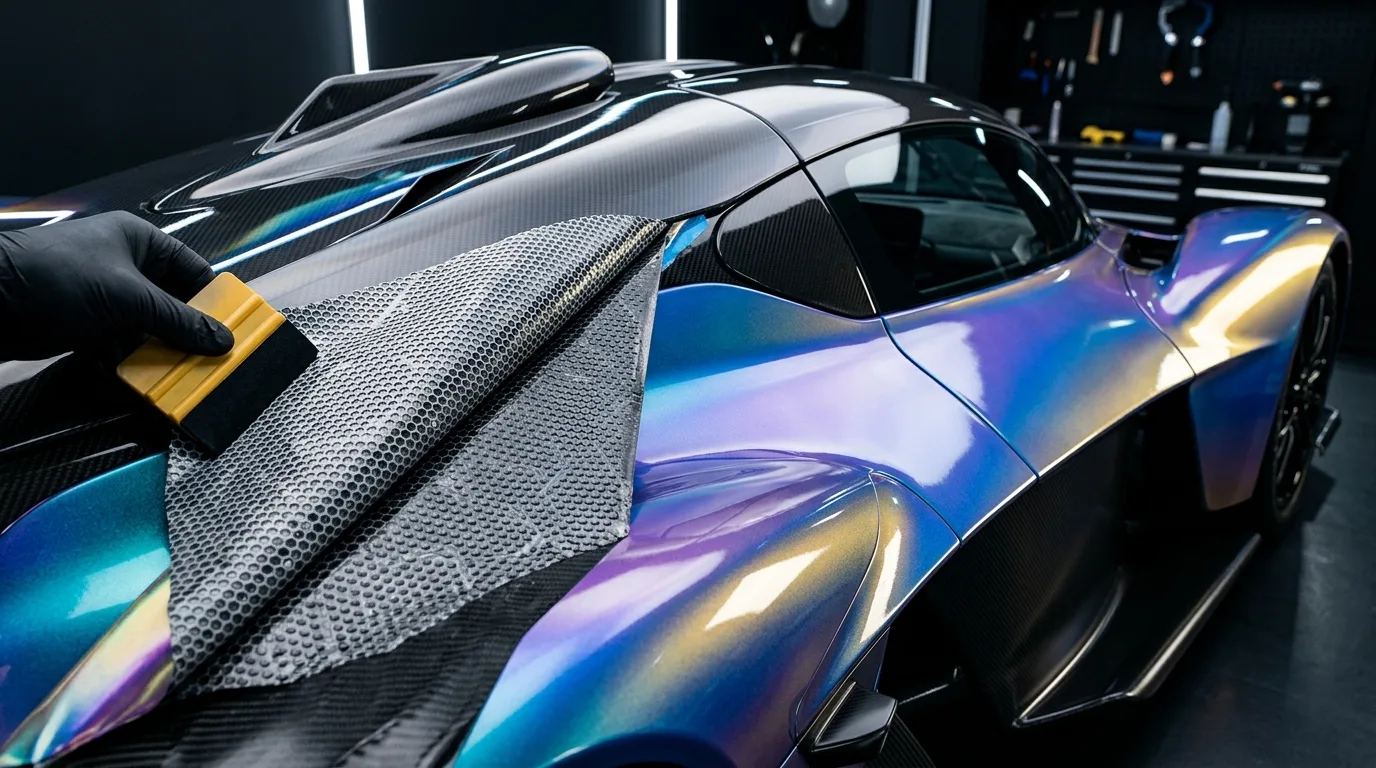

Understanding the Foundation: Cast vs. Calendered Vinyl
Walk into any professional wrap shop, and one of the first things you’ll hear us talk about is the type of vinyl film. After 15 years in this business, wrapping everything from compact cars to massive fleet trucks, I can tell you that choosing the right material is absolutely non-negotiable for a successful, long-lasting wrap. It’s the difference between a stunning finish that lasts 7+ years and a peeling, faded mess in half that time. Let’s break down the two main players: cast and calendered vinyl.
Table Of Content
- Understanding the Foundation: Cast vs. Calendered Vinyl
- Cast Vinyl: The Professional’s Choice for Premium Wraps
- Calendered Vinyl: Budget-Friendly for Flat Surfaces
- The Magic Behind the Film: Adhesives and Air Release Technology
- Air Release Channels: Your Best Friend for Bubble-Free Installs
- Adhesive Technologies: The Heart of the Grip
- Making the Right Choice: Factors for Your Project and Top Brands
- Key Considerations for Selecting Your Wrap Film
- Popular Wrap Film Brands and Their Specialties
- Beyond the Roll: Installation, Maintenance, and Costs for Success
- The Critical Role of Vehicle Preparation
- Installation Basics: Heat, Squeegee, and Post-Heating
- Maintenance for Maximum Longevity
- Cost Breakdowns (2025-2026 Estimates)
Cast Vinyl: The Professional’s Choice for Premium Wraps
When you hear “car wrap,” most professionals are thinking about cast vinyl. This is the premium, high-performance film that truly excels in automotive applications. Cast vinyl is manufactured by pouring liquid vinyl onto a casting sheet, which then passes through an oven to evaporate solvents. This process allows the material to relax and cure without tension, resulting in an incredibly stable and conformable film. Because it’s “cast” into shape, it has virtually no memory of its original form, meaning it won’t shrink back from curves or edges once installed correctly.
The benefits are clear: superior conformability to complex curves (think bumpers, mirrors, deep body lines), excellent durability, and outstanding longevity—typically 5 to 7 years, or even more with proper care. Cast films are also thinner, usually in the 2.5 to 3.5 mil range (a mil is one-thousandth of an inch), which makes them easier to handle for intricate details and gives them a paint-like finish. Popular brands like 3M 2080/1080 series, Avery Dennison Supreme Wrapping Film, Oracal 970RA, and Hexis are all cast vinyls, known for their vast color palettes and finishes, from high gloss to matte, satin, and even textured options like brushed metal or carbon fiber.
Calendered Vinyl: Budget-Friendly for Flat Surfaces
Now, let’s talk about calendered vinyl. This film is produced by extruding heated vinyl through a series of rollers (calendars) to flatten and stretch it into a sheet. This stretching process introduces internal stress into the material. While more affordable, this internal tension means calendered vinyl has a “memory” and will naturally try to revert to its original, stretched state over time, especially when exposed to heat cycles. This memory leads to shrinkage, which can cause edges to lift and corners to pull back, compromising the wrap’s integrity and appearance.
Calendered films are generally thicker than cast films, often in the 3 to 4 mil range for intermediate grades, and up to 4 to 5 mil for monomeric/polymeric types. Due to their stiffness and tendency to shrink, calendered vinyls are best suited for flat or gently curved surfaces, like vehicle graphics on the side of a box truck, flat signage, or temporary decals. While some DIYers might be tempted by the lower price point for a full vehicle wrap, I strongly advise against it for anything beyond a completely flat panel. You’ll spend more time fighting the material, and the lifespan will be significantly shorter—often just 1-3 years before noticeable shrinkage and lifting occur. Save yourself the headache and invest in cast vinyl for any full or complex partial wrap project.
The Magic Behind the Film: Adhesives and Air Release Technology
While the vinyl itself gets all the visual glory, the adhesive system is the unsung hero of any successful vehicle wrap. It’s what holds everything in place, allows for repositioning during installation, and ultimately dictates how cleanly the film can be removed years down the line. Coupled with modern air release technology, the adhesive layer is crucial for a smooth, bubble-free finish.
Air Release Channels: Your Best Friend for Bubble-Free Installs
If you’ve ever tried to apply a sticker and ended up with frustrating bubbles, you’ll appreciate air release technology. This ingenious feature, found on almost all modern automotive wrap films, involves microscopic channels or patterns embossed into the adhesive layer. These channels create pathways for trapped air to escape from under the film as you squeegee, dramatically reducing the likelihood of air bubbles. It’s a game-changer for both beginners and seasoned pros, allowing for a much smoother, more forgiving installation process.
Each major brand has its own proprietary name for this technology: 3M calls it Comply™ Adhesive Technology, Avery Dennison uses Easy Apply RS™, and Oracal features RapidAir® Technology. Regardless of the name, the principle is the same, and it’s a feature you absolutely want when choosing a film for a vehicle wrap. Without it, you’d be spending hours poking and pushing air out, risking damage to the film and your sanity.
Adhesive Technologies: The Heart of the Grip
Most modern vehicle wrap films utilize a sophisticated pressure-sensitive acrylic adhesive. What does that mean? It means the adhesive doesn’t become fully active until pressure is applied. This is critical during installation, as it allows you to reposition the film multiple times without it sticking permanently. The adhesive typically has an “initial tack” that’s strong enough to hold the film in place but weak enough for easy lifting and repositioning. Once you apply firm pressure with a squeegee, the adhesive bonds more aggressively to the vehicle’s surface.
These acrylic adhesives are engineered for outdoor durability, resisting extreme temperatures, moisture, and UV exposure. They also offer excellent long-term adhesion while remaining removable without damaging the OEM paint, provided the paint is in good condition. While polyurethane adhesives are mentioned sometimes, they are more commonly found in Paint Protection Films (PPF) due to their robust, often self-healing properties and typically stronger, more aggressive bond, which isn’t always ideal for color change wraps where repositionability is key.
Making the Right Choice: Factors for Your Project and Top Brands
So, you’re ready to wrap. How do you pick the perfect film from the countless options out there? It comes down to a combination of your vehicle, your desired outcome, your budget, and your skill level. Let’s walk through the decision-making process like we would with a client at the shop.
Key Considerations for Selecting Your Wrap Film
- Vehicle Type and Complexity: Does your car have aggressive curves, deep recesses, or intricate panels? A Porsche 911 or a Tesla Model Y, with their flowing lines and complex bodywork, absolutely demand a high-quality cast vinyl (2.5-3.5 mil) for proper conformability and longevity. For a flatter surface, like the side of a Sprinter van or a large flat panel, a high-quality intermediate calendered film might suffice for temporary graphics, but for a full, long-lasting color change, cast is still king.
- Desired Finish and Durability: Are you after a vibrant gloss, a sleek matte, a luxurious satin, or something more exotic like chrome or color-shift? Cast films offer the widest array of finishes. If you want maximum durability and a paint-like appearance that will last 5-7+ years, stick with cast.
- Budget: This is often a major factor. Cast vinyl costs more per linear foot than calendered. For example, a 60-inch wide roll of premium cast vinyl might run you $10-$15 per linear foot, while a comparable calendered film could be $5-$8. However, remember that the labor for installation is the same, if not more, for calendered due to its difficult nature. Investing in quality material upfront saves you money and headaches down the road.
- Installation Experience and Skill Level: If you’re a DIY beginner, an air release cast vinyl is your best friend. Its conformability and repositionable adhesive will forgive minor mistakes and make the learning curve much smoother. Trying to tackle a full wrap with a stiff, non-air release film as a beginner is a recipe for frustration and wasted material.
Popular Wrap Film Brands and Their Specialties
In the professional world, a few brands consistently rise to the top for their quality, consistency, and innovative features:
- 3M (2080 and 1080 Series): 3M is a giant for a reason. Their 2080 series (replacing the iconic 1080) is a premium cast film (around 3.5 mil) with Controltac™ (repositionable adhesive) and Comply™ (air release) technologies. Known for exceptional conformability, a wide range of colors and finishes, and excellent durability. It’s a go-to for many shops.
- Avery Dennison (Supreme Wrapping Film): Avery SWF (around 3.2 mil) is another top-tier cast film, celebrated for its incredibly smooth, paint-like finish and Easy Apply RS™ technology, which makes installations very forgiving. Many installers find Avery a bit more conformable right out of the box.
- Oracal (970RA and 970 Premium Shift Effect): Oracal’s 970RA (3.5 mil) is a high-performance cast film with RapidAir® Technology. It’s known for its vibrant colors and solid performance, offering great value for a premium film. Their Shift Effect films are particularly popular for unique color-changing looks.
- Hexis (Skintac HX20000/30000 Series): A European powerhouse, Hexis films (around 3 mil) are renowned for their high gloss levels, deep colors, and excellent conformability. Their patented TakeHeat technology aids in installation and conformability.
- Arlon (Ultimate PremiumPlus): Arlon’s cast films (around 3.5 mil) offer fantastic color options and good conformability, often at a competitive price point, making them a strong contender for quality and value.
For Paint Protection Film (PPF), which is a different beast altogether (a much thicker, clear urethane film, typically 8-12 mil), brands like Xpel Ultimate Plus, 3M Scotchgard Pro Series, and Suntek Reaction are industry leaders, offering self-healing properties and incredible paint protection.
Beyond the Roll: Installation, Maintenance, and Costs for Success
Choosing the right film is just the first step. The success and longevity of your vehicle wrap depend equally on meticulous preparation, skilled installation, and diligent maintenance. Whether you’re hiring a pro or tackling it yourself, understanding these aspects is crucial.
The Critical Role of Vehicle Preparation
I can’t stress this enough: prep is paramount. Any dust, wax, grease, or contaminants left on the paint will prevent the adhesive from bonding properly, leading to bubbles, lifting, and premature failure. It doesn’t matter how good your film or installer is; poor prep guarantees a poor result. Here’s the typical routine:
- Thorough Wash: A complete soap and water wash, ensuring all dirt is removed.
- Chemical Decontamination: Use an iron remover and tar remover to strip away embedded contaminants that regular washing misses.
- Clay Bar Treatment: This physically removes any remaining bonded contaminants, leaving the surface silky smooth.
- Panel Wipe/IPA Clean: A final wipe-down with a 70% isopropyl alcohol (IPA) solution or a dedicated wrap prep cleaner to remove any oils or residues. Pay special attention to edges, panel gaps, and recesses.
- Disassembly (Optional but Recommended): For a truly seamless look, removing door handles, mirrors, emblems, and lights allows the film to be tucked properly, eliminating exposed edges that could lift.
Failing to clean every nook and cranny is one of the most common beginner mistakes. A speck of dust the size of a pinhead will become a glaring bubble under the film. Take your time here – it’s worth it.
Installation Basics: Heat, Squeegee, and Post-Heating
Professional installation involves stretching, conforming, and trimming the film with precision. Key tools include a heat gun (typically set between 70-100°F for stretching, and 180-200°F for post-heating), various squeegees for different contours, Knifeless tape for clean cuts without a blade, and a rivet brush for sealing around rivets on commercial vehicles. Proper squeegee pressure is vital: firm and even, pushing air and adhesive activation from the center outwards. Overstretching, especially in recessed areas, must be avoided as it thins the film and can lead to premature failure.
The most crucial step after application is post-heating. This reactivates the adhesive and helps the film “set” into its new shape, releasing any memory of being stretched. Every square inch of the wrap, especially edges and deep recesses, should be heated to the film manufacturer’s recommended post-heat temperature (usually 180-200°F or 82-93°C) and then cooled. This prevents lifting and ensures maximum longevity. Neglecting post-heating is another common beginner pitfall that leads to premature failure.
Maintenance for Maximum Longevity
Think of your wrap like premium paint; it needs care to last. Regular maintenance can extend your wrap’s life to 7+ years:
- Washing: Hand wash frequently with a pH-neutral automotive soap and soft microfiber towels or a high-quality wash mitt. Avoid automated car washes with brushes, as they can scratch or lift edges. Pressure washers are okay, but keep the nozzle at least 12 inches away from the film, especially edges, and use a wide spray pattern.
- Chemicals: Avoid harsh chemicals, solvent-based cleaners, or abrasive polishes. These can damage the film’s finish or adhesive.
- Waxing/Sealants: Use wrap-specific sealants or waxes that are safe for vinyl. Many detail sprays and ceramic coatings are now formulated to be wrap-safe and can add an extra layer of protection and gloss. I recommend ceramic coating a new wrap; it makes cleaning a breeze and adds incredible UV protection.
- Stains: Clean bird droppings, bug guts, and tree sap as soon as possible, as these can etch into the vinyl if left too long.
A well-maintained wrap not only looks better but also protects the underlying paint more effectively. It’s an investment, so treat it as such.
Cost Breakdowns (2025-2026 Estimates)
The cost of a vehicle wrap varies significantly based on vehicle size, film type, finish, complexity of installation, and shop labor rates. Here’s a general idea for 2025-2026:
- Full Color Change Wrap:
- Small Car (e.g., Honda Civic, Tesla Model 3): $3,500 – $5,000
- Mid-Size Sedan/SUV (e.g., Tesla Model Y, BMW 3 Series, Ford Edge): $4,200 – $5,800
- Large Truck/SUV (e.g., Ford F-150 Crew Cab, Chevy Tahoe): $5,500 – $8,000+
- Premium Finishes (Chrome, Textured, Color Shift): Add 20-40% to these prices due to higher material cost and more complex installation.
A Ford F-150 crew cab, for instance, typically requires 18-22 linear meters (60-inch width) of film for a full wrap, plus installation labor.
- Partial Wraps/Accents (Roof, Hood, Chrome Delete): $300 – $1,500 depending on size and complexity. A full chrome delete on a modern sedan might run $400-$800.
- Paint Protection Film (PPF):
- Full Front (Hood, Fenders, Bumper, Mirrors): $1,800 – $3,500
- Full Vehicle: $5,000 – $9,000+ (depending on vehicle size and film quality/coverage)
- DIY Material Costs: For a full car, expect to pay $600 – $1,500 for quality cast vinyl, plus essential tools ($100-$300). Remember, the significant saving is on labor, but the time commitment and learning curve are substantial.
Always get a detailed quote from a reputable shop. Don’t just chase the lowest price; quality materials and experienced installers are worth every penny for a lasting result.