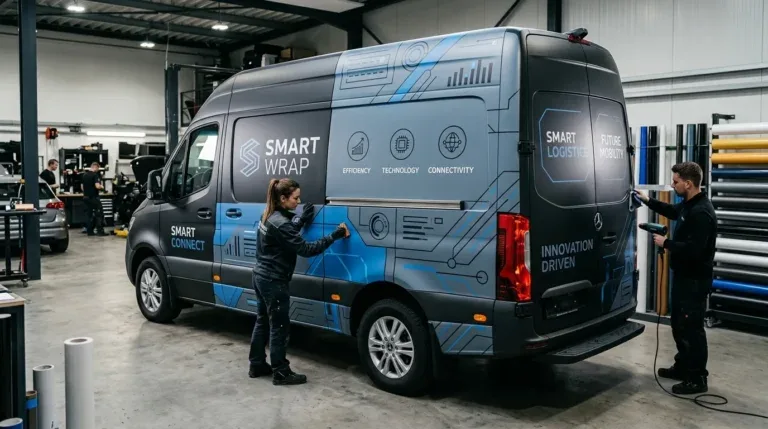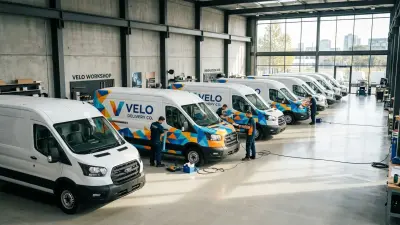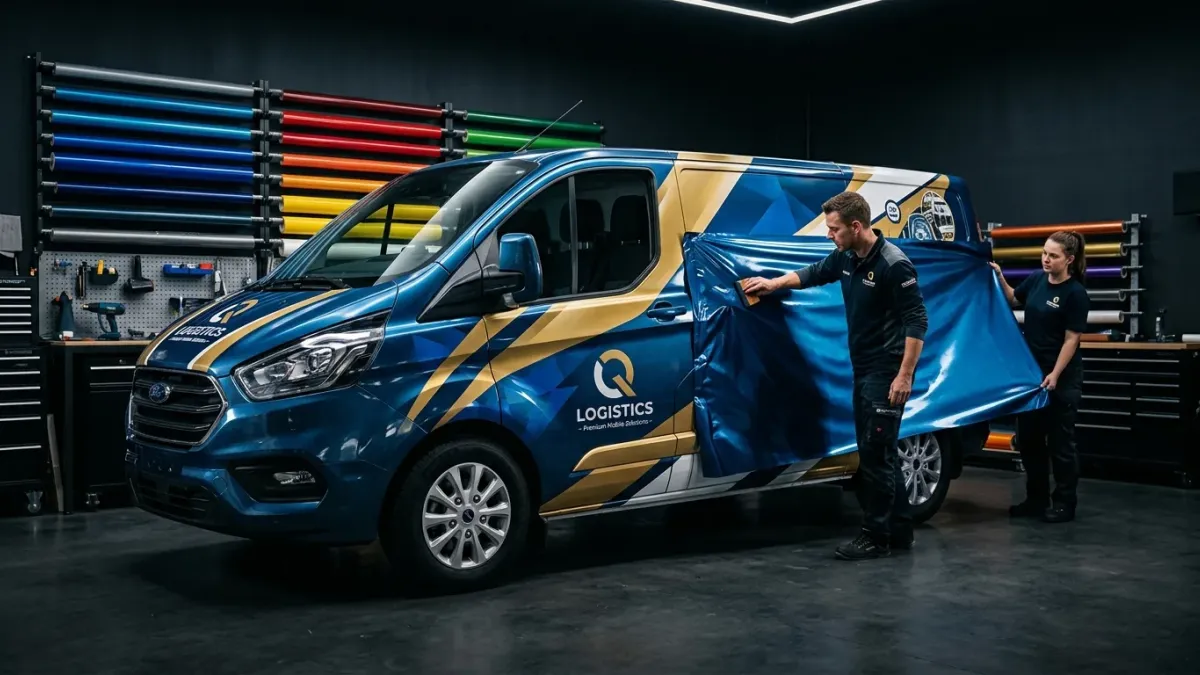
Imagine you're out running errands, perhaps stuck in slow-moving traffic, when a vibrant, professionally branded service van catches your eye. It's not just a vehicle; it's a moving advertisement, showcasing a company's logo, services, and contact information with undeniable clarity. That moment, that brief window of attention, is the exact power of a well-executed commercial vehicle wrap. For over 15 years, I've seen countless businesses, from local startups to established fleets, harness their vehicles to not just transport goods or people, but to actively generate leads, build trust, and etch their brand into the minds of potential customers. Choosing the right commercial wrap isn't merely about aesthetics; it's a critical business decision that directly impacts your visibility, credibility, and ultimately, your bottom line. Let’s cut through the noise and get down to making that decision a truly smart one.
Beyond a Pretty Picture: Defining Your Commercial Wrap Strategy
It’s easy to get excited about colors and designs, but before we even think about the visual appeal, we need to talk strategy. A commercial vehicle wrap is an investment, and like any good investment, it needs a clear purpose. What do you want your wrap to achieve? Are you a new plumbing service in town trying to announce your presence, or an established HVAC company aiming to reinforce professionalism and trustworthiness? Answering these questions upfront will guide every subsequent decision, from design choices to material selection.
The best commercial wraps aren't just pretty; they’re strategic. They communicate a clear message, resonate with a target audience, and contribute to your business goals. For example, a home improvement contractor might want to convey reliability and quality craftsmanship, while a new food delivery service prioritizes quick brand recognition and a clear call to action like "Order Now." Think of your vehicle not just as transportation, but as a silent, always-on salesperson.
What's Your Message? Goals and Target Audience
Your primary business goal will dictate everything from the wrap's coverage to its design complexity and even the specific materials we choose. For instance, a quick-service delivery operation might prioritize bold, easily digestible information like their logo, a phone number, and a simple call to action. Their vehicles are often seen briefly, sometimes only for a few seconds at a traffic light, so the message needs to be immediate and unmistakable.
On the other hand, a high-end landscaping firm might opt for a more sophisticated, elegant design that conveys quality and attention to detail, perhaps with a more subtle website address rather than a giant phone number. Their clients might take more time to observe the vehicle, appreciating finer details. Think about who you're trying to reach. Are your vehicles primarily navigating bustling city streets where traffic moves slowly, allowing for more detailed messages? Or are they cruising down highways, demanding a bolder, simpler design for maximum readability at speed? Knowing your audience and operating environment is paramount to crafting an effective mobile marketing tool.
Understanding Coverage Levels & Their Impact
The "right" wrap isn't always a full wrap. Commercial vehicle graphics come in various forms, each suited for different budgets and strategic goals. We tailor the coverage to maximize impact for your specific needs, often blending it with the vehicle's original paint color to save costs without sacrificing visual punch.
- Vinyl Lettering: This is the most basic and cost-effective option, ideal for displaying company names, phone numbers, and DOT numbers on doors or rear panels. It's durable, professional, and perfect for businesses needing essential identification without a large visual footprint. We use cast vinyl for lettering applications to ensure longevity and clean removal.
- Partial Wraps: These typically cover 25% to 75% of the vehicle, often incorporating existing paint colors into the design. Partial wraps offer significant visual impact at a lower cost than a full wrap, using strategic placement on doors, fenders, or the rear of the vehicle to create a dynamic look. We often use partial wraps to highlight key service areas or product features, making the most of the visible real estate, blending seamlessly with the vehicle's existing color scheme.
- Full Wraps: This is the ultimate mobile billboard, covering virtually every painted surface of the vehicle. A full wrap provides complete creative freedom and maximum brand exposure, transforming your vehicle into a completely new canvas. It offers the best paint protection and a consistent brand image across an entire fleet, regardless of the original vehicle color. For a smaller vehicle like a Ford Transit Connect or a Ram ProMaster City van, a partial wrap (50-75% coverage) might cost anywhere from $1,800 to $3,500, while a full wrap could range from $3,500 to $5,500. Larger vehicles like a Ford F-150 crew cab or a full-size Mercedes Sprinter van demand more material and labor, pushing full wrap costs to $4,500–$7,000+ depending on the complexity of the vehicle's curves and recesses. These figures are general estimates for 2025-2026 and always depend on the specific design, materials, and installer's expertise.
The Foundation: Choosing the Right Materials for Longevity and Impact
This is where many businesses, especially those new to wrapping, can make costly mistakes. The quality of the vinyl film and laminate directly impacts how long your wrap looks good, how well it protects the paint, and how cleanly it removes years down the line. Skimping on materials to save a few hundred bucks upfront can lead to premature fading, cracking, or even damage to your vehicle's paint, costing you far more in the long run.
As an installer, I've seen it all: cheap calendared vinyl lifting on curves within months, non-laminated prints fading in the sun, and adhesive residue stubbornly clinging to paint during removal. Trust me, the extra investment in quality materials from reputable brands is always worth it. It’s the backbone of a successful, durable commercial wrap.
Decoding Vinyl Types: Cast vs. Calendered
Understanding the difference between cast and calendered vinyl is fundamental when choosing a commercial wrap. They perform very differently, especially over time and on complex vehicle surfaces.
- Cast Vinyl: This is the premium, heat-activated film that conforms beautifully to complex curves, rivets, and recesses without shrinking back. It’s manufactured by pouring liquid vinyl onto a casting sheet, which results in a very thin, stable, and durable film. Cast vinyl typically ranges from 2.5 to 3.5 mil thick, offering superior conformability, longevity (often 7-10 years), and dimensional stability. This is what we use for full commercial wraps, intricate partial wraps, and any application where long-term durability and a seamless finish are critical. Brands like 3M 2080/1080, Avery Supreme Wrapping Film, and Oracal 970RA are all cast films.
- Calendered Vinyl: This is the more affordable, stiffer film, better suited for flat surfaces or very gentle curves. It's produced by forcing vinyl through rollers, stretching it into a sheet. While thicker (typically 3.5-4.5 mil), this manufacturing process builds in "memory," making it prone to shrinking back over time, especially in areas with tension. Calendered vinyl typically lasts 3-5 years. We might use high-quality calendered films for simple graphics, flat panel applications, or short-term promotional wraps, but never for a full, long-lasting commercial wrap on a vehicle with complex contours.
Popular Brands & Their Strengths
When it comes to commercial wraps, sticking with industry-leading brands is non-negotiable. These manufacturers invest heavily in R&D, ensuring their films offer consistent quality, vibrant prints, and reliable adhesive systems.
- 3M: Their 3M 2080 and 1080 series are gold standards for cast vinyl. They feature Controltac™ (repositionable adhesive) and Comply™ (air-release channels) technologies, making installation smoother and virtually bubble-free. Their IJ180mC series is fantastic for printed commercial graphics, offering excellent print quality and conformability.
- Avery Dennison: Avery Supreme Wrapping Film is another top-tier cast vinyl, known for its wide range of colors and finishes, excellent conformability, and easy-apply technology. Their MPI 1105 Easy Apply RS is a go-to for high-quality printed fleet graphics.
- Oracal: Oracal 970RA (Rapid Air) is a high-performance cast film that’s very popular for color change and commercial applications. It offers great conformability and a strong, reliable adhesive. Their Orajet series for printing is also widely used for commercial fleet wraps.
- Hexis & Arlon: These brands also produce excellent cast vinyl films like Hexis Skintac and Arlon Ultimate PremiumPlus, offering installers more options depending on their preference for workability and finish.
For custom printed commercial graphics, we always use a high-quality cast print media (like 3M IJ180mC or Avery MPI 1105) combined with a matching cast laminate. This pairing ensures your colors stay vibrant, the print is protected from UV and abrasion, and the entire graphic conforms and lasts as intended.
Laminates & Finishes: Protecting Your Investment
A printed commercial wrap isn't complete without a protective laminate. This clear, cast film is applied over the printed vinyl to protect it from UV radiation, abrasion, and environmental contaminants. Without a laminate, your beautiful graphics will fade, scratch, and degrade quickly. A good cast laminate (typically 2 mil thick) adds years to the life of your wrap.
Beyond protection, laminates also define the finish. Do you want a classic gloss, a sophisticated matte, or a sleek satin look for your business vehicles? Each finish communicates a different aesthetic. A glossy finish often appears vibrant and polished, matte gives a modern, subdued look, and satin strikes a balance between the two. The choice depends on your brand identity and the desired impact.
Investing Smart: Cost, ROI, and Professional vs. DIY
A commercial wrap is an advertising expense, but one with a significantly lower cost-per-impression than many traditional media. Think of it this way: a well-designed full wrap on a delivery van operating in an urban area can generate tens of thousands of impressions daily, year after year. Compared to a monthly billboard rental or recurring ad spend, a wrap is a one-time investment that works for 5-7 years, often paying for itself many times over. When budgeting, consider not just the initial cost, but the projected lifespan and the continuous brand exposure it provides. The value isn't just in the aesthetics; it's in the consistent, persistent advertising your vehicle delivers every single day it's on the road.
Breaking Down Commercial Wrap Costs (2025-2026)
Pricing for commercial wraps varies considerably based on vehicle size, wrap coverage, material choice, design complexity, and the installer's reputation. Here’s a general breakdown to help you budget effectively for 2025-2026:
| Vehicle Type | Wrap Type | Estimated Cost Range (USD) | Material Estimate (60-inch film) |
|---|---|---|---|
| Small Car (e.g., Toyota Corolla, Tesla Model 3) | Vinyl Lettering | $300 – $800 | 2-3 linear meters |
| Small Car (e.g., Toyota Corolla, Tesla Model 3) | Partial Wrap (25-50%) | $1,200 – $2,500 | 6-10 linear meters |
| Small Car (e.g., Toyota Corolla, Tesla Model 3) | Full Wrap | $3,000 – $4,800 | 14-16 linear meters |
| Mid-Size SUV/Van (e.g., Ford Transit Connect, Model Y) | Partial Wrap (25-50%) | $1,800 – $3,500 | 10-14 linear meters |
| Mid-Size SUV/Van (e.g., Ford Transit Connect, Model Y) | Full Wrap | $4,200 – $5,800 | 16-20 linear meters |
| Full-Size Truck/Van (e.g., Ford F-150, Mercedes Sprinter) | Partial Wrap (25-50%) | $2,500 – $4,500 | 12-18 linear meters |
| Full-Size Truck/Van (e.g., Ford F-150, Mercedes Sprinter) | Full Wrap | $4,800 – $7,500+ | 20-25+ linear meters |
These prices include design, material, printing (if applicable), and professional installation. Complex designs, specialized finishes (like chrome or textured films), or vehicles with intricate body lines (like a heavily paneled commercial van) will be on the higher end of the range. Remember, these are estimates, and getting a detailed quote from a reputable local shop is always the best approach.
The Return on Investment (ROI) of a Commercial Wrap
Calculating the exact ROI of a vehicle wrap can be tricky, but its effectiveness is undeniable. Industry studies suggest that vehicle wraps can generate between 30,000 to 70,000 impressions per day in urban areas. Compare that to a static billboard that costs thousands per month, or digital ads with click rates that are often under 1%. For a one-time investment that lasts 5-7 years, the cost per impression for a vehicle wrap can be as low as a few cents or even fractions of a cent, making it one of the most cost-effective forms of advertising available.
I once had a small plumbing company in town, just starting out, invest in a full wrap for their single work van. Within six months, they told me their inbound calls had increased by 30%, directly attributable to people seeing their van. That's real, tangible ROI. Beyond direct leads, a professional wrap also builds brand credibility and trust, portraying your business as established and reliable.
Why Professional Installation Matters (and When DIY is Okay)
While I'm a big proponent of DIY for simple personal projects, commercial vehicle wraps are generally not a beginner-friendly endeavor. Professional installation by certified technicians ensures proper surface preparation, precise panel alignment, correct tensioning, and crucial post-heating (heating the film to 200-220°F after application to "set" the adhesive and prevent lifting). Without these steps, bubbles, wrinkles, lifting edges, and premature failure are almost guaranteed.
For commercial applications, a clean, smooth, and durable finish is paramount for maintaining a professional image. A botched DIY wrap not only looks unprofessional but can also damage your vehicle's paint upon removal. A reputable shop will also offer warranties on their work and the materials they use, giving you peace of mind. Investing in professional installation for your commercial fleet is an investment in your brand's image and the longevity of your advertising asset.
Keeping Your Mobile Billboard Pristine: Maintenance and Removal
You've invested in a top-notch commercial wrap; now let's make sure it lasts its full 5-7 year lifespan, looking sharp the entire time. Proper maintenance is incredibly simple, but often overlooked. Neglecting your wrapped vehicle can lead to premature fading, staining, and degradation, ultimately shortening its effective advertising life.
And when the time comes to update your branding or sell the vehicle, professional removal is just as important as professional installation. Trying to remove a wrap yourself without the right tools or techniques can lead to adhesive residue left behind, or even worse, damage to the underlying paint or clear coat, which defeats the purpose of paint protection.
Simple Steps for Maximum Lifespan
The good news is that maintaining a vehicle wrap is much like caring for good paint, but with a few important differences. Aim for regular cleaning, especially in areas with a lot of road grime or pollutants.
- Hand Wash is Best: Always hand wash your wrapped vehicle using a pH-neutral automotive soap (like Meguiar's Gold Class Car Wash or Chemical Guys Mr. Pink) and a soft microfiber mitt. Avoid harsh detergents, abrasive brushes, or high-pressure washers, which can lift edges or damage the film.
- Avoid Automatic Car Washes: The aggressive brushes and harsh chemicals found in most automatic car washes are bad news for wraps. They can scratch the film, cause edges to peel, and shorten its lifespan significantly.
- Rinse Immediately: Bird droppings, tree sap, and bug splatter are highly acidic. Clean them off as soon as possible to prevent etching or staining the vinyl. Use a dedicated bug and tar remover if necessary, but test it on an inconspicuous area first.
- No Waxing (Typically): Most modern wrap films have UV inhibitors built-in. Standard car waxes, especially those with petroleum distillates, can actually degrade the vinyl. If you want added protection and shine, look for wrap-specific sealants or ceramic coatings designed for vinyl. Brands like Chemical Guys Wrap Detailer or Adams Polishes Ceramic Boost are excellent choices.
- Parking Smart: Whenever possible, park your wrapped vehicle in a garage or shaded area to minimize prolonged exposure to direct sunlight. UV radiation is the primary enemy of vinyl wraps, leading to fading over many years.
When It's Time for a Change: Professional Removal
A high-quality cast vinyl wrap, when properly installed, is designed for clean removal within its recommended lifespan (typically 5-7 years). Professional removal involves carefully heating the film to soften the adhesive, allowing the installer to peel it away slowly, minimizing residue and preventing paint damage. We often use specialized heat guns set to around 150-180°F (though precise temperature varies by film and conditions) and a combination of plastic squeegees and adhesive removers for a clean finish.
Attempting to remove a wrap yourself, especially if it's an older or lower-quality film, can be a nightmare. You risk tearing the vinyl into small pieces, leaving behind stubborn adhesive residue, or even pulling up factory paint if the surface wasn't prepped correctly or if the wrap has been on too long. Trusting a professional with removal ensures your vehicle's original paint is preserved and ready for its next transformation, whether that's a new wrap or just a fresh, clean look.
Choosing the right commercial vehicle wrap is a powerful business decision. It's about more than just aesthetics; it's about making a smart investment in mobile advertising that works tirelessly for your brand, day in and day out. By focusing on your strategic goals, selecting high-quality materials, investing in professional installation, and maintaining your wrap properly, you ensure your vehicles are not just transportation, but effective, long-lasting billboards that drive real results. Get out there and make those vehicles work for you!