Transforming the exterior of a luxury SUV is one of the most effective ways to make a personal statement on the road while protecting your factory paint. Modern luxury haulers—from the sharp, boxy lines of a Mercedes-AMG G63 to the sweeping curves of a Porsche Cayenne or Range Rover SV—possess massive surface areas that drastically magnify whichever exterior finish you select. Choosing between matte, satin, and gloss isn't just a matter of color preferences; it impacts how your vehicle reflects sunlight, how frequently you'll need to wash it, and how effectively the film hides day-to-day road grime.
Quick answer: Satin is currently the top choice for luxury SUVs because it balances light reflection and body contours without showing minor swirl marks like gloss or requiring the tedious fingerprint maintenance of true matte. However, if your goal is maintaining an OEM factory appearance with maximum depth, high-gloss film remains unbeaten, whereas satin or matte paint protection film (PPF) offers the ultimate blend of aggressive styling and heavy-duty rock chip armor.
Understanding Vinyl & Paint Protection Film Technology for Large SUVs
Before diving into aesthetics, it is essential to understand the material technology powering modern color transformations. When wrapping a full-size luxury SUV, installers generally work with two main categories of materials: premium dual-cast vinyl wraps and colored or clear Thermoplastic Polyurethane (TPU) Paint Protection Films (PPF). Premium dual-cast vinyl, such as 3M 2080 Series, Avery Dennison Supreme Wrapping Film (SW900), Oracal 970RA, and KPMF K75500, measures around 3.2 to 3.5 mils (thousandths of an inch) in thickness. These films are engineered with pressure-activated air-release adhesives that allow installers to stretch and manipulate the material around complex bumpers, mirrors, and deep door recessed channels without risk of shrinking back over time.
Conversely, satin and matte PPF options like XPEL Stealth or SunTek Matte stand much thicker, usually between 8 and 10 mils. PPF is designed primarily for impact protection against gravel, road debris, and physical scratches, offering self-healing properties when exposed to heat. Because of the sheer dimensions of luxury SUVs like a Cadillac Escalade V or BMW X7, a complete exterior coverage job demands roughly 20 to 25 linear meters (65 to 82 feet) of 60-inch wide material to account for seamless coverage across floating roofs, wide haunches, and oversized front grilles.
Investing in top-tier cast vinyl yields an expected outdoor lifespan of 5 to 7 years when backed by standard factory warranties and supported by proper vinyl wrap maintenance routines. Selecting lower-grade calendered vinyl (which ranges from 4 to 6 mils thick) on a luxury vehicle is a recipe for premature shrinkage, adhesive residue, and edge lifting within 12 to 18 months, particularly across the flat hood and roof panels exposed to intense solar heat.
Breakdown of Finishes: Gloss vs. Satin vs. Matte
Each exterior finish interacts with natural and artificial light in fundamentally different ways. Selecting the right sheen determines whether your SUV commands attention quietly or aggressively dominates the highway.
1. Gloss Finish: The Factory-Plus Look
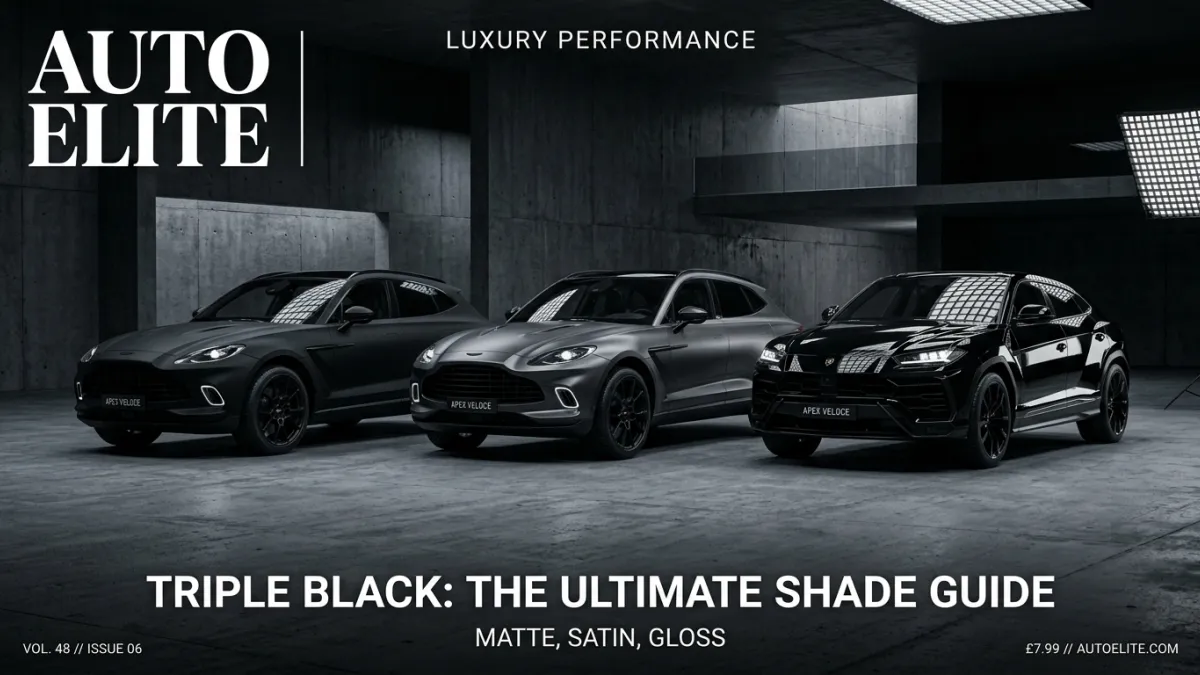
Gloss wraps replicate high-end OEM clear coats with high optical clarity and maximum sheen, generally measuring 85 to 90 Gloss Units (GU) on a reflectometer. Premium gloss films from Avery SW900 and 3M 2080 now feature protective cap sheets that prevent squeegee scratches during installation, resulting in a glass-like finish without the traditional orange peel texture seen on older vinyl products.
- Best for: Owners who love the timeless depth of paint, metallic flake pops, and traditional glass-like reflection.
- Visual Effect: Enhances the deep gloss of dark shades like emerald green or midnight navy while offering high paint reflectivity.
- Maintenance Factor: Moderate to high. Like standard paint, gloss film shows fine wash swirls, water spots, and dust build-up easily under direct sunlight.
2. Satin Finish: The Modern Sweet Spot
Satin occupies the visual middle ground between high gloss and flat matte, registering around 15 to 30 Gloss Units. It retains a soft sheen that disperses light across curved panels rather than casting sharp specular reflections. This unique light diffusion emphasizes muscular shoulder lines and fender flares on vehicles like the Audi RS Q8 or Lamborghini Urus.
- Best for: Emphasizing complex body lines, body sculpting, and aggressive styling without looking completely flat.
- Visual Effect: A silky, liquid-metal sheen that shifts dramatically depending on whether the vehicle is under daylight or street lamps.
- Maintenance Factor: Low to moderate. Satin hides light road dust, minor surface blemishes, and finger oils remarkably well compared to both gloss and flat matte.
3. Matte Finish: The Stealth Tactical Vibe
Matte films sit below 5 Gloss Units, absorbing nearly all direct ambient light. This ultra-flat appearance completely eliminates specular highlights, giving any vehicle a dense, monolithic appearance reminiscent of stealth aircraft or high-end custom builds.
- Best for: Large, aggressive SUVs like the Mercedes-Benz G-Wagon or Land Rover Defender where an imposing road presence is the goal.
- Visual Effect: Eliminates reflections completely, flattening surface contours and accentuating sharp edges and boxy silhouettes.
- Maintenance Factor: High. True matte finishes absorb oils from hands, bug splatter, and harsh chemical solvents, leaving shiny or dark blotches if not wiped down quickly with dedicated matte detailers.
Side-by-Side Comparison & Real-World Maintenance Requirements
Maintaining a wrapped vehicle differs significantly from caring for raw clear coat paint. Gloss finishes can be gently polished with ultra-light finishing compounds if light swirl marks occur, but polishing a matte or satin wrap will permanently ruin the finish by turning the micro-textured surface glossy in uneven patches.
Installer tip: When wrapping sharp, boxy panels like a Mercedes-Benz G-Class corner post or complex front fascias on an Audi RS Q8, satin films are far more forgiving during post-heating (typically 195°F to 212°F / 90°C to 100°C) than flat matte films. Over-stretching flat matte vinyl beyond 15-20% will cause "gloss spots" or color whitening where the PVC matrix thins out. Always use knifeless tape for body seam cuts to avoid etching expensive factory paint beneath.
To better understand how these three popular wrap finishes perform across key operational metrics on a daily-driven luxury SUV, examine the comparative breakdown below:
| Feature / Property | Gloss Finish | Satin Finish | Matte Finish |
|---|---|---|---|
| Reflective Sheen Level | High (85–90+ GU) | Medium (15–30 GU) | Ultra-Low (<5 GU) |
| Swirl & Scratch Visibility | High (Shows fine washes) | Low (Masks fine defects) | Very Low (Masks scratches) |
| Fingerprint / Oil Sensitivity | Very Low | Moderate | High (Requires quick cleaning) |
| Ceramic Coating Compatibility | Gloss-Enhancing Ceramic | Matte/Satin Specific Ceramic | Matte/Satin Specific Ceramic |
| Average Material Lifespan | 5–7 Years (Cast Vinyl) | 5–7 Years (Cast Vinyl) | 4–5 Years (Higher UV absorption) |
| Cost Range (Full SUV Wrap) | $3,800 – $5,200 | $4,200 – $5,800 | $4,200 – $5,800 |
When washing any non-gloss wrap, standard automotive shampoos containing gloss enhancers or carnauba waxes must be strictly avoided. Instead, rely on pH-neutral, wax-free car wash soaps paired with microfiber wash mitts. Applying a vinyl-specific ceramic coating (such as Gtechniq Halo or Gyeon Q² CanCoat EVO) directly onto satin or matte vinyl creates a hydrophobic layer that repels dirt, road grime, and harsh UV rays without altering the intended sheen of the material. Understanding overall color change wrap versus PPF costs helps budget long-term vehicle styling decisions accurately.
2026 Cost Analysis, Material Quality, and Installation Realities
Professional installation costs for wrapping a full-size luxury SUV reflect both high material expenses and intensive manual labor. A skilled installation team spends between 28 and 40 labor hours stripping exterior door handles, roof rails, badging, trim pieces, and deep cleaning every panel gap with isopropyl alcohol and clay bars prior to laying a single square foot of vinyl.
Here is a typical cost outline for full-size luxury vehicle transformations for the 2026 market season:
- Full Color Change Cast Vinyl Wrap (3M 2080 / Avery SW900): $3,800 to $5,800 total (includes professional disassembly, surface decontamination, edge wrapping, and reassembly).
- Full Satin/Matte Paint Protection Film (XPEL Stealth / SunTek Matte): $6,200 to $9,500 total (reflects heavy material cost, 8 mil thick self-healing TPU material, and complex wet-application labor).
- DIY Material Costs (60" x 75ft Roll): $750 to $1,150 for premium cast vinyl rolls, plus $150 to $250 for essential wrap tools and heat gun setups.
Flat matte cast vinyl materials absorb significantly higher amounts of infrared heat compared to high-gloss or satin films due to their non-reflective surface texture. As a result, horizontal panels (such as the hood, roof, and tailgate top) exposed to intense daily sunlight may experience thermal degradation earlier than vertical door panels. Expect a matte wrap installed on a dark outdoor-parked SUV to require professional removal or replacement around year 4 or 5, whereas satin and gloss cast films often comfortably hit 5 to 7 years of structural integrity when well-maintained.
If your budget permits, opting for a clear matte or satin Paint Protection Film (such as XPEL Stealth) directly over your factory gloss paint offers the single best long-term investment. It instantly transforms your stock metallic paint into a stunning frozen or satin sheen while providing genuine 8-mil impact defense against stone chips, scratches, and harsh environmental contaminants with warranties extending up to 10 years.
Frequently Asked Questions
Can I apply traditional car wax to a matte or satin vinyl wrap?
No. Traditional car waxes, spray sealants, and polishers contain gloss-enhancing additives and natural oils that will fill in the micro-textured surface of matte and satin vinyl. This creates uneven, shiny blotches across your panels that cannot be easily removed. Always use dedicated wax-free, pH-neutral detail sprays designed specifically for matte and satin finishes.
Is a satin wrap easier to clean than a flat matte wrap?
Yes, significantly easier. Satin films have just enough subtle reflectivity to resist holding oil from fingertips, water spots, and light dust particles. Flat matte wraps act like a visual magnet for hand skin oils, bug splatter, and bird droppings, demanding immediate cleaning with a microfiber towel and dedicated matte detail spray to prevent temporary staining.
Will wrapping my luxury SUV in matte or satin damage the original OEM paint underneath?
No, provided the vehicle's paint is original factory paint in good structural condition. Premium cast vinyl wraps from brands like 3M, Avery, and Oracal use removable acrylic adhesives designed to cleanly release from factory clear coats without leaving heavy adhesive residue or lifting paint, even after 5+ years of installation.
Can I wash a wrapped SUV in an automatic drive-through car wash?
Automatic friction car washes featuring spinning nylon brushes should never be used on wrapped vehicles, regardless of the finish style. The harsh bristles can lift wrap edges, scratch gloss films, and ruin satin or matte finishes. Touchless laser car washes are acceptable in a pinch, but gentle hand-washing using the two-bucket method is strongly recommended for maximum film longevity.
If you prefer an aggressive, tactical appearance for a boxier SUV like a G-Class or Defender and don't mind extra attention during hand washes, select a premium matte wrap. However, if you want an eye-catching visual upgrade that highlights dynamic curves, stays clean effortlessly, and hides minor road grime on daily commutes, order a full roll of satin wrap or satin PPF for your luxury SUV today.